Dog breed
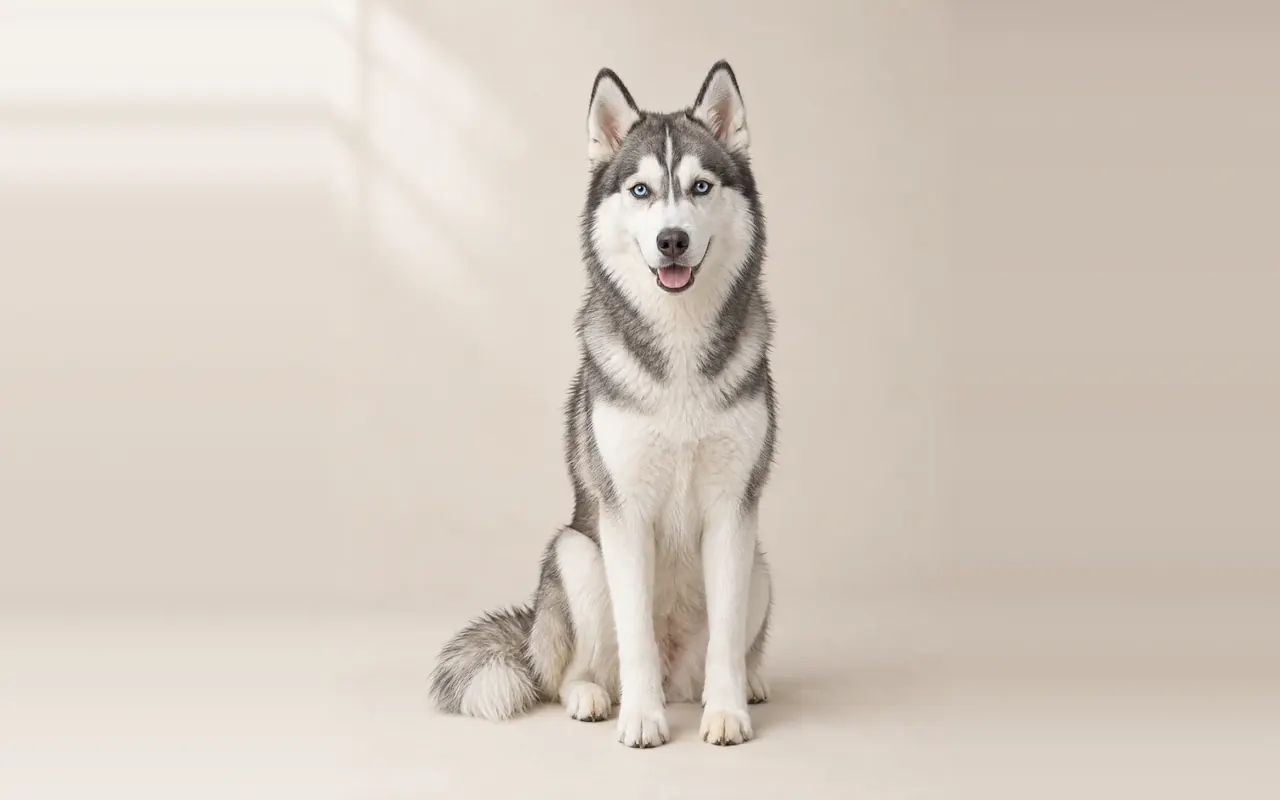
Siberian Husky
From Siberia, 20 to 24 inches at the shoulder and 34 to 62 pounds.
What a Siberian Husky is really like
A Siberian Husky does not bark so much as talk. Expect howls, woo-woos, grumbles and long, dramatic complaints about bath time, a late dinner or a walk that ended too soon, often in a voice that sounds startlingly like words. Many Huskies hold full conversations and expect you to keep up your side of them.
They were bred to run. A Husky's ancestors pulled light sleds over huge distances in the Arctic, and that engine is still running: they love to run, pull and keep going, and a stroll around the block barely registers. Most owners keep a Husky on a leash outside a fenced area, because once one starts running it tends to keep going and not look back.
Then there is the escaping. Huskies dig under fences, climb over them, slip collars and test gate latches, and plenty of owners have a story about a Husky found three streets away looking very pleased with itself. The other big surprise is the coat: twice a year the undercoat comes out in fistfuls, and it can look as if it snowed indoors.
The facts
- Where it comes from
- Siberia
- Height at the shoulder
- 20 to 24 inches
- Weight
- 34 to 62 pounds
- Litter size
- around 5 puppies
- Also called
- Husky
- American Kennel Club
- A recognized breed
Living with a Siberian Husky
Our ratings, worked out from what its sources say about its weight, its coat and what it was bred for. Every animal is an individual, so meet them before you decide.
- Bred for
- Pulling sleds
- Size
- Medium to large
- Coat
- A double coat, short to medium
- Grooming
- Brushing every week
- Shedding
- A lot
- Exercise
- Lots: long walks, runs or a job to do
- Voice
- Its descriptions mention howling
Breeds compared: German Shepherd vs Siberian Husky
Siberian Husky owners will tell you
- You asked a simple question, and the Husky gave a five-minute speech in reply.
- The fence is not a barrier; it is a puzzle with a prize on the other side.
- Twice a year, the vacuum fills up before it reaches the end of the hallway.
- Bath time is announced to the entire street as a terrible injustice.
- A Husky listens to every request, considers it carefully and then does its own thing.
A day with a Siberian Husky
An example, not a schedule: every home runs its own way.
- DawnA wake-up song: a long, rising woo from beside the bed, then a hopeful look at the leash.
- Morning runA long run or a fast walk in a harness, leaning into it the whole way. Pulling is what the breed was made for.
- MiddayA nap on the coolest surface in the house, often the tile floor, stretched out like a rug.
- AfternoonA careful inspection of the fence line, looking for any loose board or soft patch of dirt worth working on.
- EveningA play session, a little digging in the yard and a short opera at dinnertime.
- NightCurled nose to tail, with the bushy tail wrapped over the face like a scarf.
Before you choose
- Plan for a secure yard: tall fences, nothing to climb on, edges that cannot be dug under and gates that latch. Huskies are famous for finding a way out.
- They are vocal. Huskies rarely bark much, but they howl, talk and complain, and the neighbors will hear about all of it.
- Off-leash freedom is rare. Most Huskies have a strong urge to run and to chase small animals, cats included, so owners keep them leashed or fenced.
- Exercise needs are high. Plan on running, hiking, pulling sports or long brisk walks every day, ideally in cooler weather, which they clearly prefer.
- The double coat sheds steadily and blows out heavily about twice a year, when even daily brushing barely keeps up.
- Huskies were bred to live and work in teams and like company, human or canine. Many owners find a second dog keeps a Husky busy and entertained.
- Ask the breeder about health screening for the puppy's parents, and ask a vet what to watch for in a Siberian Husky.
History in brief
The Siberian Husky comes from the Chukchi people of northeastern Siberia, who bred dogs that could pull light loads over long distances in bitter cold while eating surprisingly little.
Huskies first reached Alaska in 1908, brought to Nome during the gold rush years. Racers there laughed at the smaller Siberian dogs at first, until they started winning the long sled races.
In 1925 a relay of sled teams carried urgently needed supplies across Alaska to the snowbound town of Nome, and Huskies ran some of the longest, hardest stretches. The run made the breed famous across America.
Colors and looks
A medium-sized, compact sled dog with a thick double coat, upright triangular ears and a fox-like brush of a tail carried up in a curve when it moves. The eyes can be blue, brown, one of each or a mix within one eye, and the face often wears a striking mask.
Colors you will see
- Black and white
- Gray and white
- Red and white
- Agouti and white
- Sable and white
- Pure white
- Black
Most common names for a Siberian Husky
In the pet license records we use, 2,979 dogs are listed as a Siberian Husky or a Siberian Husky mix. These are their most common names.
Names that lean Siberian Husky
Each of these is more common among Siberian Husky dogs than among all the dogs whose breed we can read in the records.
From pet license records published by New York City, Seattle, Cambridge in Massachusetts, and Allegheny County in Pennsylvania. How the names data works
Eight ways we draw a Siberian Husky
Each one prints on a poster, a bandana, a bed, a mat and more. Pick a style to see it on a poster.
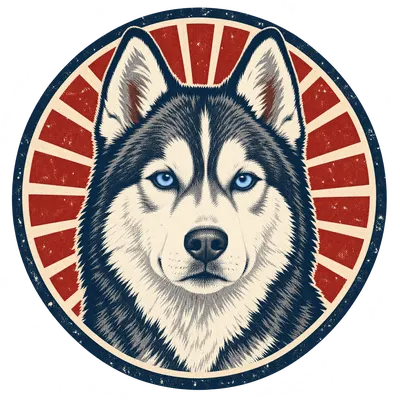 Retro badge
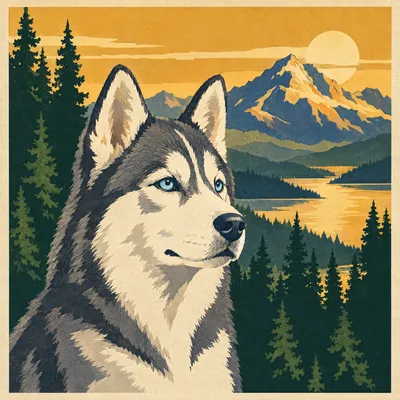 National park poster
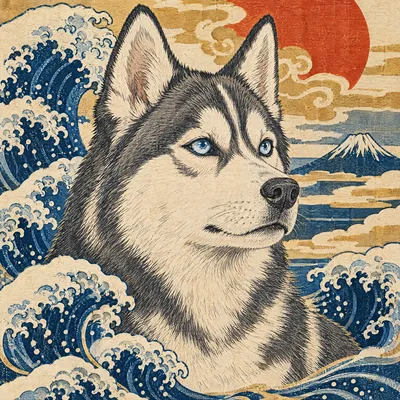 Woodblock print
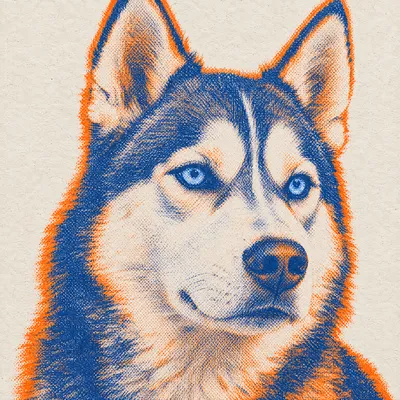 Risograph print
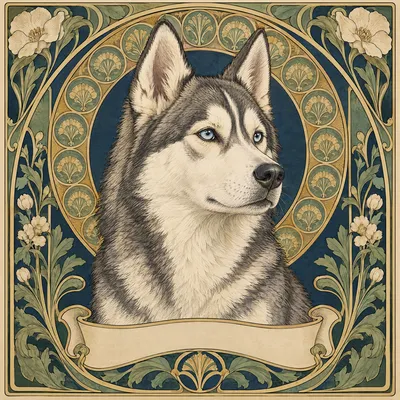 Art nouveau
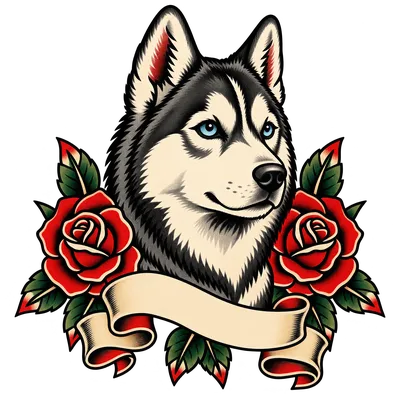 Tattoo flash
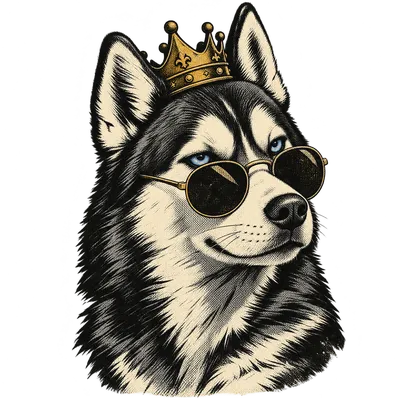 Crown and shades
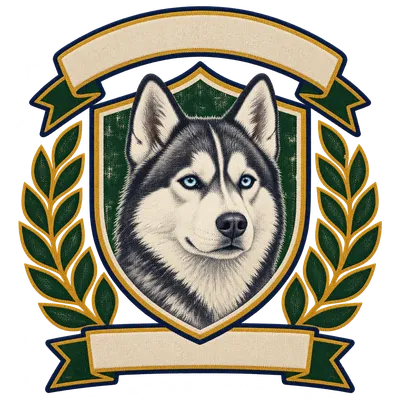 Varsity crest
Not your dog's color?
A Siberian Husky's life stages
A Siberian Husky is a medium to large dog by its recorded weight; the stages below follow the medium band, and the age the senior years may start depends on size.
- PuppyBirth to 6 months
- Puppy or young adult6 to 9 months
- Young adult9 months to 3 years
- Young or mature adult3 to 4 years
- Mature adult4 to 7 years
- Mature adult or seniorFrom 7 years
Stages from the American Animal Hospital Association life stage guidelines. How the life-stage calculator works
A Siberian Husky's age in human years
A Siberian Husky's recorded weight spans medium to large dogs; this table uses the medium band, on the same method as our dog age calculator.
| Age | In human years |
|---|---|
| 1 year | 15 |
| 2 years | 24 |
| 3 years | 29 |
| 5 years | 39 |
| 7 years | 49 |
| 10 years | 64 |
| 13 years | 79 |
| 16 years | 94 |
Questions people ask about the Siberian Husky
How big do Siberian Huskies get?
Most males stand about 21 to 24 inches and weigh about 45 to 60 lb; females run a little smaller, at about 20 to 22 inches and 35 to 50 lb.
Why do Huskies howl and talk so much?
It is part of the breed. Huskies tend to bark less than many dogs but howl, yip and make long talking sounds, often in reply to sirens, music or their people. Some are chattier than others, but silent Huskies are rare.
Why do Huskies run off so often?
They were bred to run long distances and have a strong urge to explore and to chase. Once a Husky is off and running, calling it back rarely works, which is why owners rely on leashes, harnesses and tall, secure fences.
Do Huskies shed?
Heavily, about twice a year, when the dense undercoat comes out in clumps for a few weeks. The rest of the year they shed moderately. An undercoat rake and frequent brushing help during the heavy spells.
Are Huskies and Malamutes the same?
No. The Alaskan Malamute is a larger, heavier freight dog, while the Siberian Husky is lighter and faster, built for pulling smaller loads over long distances. Huskies can have blue eyes; the Malamute standard calls for brown.
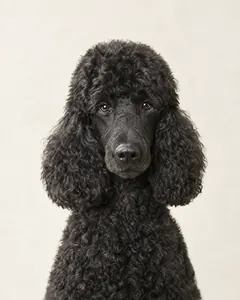
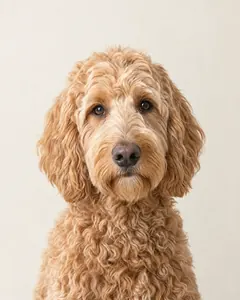
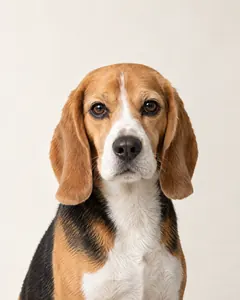
Related breeds
The same size, or from the same country.
For your Siberian Husky
Every dog is an individual. What we describe here is what is typical, from owners' experience and published breed descriptions, not a promise about any one dog. Meet the dog in front of you before you decide.
Breed facts: Wikidata, read 2026-10-03, which anyone may reuse, and the breed's Wikipedia article, read 2026-10-08. The ratings in "Living with" are ours, from those facts.
Unlock unlimited calm listening, free
Quiet music for the hours your dog is home alone, and the occasional note about new designs.
Unlimited listening is unlocked on this device. The Soundtrack player is ready when you are. Open the Soundtrack player