Cat breed
Maine Coon
From the United States, 10 to 24 pounds.
What a Maine Coon is really like
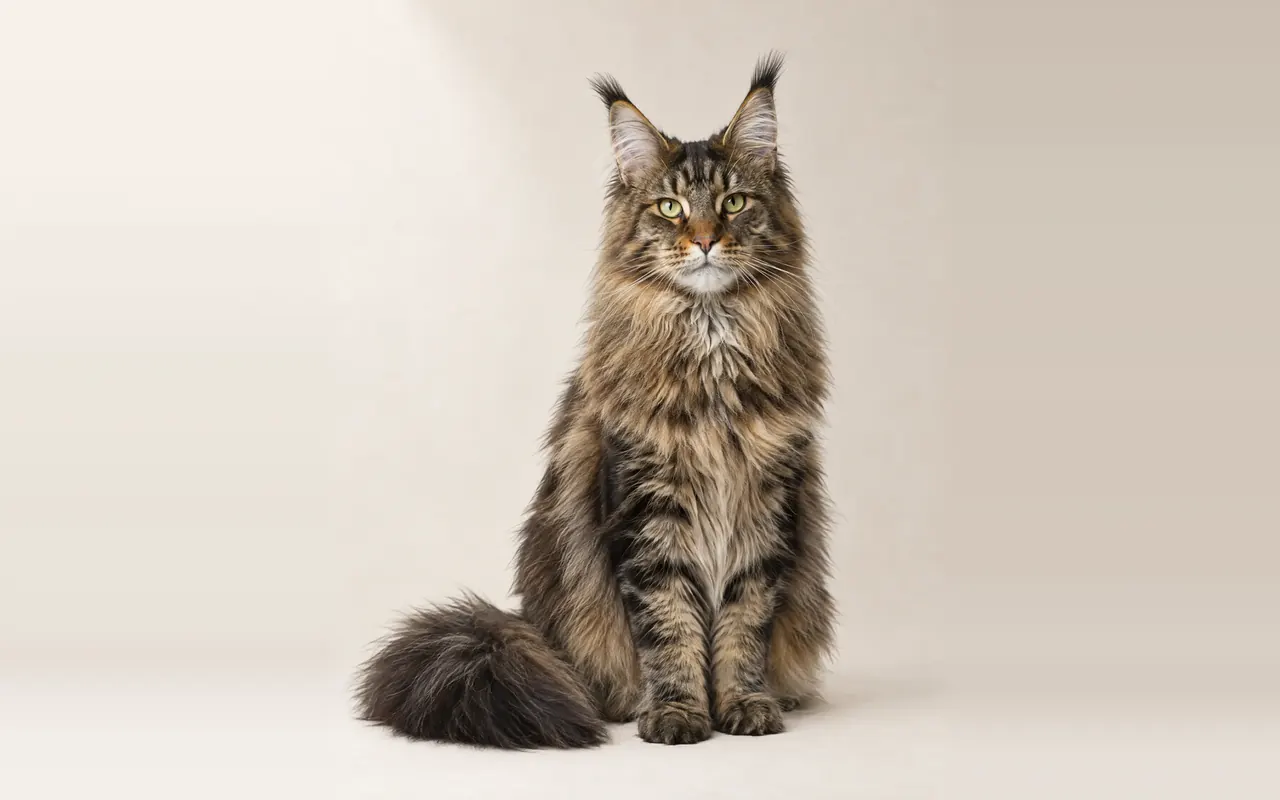
A Maine Coon is the cat people mistake for a small dog when it strolls into the room. Long bodied, big boned and finished with a lion's ruff and a tail like a feather duster, it takes up a surprising share of the sofa. Big males can pass 20 lb, and the breed grows slowly, so the kitten you bring home keeps getting larger for three to five years.
For all that size, the voice is a surprise. Maine Coons chirp and trill far more than they meow, a small bird sound coming out of a large animal. Many prefer to be near their people rather than on them, so expect a big cat sprawled across the doorway of whatever room you are in, or stretched along the hall like a draft stopper.
Then there is the water. Plenty of Maine Coons are fascinated by it: dipping a paw in the bowl and licking the drips off, batting at a running tap, keeping you company at the edge of the tub. A heavy, wide water bowl saves a lot of mopping, and a closed bathroom door saves a lot of explaining.
The facts
- Where it comes from
- United States
- Weight
- 10 to 24 pounds
- Also called
- American longhair
Living with a Maine Coon
Our ratings, worked out from what its sources say about its weight, its coat and how active it is. Every animal is an individual, so meet them before you decide.
- Size
- Large
- Coat
- Long
- Grooming
- Brushing every week
- Shedding
- A lot
Maine Coon owners will tell you
- The water bowl is a toy first and a drink second.
- Nobody believes you about the size until they try to lift one.
- Every guest asks whether it is part raccoon, and the answer is still no.
- The cat tree that looked huge in the store is now a footstool.
- It chirps at the birds, at you and at the empty food bowl, in that order of importance.
A day with a Maine Coon
An example, not a schedule: every home runs its own way.
- DawnA trilling patrol of the bedroom, then the heavy, deliberate thump of a large cat landing on the bed.
- BreakfastFood first, then the water bowl, where one paw goes in, comes out dripping and gets licked like a spoon.
- MiddayA long nap stretched full length across the hallway, placed so that everyone has to step over it.
- AfternoonFetch with a crumpled paper ball or a toy mouse, carried back and dropped at your feet for another throw.
- EveningSupervising dinner from a kitchen chair, chin at table height, front paws planted politely on the seat.
- NightSprawled across the foot of the bed, taking up a full third of it and declining to move.
Before you choose
- Buy for the cat you will have, not the kitten. Look for a sturdy, wide-based cat tree, an extra-large litter box and a carrier big enough for a hefty adult.
- The shaggy coat is easier than it looks because the texture is silky, but it still wants a comb a few times a week, especially through the ruff, belly and britches.
- Expect splashing. Many Maine Coons paw at water, tip bowls and investigate taps, so a heavy bowl or a water fountain on a mat is standard equipment.
- They stay kittenish for years. A two-year-old can already look enormous and still tear around the house like a youngster at midnight.
- Shedding is heavy, especially in spring when the winter coat lets go. A strong vacuum and a lint roller by the door become part of the routine.
- Ask the breeder about health screening for the kitten's parents, and ask a vet what to watch for in a Maine Coon.
History in brief
The Maine Coon grew up as a working barn and farm cat in New England, shaped by long, snowy winters into a big mouser with a thick coat, tufted ears and wide paws that work like snowshoes.
Folk tales put a raccoon somewhere in the family tree, which is impossible, or credit cats sent ahead by Marie Antoinette, which is unproven. The likelier story is plainer: cats that came over with European settlers and adapted to the cold.
A brown tabby called Cosey took the top prize at a major New York cat show in 1895. Long-haired imports then pushed the breed out of fashion for decades before a comeback, and Maine named it the state cat in 1985.
Colors and looks
A long, rectangular body, a square muzzle, big tufted ears and a shaggy coat that is short on the shoulders and long on the belly and britches. The tail is long and plumed, many wear a lion-like ruff, and some carry extra toes, a trait common in the old Maine farm cats.
Colors you will see
- Brown tabby
- Silver tabby
- Red tabby
- Black
- White
- Blue
- Cream
- Tortoiseshell
- Calico
- Black smoke
Eight ways we draw a Maine Coon
Each one prints on a poster, a bandana, a bed, a mat and more. Pick a style to see it on a poster.
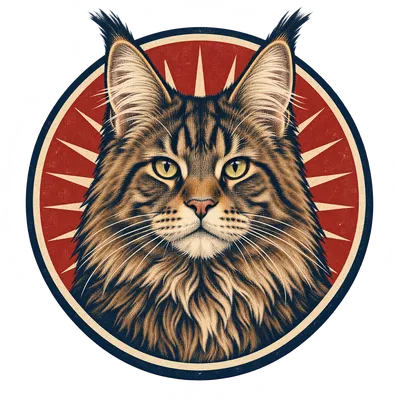 Retro badge
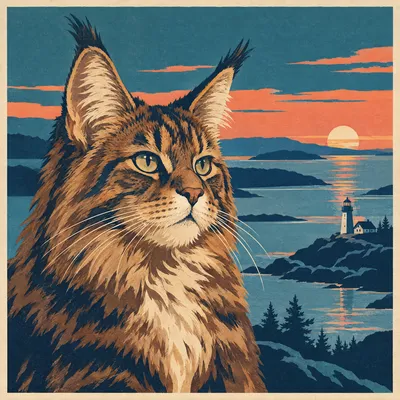 National park poster
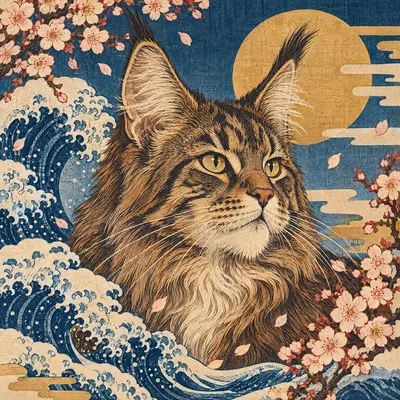 Woodblock print
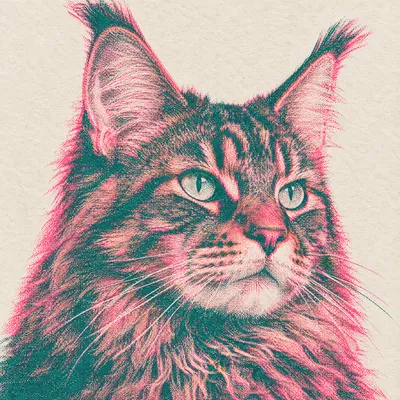 Risograph print
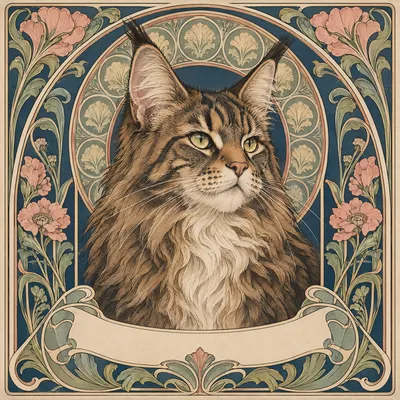 Art nouveau
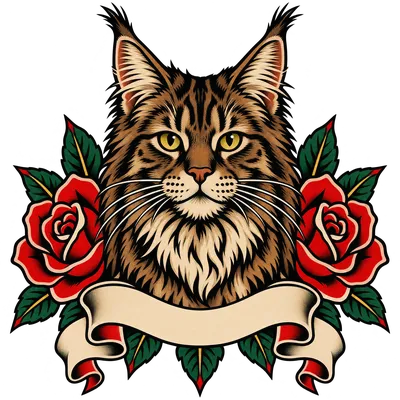 Tattoo flash
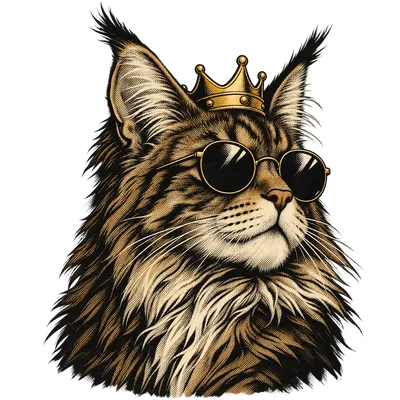 Crown and shades
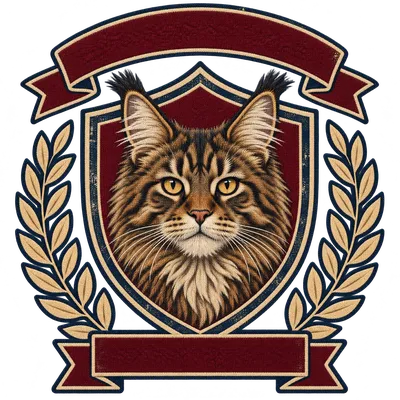 Varsity crest
Not your cat's color?
A Maine Coon's life stages
Every cat moves through the same stages, whatever its breed.
- KittenBirth to 1 year
- Young adult1 to 6 years
- Mature adult7 to 10 years
- SeniorOver 10 years
Stages from the American Animal Hospital Association life stage guidelines. How the life-stage calculator works
A Maine Coon's age in human years
On the same method as our cat age calculator.
| Age | In human years |
|---|---|
| 1 year | 15 |
| 2 years | 24 |
| 3 years | 28 |
| 5 years | 36 |
| 7 years | 44 |
| 10 years | 56 |
| 13 years | 68 |
| 16 years | 80 |
Questions people ask about the Maine Coon
How big do Maine Coon cats get?
Large. Adults run from about 10 to 24 lb, with males usually at the heavier end, and they keep filling out until about three to five years old. Their length surprises people even more than their weight.
Do Maine Coons like water?
Many do, on their own terms. Pawing at the water bowl, playing in a dripping sink and watching the bath are all common. Few want to be dunked, so let the cat choose how close it gets.
Are Maine Coons vocal?
Chatty in a soft way. Instead of loud meows, most chirp and trill, little questioning sounds that seem far too small for such a big cat.
How much grooming does a Maine Coon need?
Less than the coat suggests. The fur is silky and tangles less than many long coats, so combing a few times a week usually does it, with more attention during the spring shed.
Are Maine Coons lap cats?
Some are, but many would rather sit next to you, or at least in the same room, than on you. Given their size, your legs may be grateful.
Related breeds
The same size, or from the same country.
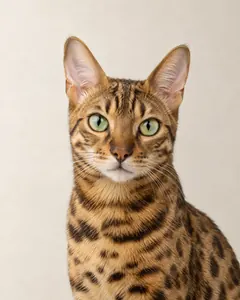
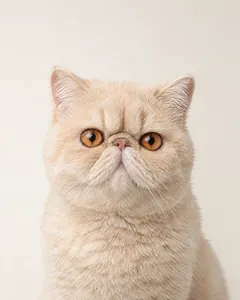
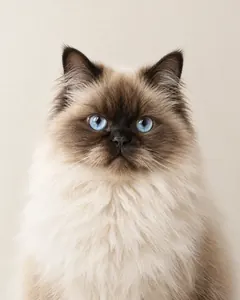
For your Maine Coon
Every cat is an individual. What we describe here is what is typical, from owners' experience and published breed descriptions, not a promise about any one cat. Meet the cat in front of you before you decide.
Breed facts: Wikidata, read 2026-10-03, which anyone may reuse, and the breed's Wikipedia article, read 2026-10-08. The ratings in "Living with" are ours, from those facts.
Unlock unlimited calm listening, free
Quiet music for the hours your cat is home alone, and the occasional note about new designs.
Unlimited listening is unlocked on this device. The Soundtrack player is ready when you are. Open the Soundtrack player