Labradoodle vs Labrador Retriever
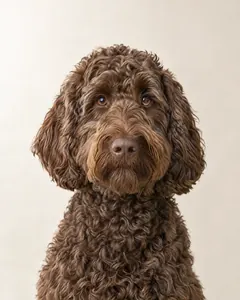
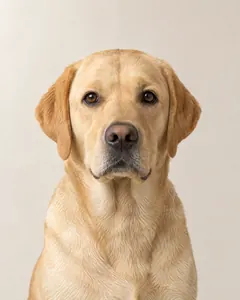
Both want to retrieve, swim, eat and join in, so the daily rhythm looks much the same: a ball in the mouth, a wet dog by the back door, a nose in the grocery bags. The Lab is the predictable one, with a short, dense coat and a solid, sporty frame. The Labradoodle is a cross with a Poodle, so its coat can be anything from flat to curly, its size follows the Poodle parent, and its shedding varies from dog to dog.
The big differences
- Coat care: a Lab's short double coat needs a weekly brush and a busy vacuum, but never a haircut. Most Labradoodle coats grow long and need a professional trim every several weeks.
- Size: a Labrador weighs about 55 to 80 lb and stands about 21 to 22 inches. A Labradoodle can be much smaller, from around 18 lb, or near Lab size at up to about 75 lb.
- Shedding: Labs drop short hairs all year, with heavier spells in spring and fall. A Labradoodle may shed less or just as much; the coat it inherits decides, and nobody can promise which.
- Look: a Lab looks like a Lab from across the park. Labradoodles range from sleek and Lab-like to shaggy and Poodle-like, sometimes within one litter.
A Labradoodle may suit you if
- You love the Lab's retrieving streak but like a shaggier, curlier look.
- You would welcome a smaller option, from a Miniature Poodle parent.
- You will meet the parents, ask which generation the litter is, and still plan for some hair.
A Labrador Retriever may suit you if
- You would rather run a vacuum than pay a groomer.
- You want a predictable size, coat and look from the first day.
- You picture a dog that charges into every lake and comes out ready for another throw.
- You like a choice of three classic colors: black, yellow or chocolate.
Side by side
| Labradoodle | Labrador Retriever | |
|---|---|---|
| Bred for | A cross of the Labrador Retriever and the Poodle | Retrieving game for hunters |
| Size | Small to large | Large |
| Weight | 18 to 75 lb | 55 to 80 lb |
| Coat | Depends on the parents: a double coat, short to medium, curly, or wiry | A double coat, short to medium |
| Grooming | Weekly to regular | Brushing every week |
| Shedding | Lower to heavy | A lot |
| Exercise | Lots of exercise | Lots of exercise |
| Voice | Not in its sources | Not in its sources |
What owners of each will tell you
- Labradoodle
Up on its hind legs, the Labradoodle can see the whole counter, and it has taken notes. - Labrador Retriever
The tail is a weapon, and the coffee table is its favorite target. - Labradoodle vs Labrador Retriever
After a swim the Lab shakes once and is half dry by the car; the Labradoodle shakes once and stays damp until bedtime, on the sofa.
What people name them
The most common names in the pet license records we use.
From pet license records published by New York City, Seattle, Cambridge in Massachusetts, and Allegheny County in Pennsylvania.
Common questions
Does a Labradoodle shed less than a Labrador?
Often, but not always. Labs shed heavily. A Labradoodle with a flat, Lab-style coat sheds much like a Lab, while a wavy or curly coat tends to hold more of its hair. Puppies in one litter can go either way, so plan for some hair whichever you choose.
Why was the Labradoodle first bred?
In Australia in the late 1980s, a guide dog breeder crossed a Labrador with a Standard Poodle, hoping for a guide dog with a coat that shed less. The catchy name took off, and the cross spread far beyond guide work.
Do Labradoodles love water as much as Labs?
Many do. Both parent breeds were made to fetch from water, so plenty of Labradoodles head straight for the lake. The difference comes afterward: a long doodle coat soaks up water, mud and burrs, and takes far longer to dry.
Which needs more exercise?
Both are retrievers at heart and want daily walks, swims and games of fetch. A small Labradoodle may need a little less mileage than a big Lab, but neither is happy with a quick stroll around the block.
Every dog is an individual. What we describe here is what is typical, from owners' experience and published breed descriptions, not a promise about any one dog. Meet the dog in front of you before you decide.
General information to help you narrow your choices. Every animal is an individual; meet them first. Check your lease and local rules.
Breed facts: Wikidata and each breed's Wikipedia article, read 2026-10-08. The ratings are ours, from those facts; how we match is on the breed fit quiz.
Unlock unlimited calm listening, free
Quiet music for the hours your dog is home alone, and the occasional note about new designs.
Unlimited listening is unlocked on this device. The Soundtrack player is ready when you are. Open the Soundtrack player