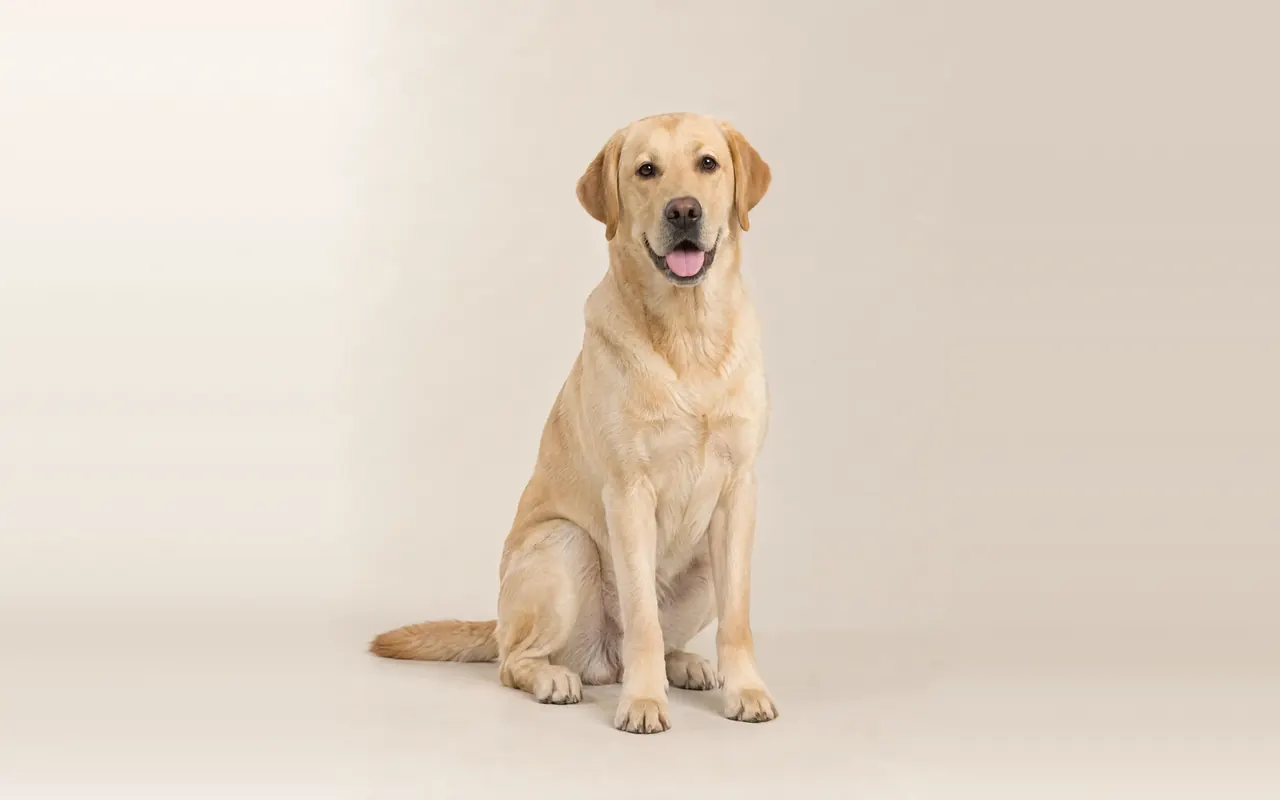
Dog breed
Labrador Retriever
From Canada and England, 21 to 22 inches at the shoulder and 55 to 80 pounds.
What a Labrador Retriever is really like
A Labrador greets life mouth first. Bred to fetch ducks out of icy water and hand them over unharmed, most Labs still want something to carry: a shoe, a sock, the TV remote, presented at the door with a full-body wiggle. Living with one means nothing at floor level is ever entirely yours again, and a dog who is delighted about all of it.
Food and water are the two great Lab passions. Plenty of Labs finish breakfast in seconds and then ask, with complete sincerity, whether breakfast is happening. Any puddle, pond, creek or muddy ditch is an open invitation, so a towel by the back door becomes part of the furniture. The water bowl gets the same enthusiasm, and the floor around it rarely stays dry.
Labs grow up slowly. The body looks adult around the first birthday, but the puppy inside often hangs around for another year or two, which is how a full-sized dog ends up launching itself at a visitor out of pure joy. Plan for long walks, swims and games of fetch, and for a thick, thumping tail that sweeps coffee tables at exactly mug height.
The facts
- Where it comes from
- Canada and England
- Height at the shoulder
- 21 to 22 inches
- Weight
- 55 to 80 pounds
- Typical lifespan
- around 10 years
- Litter size
- around 7 puppies
- Also called
- Lab and Labrador
- American Kennel Club
- A recognized breed
Living with a Labrador Retriever
Our ratings, worked out from what its sources say about its weight, its coat and what it was bred for. Every animal is an individual, so meet them before you decide.
- Bred for
- Retrieving game for hunters
- Size
- Large
- Coat
- A double coat, short to medium
- Grooming
- Brushing every week
- Shedding
- A lot
- Exercise
- Lots: long walks, runs or a job to do
Breeds compared: Labradoodle vs Labrador Retriever · Golden Retriever vs Labrador Retriever · German Shepherd vs Labrador Retriever · Australian Shepherd vs Labrador Retriever
Labrador Retriever owners will tell you
- The tail is a weapon, and the coffee table is its favorite target.
- Every guest gets a welcome present, usually one of their own shoes.
- A Lab hears a cheese wrapper open from three rooms away, through a closed door.
- Muddy water is not an obstacle on the walk; it is the destination.
- The bowl was licked clean ten minutes ago, and it is still being checked in case it refilled itself.
A day with a Labrador Retriever
An example, not a schedule: every home runs its own way.
- Early morningUp and wagging before the alarm, already carrying a toy to show you, as if you have been gone for weeks.
- BreakfastInhaled. Then a careful second pass over the empty bowl, which slides across the kitchen floor in the process.
- Mid-morningA long walk or a run, with a detour toward any water in sight. A Lab can find the one muddy puddle in a dry park.
- AfternoonFetch, then more fetch. A Lab will keep bringing the ball back long after your throwing arm has retired for the day.
- EveningA towel-off at the back door, dinner, then a stretched-out nap across the exact middle of the kitchen, where everyone needs to walk.
- BedtimeLights out with a long, contented groan, often flat on its back with all four legs in the air.
Before you choose
- Food goes behind closed doors. Labs are tall enough to reach counters and patient enough to wait for an opening, so owners learn to push the butter dish to the back.
- The short coat sheds far more than it looks like it should, with heavy spells in spring and fall. A weekly brush and a strong vacuum become routine.
- Plan for real daily exercise: long walks, swimming and retrieving games. A young Lab with energy to burn tends to chew whatever is nearest, from shoes to table legs.
- Puppyhood is long. Expect a bouncing, mouthy, exuberant dog through the second year and often beyond, at a size that can knock a cup out of your hand with one happy wag.
- They are big dogs, around 55 to 80 lb, and they want to be where you are, which in a small home means a large dog in the middle of every room.
- Mouths are always busy. Most Labs carry something whenever they can, so socks, slippers and anything precious live off the floor.
- Ask the breeder about health screening for the puppy's parents, and ask a vet what to watch for in a Labrador Retriever.
History in brief
The Lab's ancestors worked on the island of Newfoundland, where fishermen relied on sturdy water dogs to help haul nets and to bring back fish that slipped off the line. Despite the name, the breed was shaped in Britain, not in Labrador.
In the 1800s, British estates, among them those of the Earls of Malmesbury and the Dukes of Buccleuch, kept these dogs as gun dogs for waterfowl. Black was the original favorite; the first recorded yellow Lab, Ben of Hyde, was born in 1899, and chocolate found its fans later.
In the United States the Lab was the most registered breed with the American Kennel Club every year from 1991 to 2021, and it remains one of the most common guide dogs and detection dogs at work.
Colors and looks
A solid, athletic retriever with a broad head, kind eyes and a short, dense coat that shrugs off water. The thick, rounded tail, often called an otter tail, works as a rudder when swimming and as a demolition tool in the living room. Field-bred Labs tend to be leaner and leggier than show lines.
Colors you will see
- Black
- Yellow, pale cream to fox red
- Chocolate
Most common names for a Labrador Retriever
In the pet license records we use, 15,822 dogs are listed as a Labrador Retriever or a Labrador Retriever mix. These are their most common names.
Names that lean Labrador Retriever
Each of these is more common among Labrador Retriever dogs than among all the dogs whose breed we can read in the records.
From pet license records published by New York City, Seattle, Cambridge in Massachusetts, and Allegheny County in Pennsylvania. How the names data works
Eight ways we draw a Labrador Retriever
Each one prints on a poster, a bandana, a bed, a mat and more. Pick a style to see it on a poster.
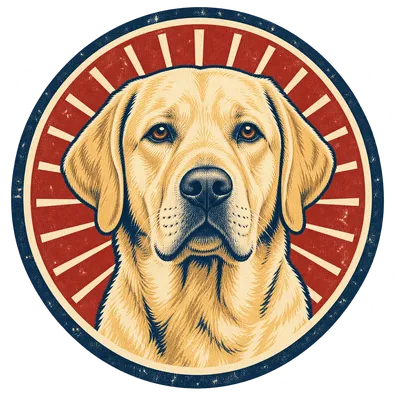 Retro badge
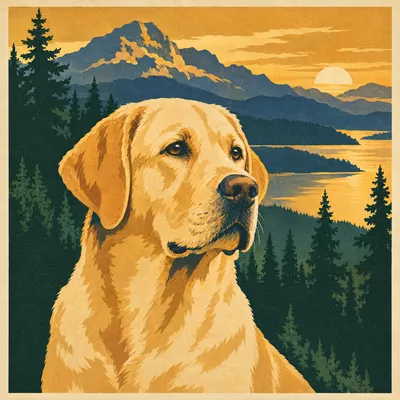 National park poster
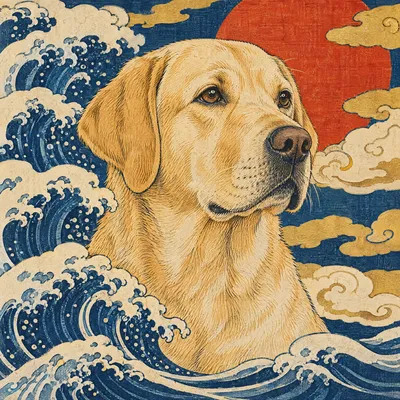 Woodblock print
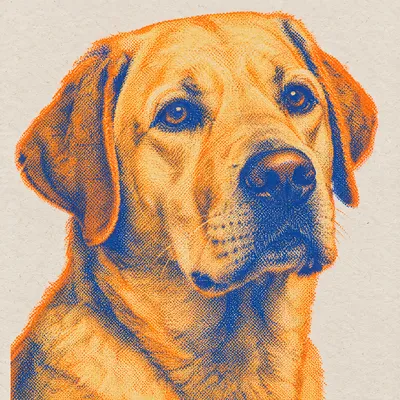 Risograph print
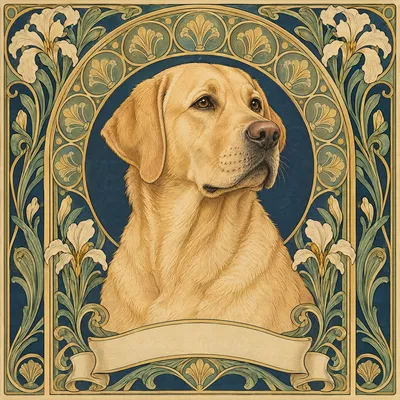 Art nouveau
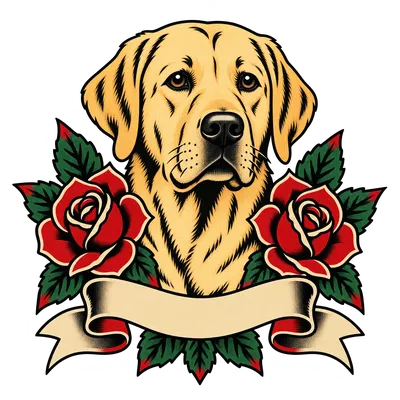 Tattoo flash
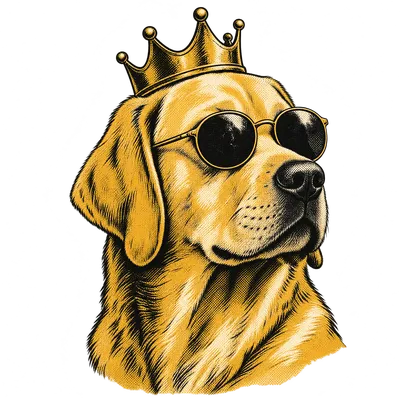 Crown and shades
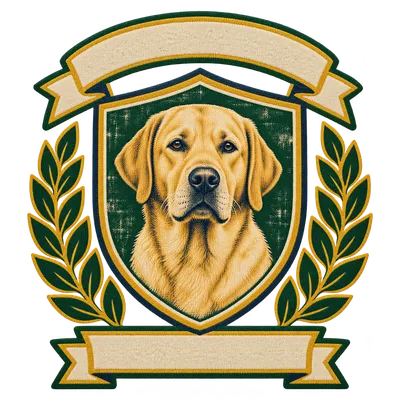 Varsity crest
Not your dog's color?
A Labrador Retriever's life stages
A Labrador Retriever is a large dog by its recorded weight, and the age the senior years may start depends on size.
- PuppyBirth to 6 months
- Puppy or young adult6 to 9 months
- Young adult9 months to 3 years
- Young or mature adult3 to 4 years
- Mature adult4 to 7 years
- Mature adult or seniorFrom 7 years
Stages from the American Animal Hospital Association life stage guidelines. How the life-stage calculator works
A Labrador Retriever's age in human years
For a large dog, on the same method as our dog age calculator.
| Age | In human years |
|---|---|
| 1 year | 15 |
| 2 years | 24 |
| 3 years | 30 |
| 5 years | 42 |
| 7 years | 54 |
| 10 years | 72 |
| 13 years | 90 |
| 16 years | 108 |
Questions people ask about the Labrador Retriever
How big do Labrador Retrievers get?
Most adults weigh about 55 to 80 lb and stand about 21 to 22 inches at the shoulder, with males on the larger side. Show-bred Labs tend to look stockier and broader in the head, while field-bred Labs are often slimmer and longer in the leg.
Do Labs shed a lot?
Yes, more than the short coat suggests. The dense undercoat sheds all year and comes out in clumps in spring and fall. Yellow Lab hair shows up on dark clothes, black Lab hair on light ones, and both end up on the sofa.
When does a Lab grow out of the puppy stage?
Later than most people expect. Many Labs keep their bouncy puppy energy until two or three, and plenty stay playful well past that. Lots of exercise and things to carry make the wait easier.
Do Labradors like water?
Most love it. The breed comes from dogs that worked in the cold sea off Newfoundland, and the water-shedding coat, webbed toes and otter tail all suit swimming. Many will find water on any walk, including the muddy kind.
What colors do Labradors come in?
Three: black, yellow and chocolate. Yellow covers everything from pale cream to a deep fox red. The breed standard recognizes only those three colors.
Related breeds
The same size, or from the same country.

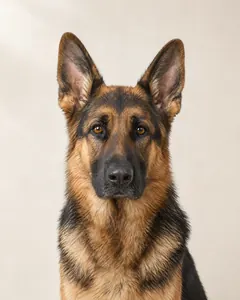
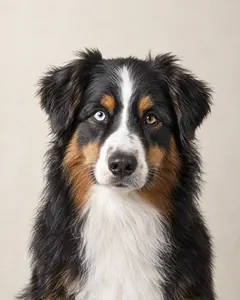
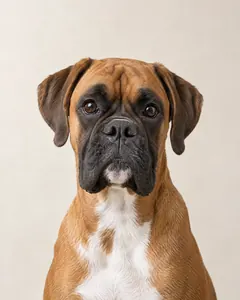
For your Labrador Retriever
Every dog is an individual. What we describe here is what is typical, from owners' experience and published breed descriptions, not a promise about any one dog. Meet the dog in front of you before you decide.
Breed facts: Wikidata, read 2026-10-03, which anyone may reuse, and the breed's Wikipedia article, read 2026-10-08. The ratings in "Living with" are ours, from those facts.
Unlock unlimited calm listening, free
Quiet music for the hours your dog is home alone, and the occasional note about new designs.
Unlimited listening is unlocked on this device. The Soundtrack player is ready when you are. Open the Soundtrack player