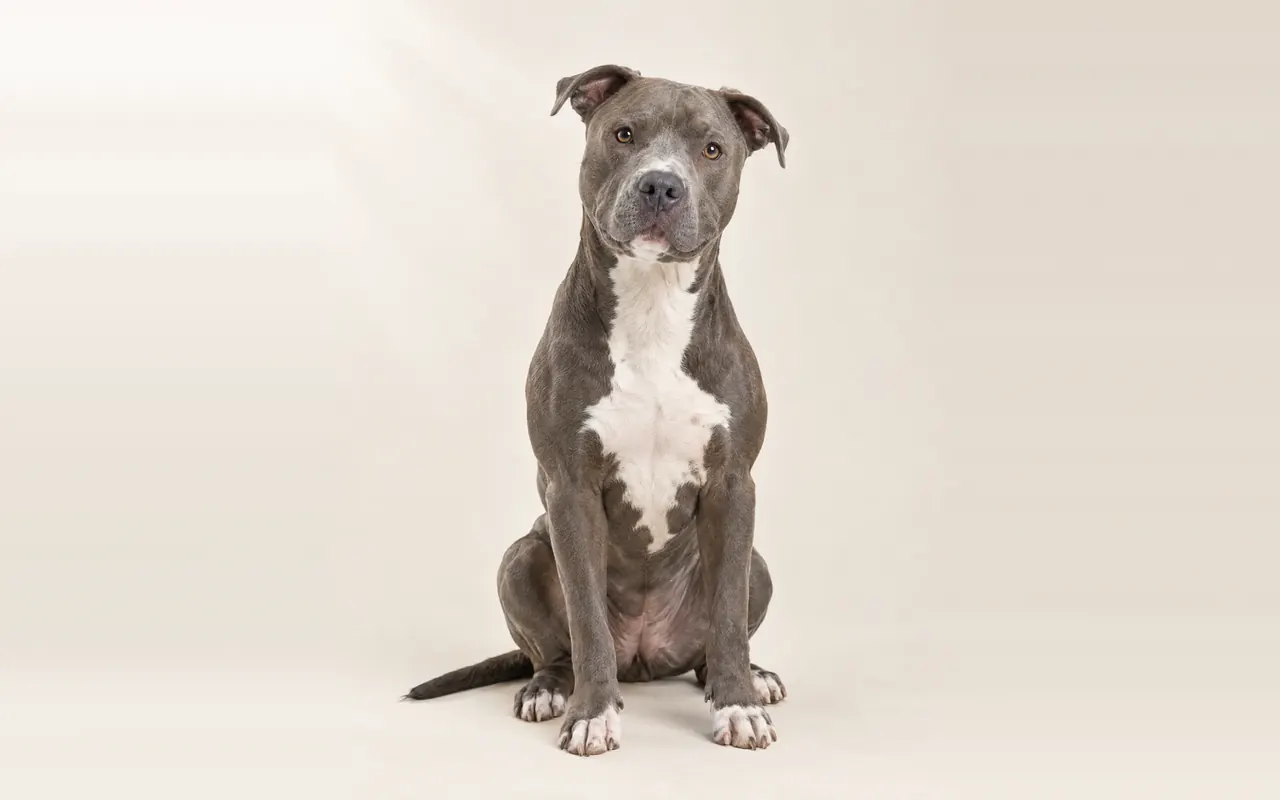
Dog type
Pit bull type
The name "pit bull" covers a type of dog, not one breed: it is used for several related breeds and their mixes.
What a pit bull is really like
Pit bull is not one breed. It is a name people use for a family of muscular, short-coated dogs that descend from bulldogs and terriers, including the American Pit Bull Terrier, the American Staffordshire Terrier and a great many mixes that simply look the part. Size, build and color vary widely, so it pays to meet the actual dog rather than go by the label on its kennel card.
Ask people who share a home with one and the same picture keeps coming up: a dog that loves people with its whole body. There is the wide, open-mouthed grin, the tail that thumps the wall like a drum, the full wiggle at the front door and the habit of trailing you from room to room before flopping down on your feet. Many are champion nappers who burrow under blankets and sleep with their head on a pillow, like a person.
They are strong, athletic dogs, and that shapes daily life. A young one tends to pull hard on the leash, play tug like the title is on the line and turn a cheap plush toy into fluff before lunch. Shelters across the country care for many of them, and a good shelter can tell you a lot about one particular dog's energy and habits before you bring it home.
The facts
Pit bull owners will tell you
- The zoomies come in one speed only, and that speed is everything.
- Their sighs are louder than some dogs' barks, and twice as dramatic.
- Blankets exist so there is something to burrow under, leaving only a nose showing.
- That grin gets them out of trouble far more often than it should.
- A new squeaky toy lasts exactly as long as it takes to find the squeaker.
A day with a pit bull
An example, not a schedule: every home runs its own way.
- MorningA big stretch, a yawn with sound effects, then a brisk walk where the first stretch of sidewalk is mostly pulling toward every interesting smell.
- BreakfastInhaled. Then a hopeful stare at your plate, as if the first bowl were some kind of misunderstanding.
- MiddayA round of tug or chase in the yard. Many of these dogs love a game with a clear winner, and they intend to be it.
- AfternoonA deep nap flat on its back, feet in the air and mouth slightly open, on the sunniest stretch of floor.
- EveningA welcome-home wiggle for every person who walks in, then a walk and some sofa time pressed against whoever is closest.
- NightUnder the covers or tucked into the bend of someone's knees, taking up a startling share of a queen bed.
Before you choose
- Check your lease and your home insurance before you choose. Some landlords and insurers restrict certain breeds and types, and pit bull types are often among them.
- Local rules vary as well. Some places have breed-specific laws, so check what applies where you live now and anywhere you may move.
- These dogs are strong, and many pull hard on the leash, so plan for a well-fitting harness and plenty of exercise, especially in the first couple of years.
- Toys need to be tough. Many pit bull types can take apart a plush toy in minutes, so owners stock up on heavy rubber chews.
- Every dog is different with other animals. Ask the shelter how this one does with dogs and cats, and meet it more than once before you decide.
- The short coat is about as simple as coats get: a weekly rub with a grooming mitt and an occasional bath.
- Ask the shelter, rescue or breeder what they know about the dog's health, and ask a vet what to watch for.
History in brief
The dogs now called pit bulls trace back to crosses between bulldogs and terriers made in Britain and Ireland in the 1800s. Immigrants brought them to America, where many worked on farms and homesteads, catching loose cattle and hogs and keeping the household company.
Breed clubs later gave branches of this family their own names. The United Kennel Club registered the American Pit Bull Terrier from its founding in 1898, and the American Kennel Club recognized a related line in 1936, known today as the American Staffordshire Terrier.
Today the label also covers countless mixes. Many shelter dogs are called pit bulls purely on looks, and looks are only a rough guide to a dog's real background.
Colors and looks
Most have a broad head with full cheeks, a wide smile and a short, glossy coat over a muscular body. Beyond that they vary: some are compact and stocky, others long-legged and lean, with ears that fold, flop or stand.
Colors you will see
- Black
- Blue
- Brindle
- Fawn
- Red
- White
- Black and white
- Brindle and white
Most common names for a pit bull
In the pet license records we use, 5,956 dogs are listed as a pit bull or a pit bull mix. These are their most common names.
Names that lean pit bull
Each of these is more common among pit bull dogs than among all the dogs whose breed we can read in the records.
From pet license records published by New York City, Seattle, Cambridge in Massachusetts, and Allegheny County in Pennsylvania. How the names data works
Eight ways we draw a pit bull
Each one prints on a poster, a bandana, a bed, a mat and more. Pick a style to see it on a poster.
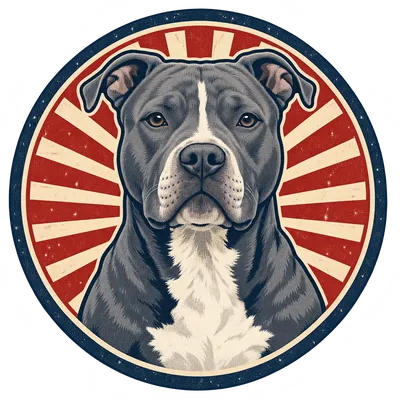 Retro badge
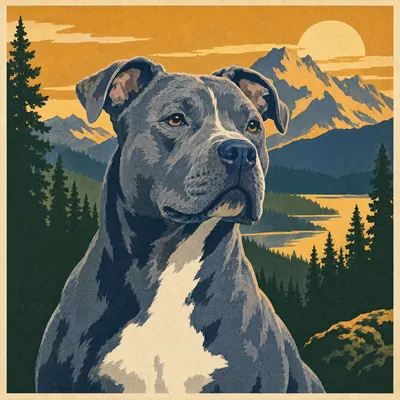 National park poster
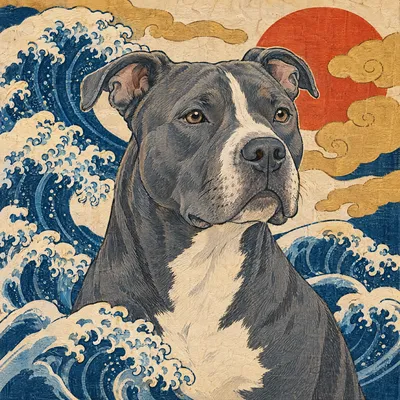 Woodblock print
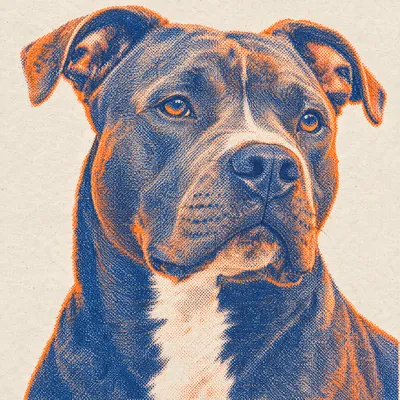 Risograph print
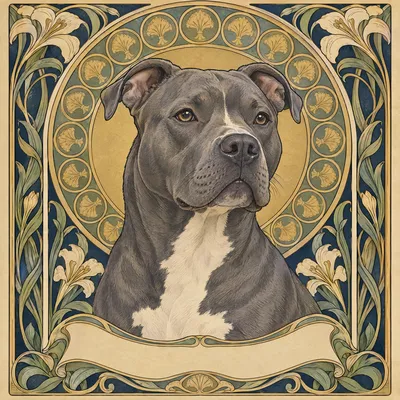 Art nouveau
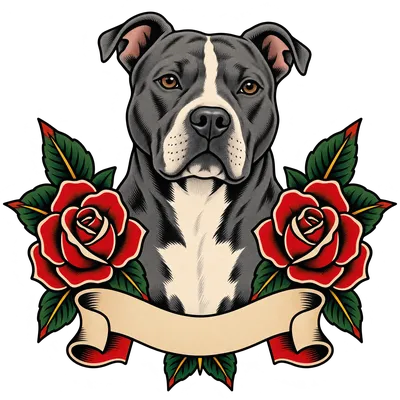 Tattoo flash
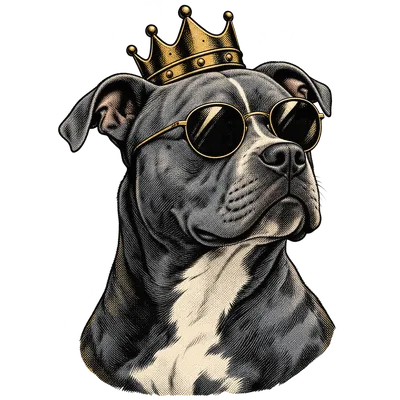 Crown and shades
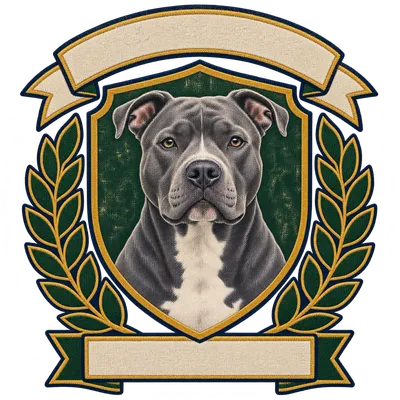 Varsity crest
Not your dog's color?
A pit bull's life stages
The senior years start at different ages by size: around 12 for small dogs, and as early as 7 for larger ones.
- PuppyBirth to 6 months
- Puppy or young adult6 to 9 months
- Young adult9 months to 3 years
- Young or mature adult3 to 4 years
- Mature adult4 years until the senior years
- Mature adult or seniorFrom around 7 to 12 years, by size
Stages from the American Animal Hospital Association life stage guidelines. How the life-stage calculator works
Questions people ask about the pit bull
Is a pit bull a breed?
No. Pit bull is a type, a loose name for several related breeds and the many mixes that look like them. Two registered breeds sit inside that family: the American Staffordshire Terrier and the American Pit Bull Terrier.
How big do pit bull type dogs get?
It depends on the dog. Because the label covers several breeds and many mixes, adults run from compact, medium-sized dogs to tall, heavy ones. A shelter can tell you the actual dog's size, and a puppy's parents are the most useful guide.
Do pit bulls shed?
Yes, a moderate amount. The coat is short and single, so there is no big seasonal shed, but short hairs show up on clothes and furniture all year.
Can you rent a home with a pit bull?
Often, but check first. Some leases and home insurance policies restrict certain breeds and types, including pit bull types, so read the policy and ask before you adopt.
Why are there so many pit bulls in shelters?
They are among the most common dogs in the country, and housing and insurance limits make some harder to place. The upside is choice: shelters have pit bull types of every age, size and energy level.
More dog breeds

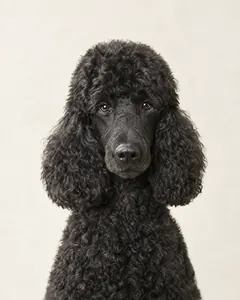

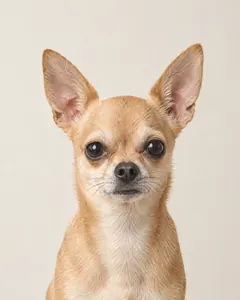

For your pit bull
Every dog is an individual. What we describe here is what is typical, from owners' experience and published breed descriptions, not a promise about any one dog. Meet the dog in front of you before you decide.
Breed facts: Wikidata, read 2026-10-03, which anyone may reuse.
Unlock unlimited calm listening, free
Quiet music for the hours your dog is home alone, and the occasional note about new designs.
Unlimited listening is unlocked on this device. The Soundtrack player is ready when you are. Open the Soundtrack player