Dog breed
Pomeranian
From Germany, 3 to 7 pounds.
What a Pomeranian is really like
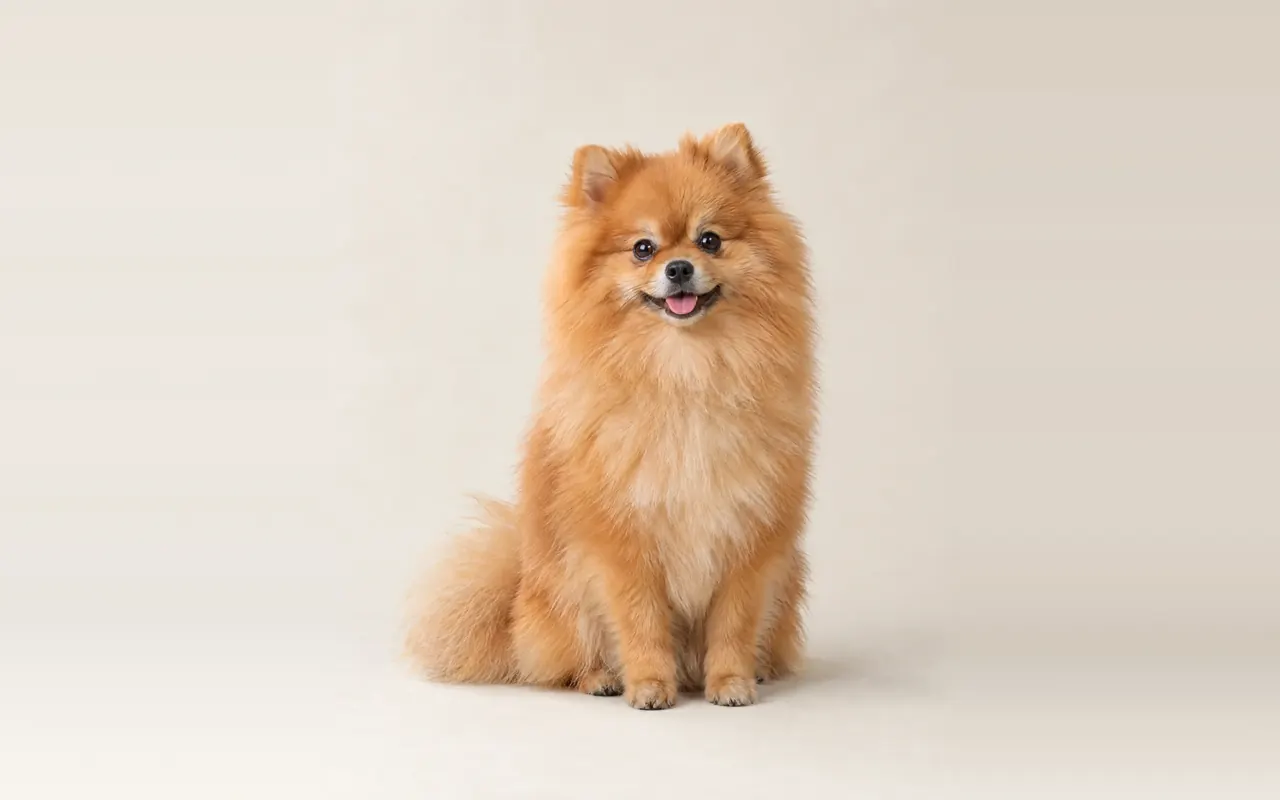
Picture a cloud of fluff with a fox's face and a doorbell's job description, and you have most of a Pomeranian. These are tiny spitz dogs, usually 3 to 7 lb, but the thick coat makes them look twice that, and they carry themselves like a much bigger dog on important business.
That business is mostly announcing. A Pom notices everything, the mail carrier, a car door, a leaf landing on the porch, and reports it in a sharp, high bark. Owners joke that they never needed a doorbell again. Between alerts, a Pom is a bouncy little performer that spins in circles at the word dinner and prances down the sidewalk like it is leading a parade.
The coat is the signature, and it is real work: a dense, cottony undercoat beneath a longer outer coat that sheds steadily and blows out heavily a couple of times a year. Puppies also go through an awkward phase owners call the puppy uglies, when the baby fluff drops out before the adult coat fills in, so a scraggly young Pom is right on schedule.
The facts
- Where it comes from
- Germany
- Weight
- 3 to 7 pounds
- Litter size
- around 2 puppies
- Named after
- Pomerania
- American Kennel Club
- A recognized breed
Living with a Pomeranian
Our ratings, worked out from what its sources say about its weight, its coat and what it was bred for. Every animal is an individual, so meet them before you decide.
- Bred for
- Companionship
- Size
- Small
- Coat
- A long double coat
- Grooming
- Regular brushing, and trims for some coats
- Shedding
- A lot
- Exercise
- Lighter: short walks and play
- Voice
- Its descriptions mention barking
Pomeranian owners will tell you
- There is Pomeranian fluff in rooms the Pomeranian has never been in.
- You will never again miss a package, a leaf or a slightly suspicious breeze.
- Dinner gets a spin, a hop and a little dance, every single night.
- A wet Pom is half the size of a dry one and twice as offended.
- They prance on walks as if the whole street came out to watch.
A day with a Pomeranian
An example, not a schedule: every home runs its own way.
- MorningA brisk little walk with a proud prance, and a bark report on every dog spotted through a window along the way.
- BreakfastAnnounced with a pirouette in the kitchen, eaten in a hurry, then a victory lap around the table.
- MiddaySentry post on the back of the couch, ready to raise the alarm about the mail truck the moment it turns the corner.
- AfternoonFetch with a small ball, a squeaky toy tossed in the air and caught, then a nap in a puff of fur.
- EveningA brushing session on your lap that ends with a surprising pile of fluff beside you on the cushion.
- NightCurled into a tight ball with the tail over the nose, like a fox in its den.
Before you choose
- Expect barking. Poms are quick to sound off at noises and movement, so anyone on the other side of a thin wall will hear about the mail carrier too.
- The double coat sheds all year and drops in clumps during spring and fall. Brushing down to the skin a few times a week, and daily during a heavy shed, keeps mats from forming behind the ears.
- Many owners book a groomer to shape the coat into a neat round outline or a shorter teddy bear look; the full, untrimmed coat takes the most upkeep.
- Size cuts both ways. A Pom fits on any lap and in any carrier, but it also fits under furniture, behind the dryer and through gaps in the fence you never noticed.
- They love an audience and tend to perform for one, so they often suit homes with plenty of coming and going.
- Poms come in a wide range of colors, from orange and cream to black, blue and parti-color, so a particular look may take patience to find.
- Ask the breeder about health screening for the puppy's parents, and ask a vet what to watch for in a Pomeranian.
History in brief
The name comes from Pomerania, a region on the Baltic coast now divided between Poland and Germany. The breed descends from German spitz dogs, and the early ones were far larger than the lapful you see today.
Queen Charlotte brought two to England in 1767, and her granddaughter Queen Victoria became a devoted breeder with a large kennel. Victoria preferred the small ones, and after she showed a little red sable named Marco, breeders began chasing the toy size.
In Victoria's lifetime the breed is said to have shrunk to about half its earlier size, and it has stayed pocket sized ever since.
Colors and looks
A tiny spitz with a foxy, wedge-shaped face, small pointed ears, bright dark eyes and a heavily plumed tail fanned flat over the back. A thick ruff frames the neck and chest, so the dog looks round from every angle.
Colors you will see
- Orange
- Orange sable
- Cream
- Red
- Black
- White
- Chocolate
- Blue
- Wolf sable
- Black and tan
- Parti-color
- Brindle
- Beaver
Most common names for a Pomeranian
In the pet license records we use, 2,867 dogs are listed as a Pomeranian or a Pomeranian mix. These are their most common names.
Names that lean Pomeranian
Each of these is more common among Pomeranian dogs than among all the dogs whose breed we can read in the records.
From pet license records published by New York City, Seattle, Cambridge in Massachusetts, and Allegheny County in Pennsylvania. How the names data works
Eight ways we draw a Pomeranian
Each one prints on a poster, a bandana, a bed, a mat and more. Pick a style to see it on a poster.
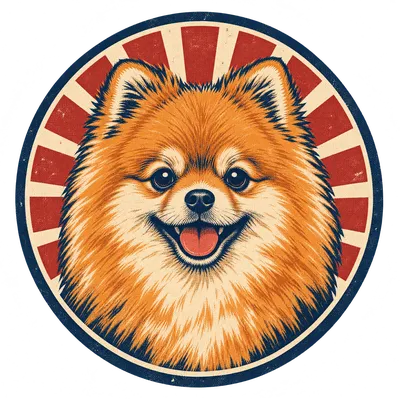 Retro badge
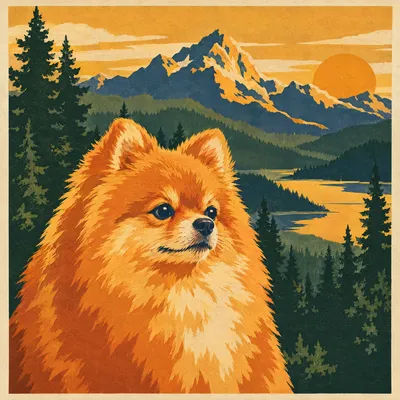 National park poster
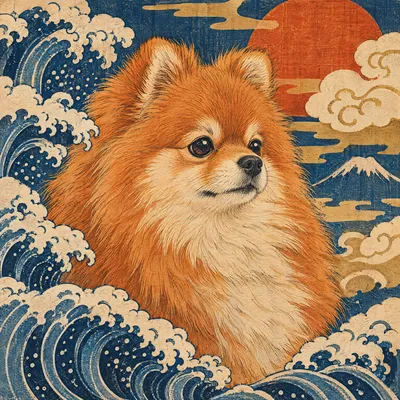 Woodblock print
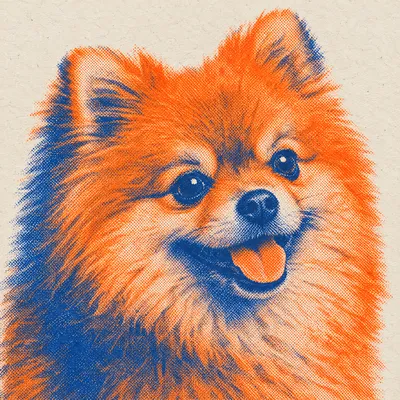 Risograph print
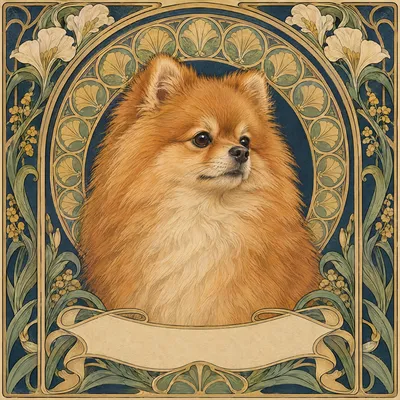 Art nouveau
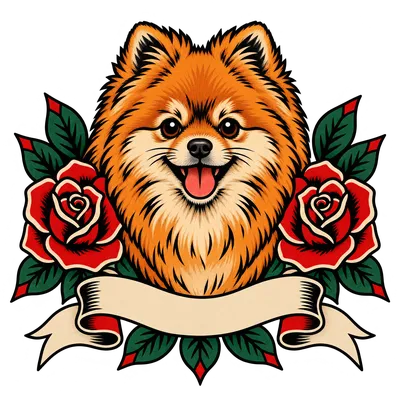 Tattoo flash
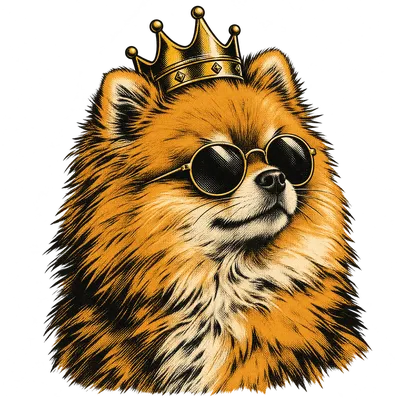 Crown and shades
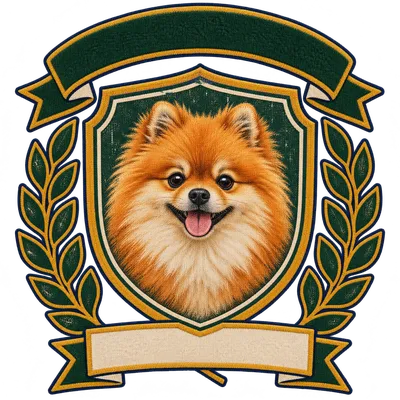 Varsity crest
Not your dog's color?
A Pomeranian's life stages
A Pomeranian is a small dog by its recorded weight, and the age the senior years may start depends on size.
- PuppyBirth to 6 months
- Puppy or young adult6 to 9 months
- Young adult9 months to 3 years
- Young or mature adult3 to 4 years
- Mature adult4 to 12 years
- Mature adult or seniorFrom 12 years
Stages from the American Animal Hospital Association life stage guidelines. How the life-stage calculator works
A Pomeranian's age in human years
For a small dog, on the same method as our dog age calculator.
| Age | In human years |
|---|---|
| 1 year | 15 |
| 2 years | 24 |
| 3 years | 28 |
| 5 years | 36 |
| 7 years | 44 |
| 10 years | 56 |
| 13 years | 68 |
| 16 years | 80 |
Questions people ask about the Pomeranian
How big do Pomeranians get?
Most adults weigh 3 to 7 lb. The thick coat makes them look much bigger, and a Pom fresh out of the bath is startlingly slim.
Do Pomeranians shed a lot?
Yes. The dense double coat sheds steadily and comes out in clumps during a seasonal shed, usually spring and fall. Brushing a few times a week, down to the skin, keeps it under control.
Why do Pomeranian puppies look scruffy?
Most go through a stage, often called the puppy uglies, when the soft baby coat sheds before the adult coat fills in. It passes within months, and the full coat keeps thickening after that.
Do Pomeranians bark a lot?
Most do. They react to new sounds and movement, and the bark is high and sharp. Close neighbors will usually hear the news as well.
Is a Pomeranian the same as a German Spitz?
They share ancestry, and some kennel clubs outside the US place them under one standard. The Pomeranian is the smallest of that spitz family, bred down to toy size in Victorian England.
Related breeds
The same size, or from the same country.
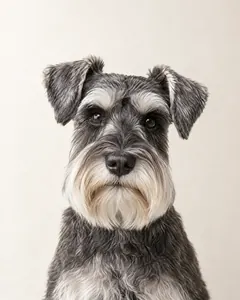

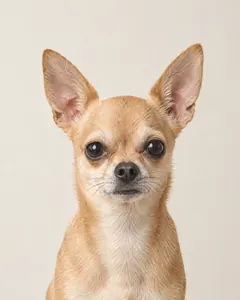
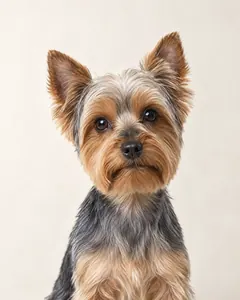

For your Pomeranian
Every dog is an individual. What we describe here is what is typical, from owners' experience and published breed descriptions, not a promise about any one dog. Meet the dog in front of you before you decide.
Breed facts: Wikidata, read 2026-10-03, which anyone may reuse, and the breed's Wikipedia article, read 2026-10-08. The ratings in "Living with" are ours, from those facts.
Unlock unlimited calm listening, free
Quiet music for the hours your dog is home alone, and the occasional note about new designs.
Unlimited listening is unlocked on this device. The Soundtrack player is ready when you are. Open the Soundtrack player