Dog breed
Yorkshire Terrier
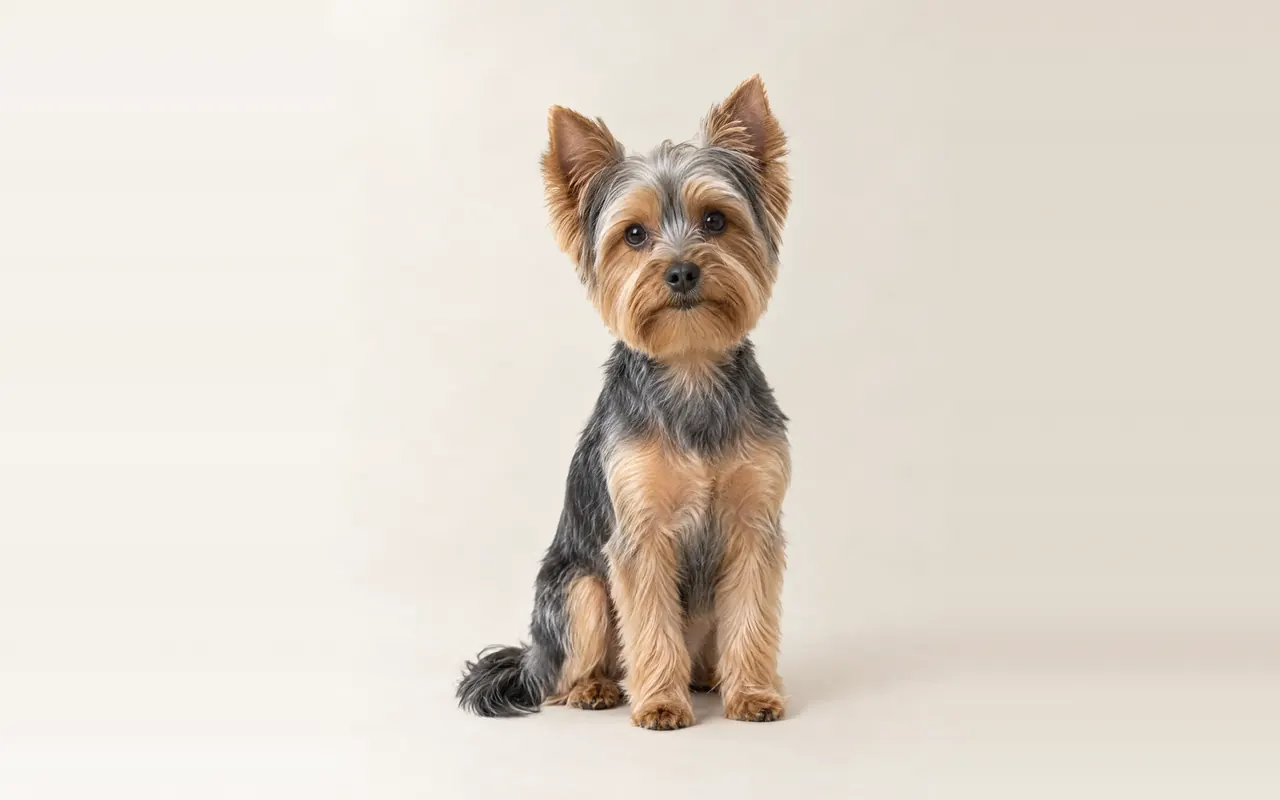
From England, up to 7 pounds.
What a Yorkshire Terrier is really like
Under the bow and the silky coat, a Yorkshire Terrier is still a terrier. The breed was made in the mill towns of northern England to catch rats, and that job never fully left: a Yorkie will stalk a moth across the ceiling, dig a hole in the couch cushions and stare down a squirrel through the glass as if they have unfinished business.
Indoors they are small, bossy and very much in charge of their people. A Yorkie tends to claim a lap, a corner of the pillow and a spot at your elbow, and expects all three held in reserve. They catch on fast, too: the sound of the treat drawer on day one, the jingle of the car keys by day two.
The coat is the other big decision. It is fine and silky, closer to human hair than to fur, and it never stops growing. Owners either brush daily and keep it long, with a topknot tied up out of the eyes, or book a groomer every month or so for a short puppy cut that is far easier to live with.
The facts
- Where it comes from
- England
- Weight
- up to 7 pounds
- Litter size
- around 4 puppies
- Named after
- Yorkshire
- Also called
- Yorkie
- American Kennel Club
- A recognized breed
Living with a Yorkshire Terrier
Our ratings, worked out from what its sources say about its weight, its coat and what it was bred for. Every animal is an individual, so meet them before you decide.
- Bred for
- Companionship
- Size
- Small
- Coat
- Long hair
- Grooming
- Regular brushing, and trims for some coats
- Shedding
- Less than mostNo breed is allergy-free.
- Exercise
- Moderate: a good walk every day, and play
Breeds compared: Chihuahua vs Yorkshire Terrier · Beagle vs Yorkshire Terrier · Dachshund vs Yorkshire Terrier · French Bulldog vs Yorkshire Terrier
Yorkshire Terrier owners will tell you
- The bow lasts about ten minutes, and then it lives somewhere under the couch.
- A squirrel on the fence is a matter of personal honor.
- Puddles are fine, as long as someone carries them across.
- They will find the exact middle of your pillow and defend it all night.
- Your groomer sees your dog more often than your friends see you.
A day with a Yorkshire Terrier
An example, not a schedule: every home runs its own way.
- MorningA quick trot around the block, stopping to investigate every rustle in the hedge and to inform a passing dog who runs this street.
- After breakfastA few minutes with a comb and a fresh topknot, or a quick tidy of the puppy cut and a wipe of the whiskers.
- MiddayLookout duty from the back of the couch, tracking birds, squirrels and anything else that moves the leaves.
- AfternoonFetch with a squeaky toy down the hallway, followed by a serious mission to remove the squeaker.
- EveningCurled on the warmest lap available, sometimes tucked into a fold of blanket so only the ears show.
- NightOn the bed, on the pillow, nose pressed to your cheek.
Before you choose
- The coat takes real time. A long coat wants brushing every day; a short puppy cut trims that down a lot, but most owners still see a groomer every four to six weeks.
- There is a ratter inside the lapdog. Yorkies chase, dig and bark at small creatures, so a stroll past a park full of squirrels can get loud.
- They are quick to announce things, from a knock at the door to a car door closing two houses down, in a high bark that carries.
- The fine coat leaves very little hair on the furniture. The work goes into brushing and trims instead of vacuuming.
- A dog this small rides along easily, in a carrier bag on errands or a booster seat in the car, which is why so many go everywhere with their people.
- Puppies are born black and tan, and the black slowly clears to steel blue as they grow, so the young Yorkie you meet will look different a couple of years later.
- Ask the breeder about health screening for the puppy's parents, and ask a vet what to watch for in a Yorkshire Terrier.
History in brief
Yorkies come from Yorkshire and Lancashire in the 1800s, where mill workers and miners bred small, quick terriers to hunt the rats in the mills and pits.
A show dog named Huddersfield Ben, born in the 1860s, fixed the breed's look so firmly that he is often called the father of the modern Yorkie.
In World War II a Yorkie named Smoky traveled with American airmen in the Pacific and once pulled a telegraph wire through a narrow pipe under an airstrip. Her fame helped spark new interest in the breed after the war.
Colors and looks
A tiny, square terrier with a flat, silky coat parted down the middle of the back, rich tan on the head and legs and steel blue on the body. Small ears stand upright in a V, and the long hair on the face is usually tied up or trimmed so the dark eyes show.
Colors you will see
- Blue and tan
- Black and tan
- Blue and gold
- Black and gold
Most common names for a Yorkshire Terrier
In the pet license records we use, 6,480 dogs are listed as a Yorkshire Terrier or a Yorkshire Terrier mix. These are their most common names.
Names that lean Yorkshire Terrier
Each of these is more common among Yorkshire Terrier dogs than among all the dogs whose breed we can read in the records.
From pet license records published by New York City, Seattle, Cambridge in Massachusetts, and Allegheny County in Pennsylvania. How the names data works
Eight ways we draw a Yorkshire Terrier
Each one prints on a poster, a bandana, a bed, a mat and more. Pick a style to see it on a poster.
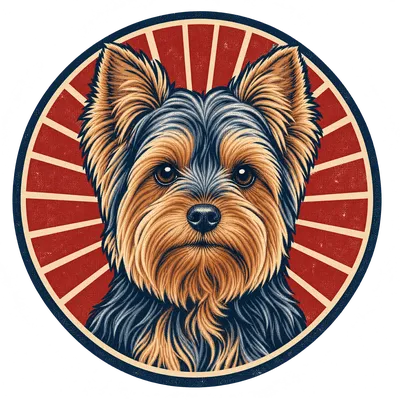 Retro badge
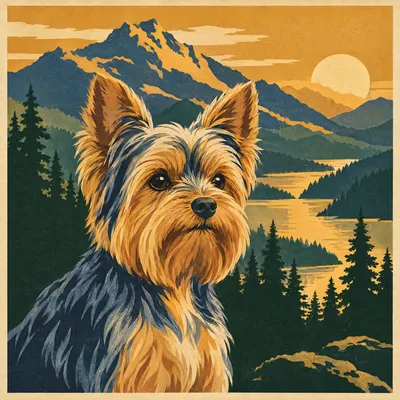 National park poster
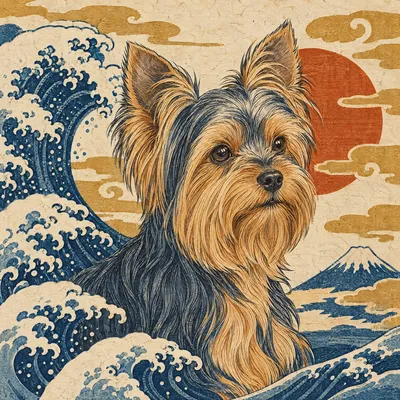 Woodblock print
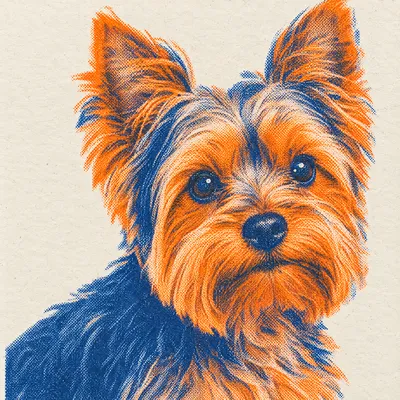 Risograph print
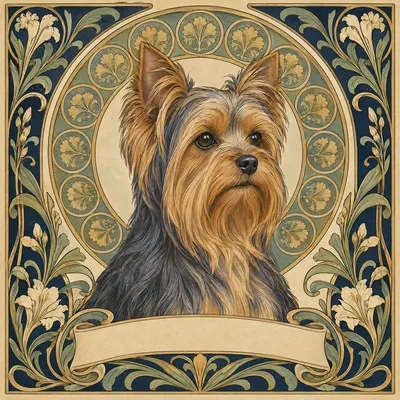 Art nouveau
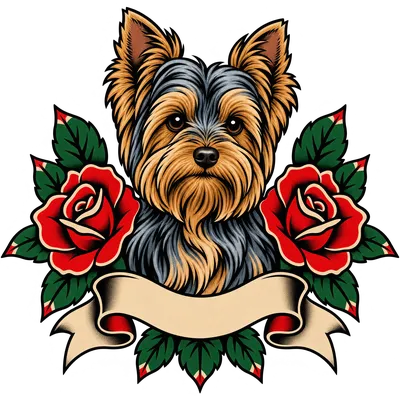 Tattoo flash
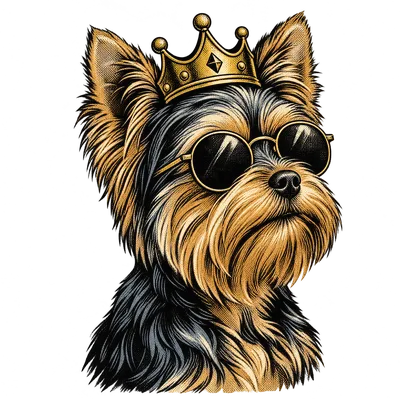 Crown and shades
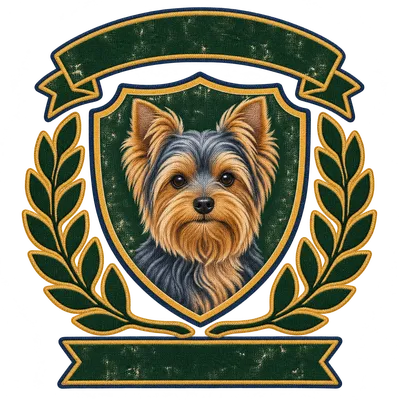 Varsity crest
Not your dog's color?
A Yorkshire Terrier's life stages
A Yorkshire Terrier is a small dog by its recorded weight, and the age the senior years may start depends on size.
- PuppyBirth to 6 months
- Puppy or young adult6 to 9 months
- Young adult9 months to 3 years
- Young or mature adult3 to 4 years
- Mature adult4 to 12 years
- Mature adult or seniorFrom 12 years
Stages from the American Animal Hospital Association life stage guidelines. How the life-stage calculator works
A Yorkshire Terrier's age in human years
For a small dog, on the same method as our dog age calculator.
| Age | In human years |
|---|---|
| 1 year | 15 |
| 2 years | 24 |
| 3 years | 28 |
| 5 years | 36 |
| 7 years | 44 |
| 10 years | 56 |
| 13 years | 68 |
| 16 years | 80 |
Questions people ask about the Yorkshire Terrier
How big do Yorkies get?
The breed standard calls for no more than 7 lb, and a typical adult sits right around that. Some pet lines run a little bigger, so it helps to meet or ask about the parents.
Do Yorkies shed?
Very little. The coat is closer to hair than fur, with no thick undercoat, so it rarely ends up on the couch. It does tangle easily and needs regular brushing or a short trim.
Why do Yorkie puppies change color?
They are born black and tan. As the adult coat grows in, the black on the body clears to steel blue and the tan deepens, a change that can take two years or more to finish.
What is a puppy cut on a Yorkie?
A short, even trim all over the body and face. It skips the daily brushing a floor-length coat needs, and most pet Yorkies wear one, with a groomer visit every month or so.
Are Yorkies yappy?
They are watchful and quick to bark at a knock, a noise in the hall or a squirrel outside. The bark is high and persistent rather than deep, and it carries.
Related breeds
The same size, or from the same country.




For your Yorkshire Terrier
Every dog is an individual. What we describe here is what is typical, from owners' experience and published breed descriptions, not a promise about any one dog. Meet the dog in front of you before you decide.
Breed facts: Wikidata, read 2026-10-03, which anyone may reuse, and the breed's Wikipedia article, read 2026-10-08. The ratings in "Living with" are ours, from those facts.
Unlock unlimited calm listening, free
Quiet music for the hours your dog is home alone, and the occasional note about new designs.
Unlimited listening is unlocked on this device. The Soundtrack player is ready when you are. Open the Soundtrack player