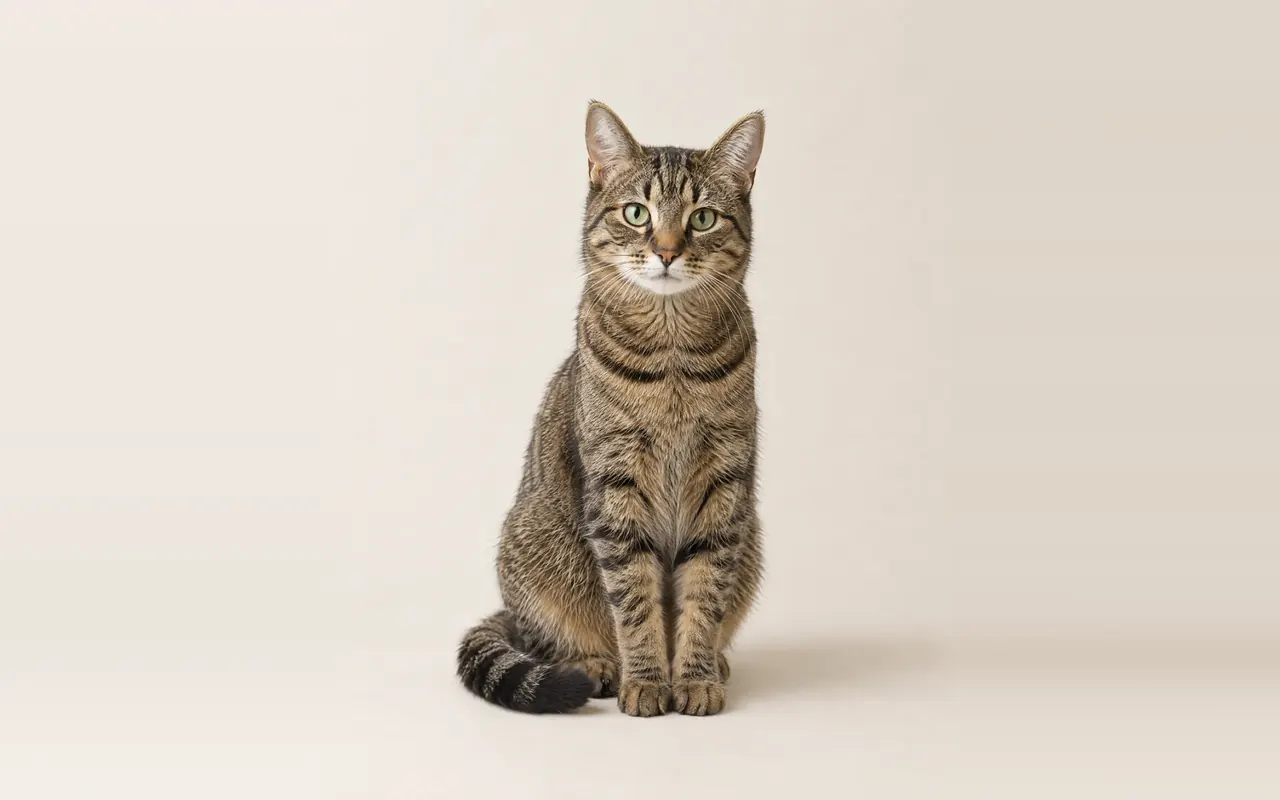
Domestic cat
Domestic Shorthair
A domestic shorthair is not a breed: it is a cat of mixed or unknown ancestry, described by its coat, so looks vary from cat to cat.
What a domestic shorthair is really like
A domestic shorthair is not a breed. It is the everyday cat: short coated, of mixed ancestry and by far the most common cat in American homes. That means there is no standard to describe. Tabbies, tuxedos, solid blacks, orange cats, calicos and torties all wear the label, and each comes with its own build and personality.
The upside is choice. A shelter full of domestic shorthairs is a room of very different cats: the lap sitter, the shelf climber, the chatterbox, the one who watches you from under the bed for a week and then never leaves your side. With an adult cat, staff and foster families can often tell you which one you are meeting.
Living with the coat is simple. Short fur needs little more than a weekly brush or a rubber mitt run down the back, and it sheds a moderate amount all year. The real planning is about the cat inside it: a scratching post, a window to watch, a patch of sun and a few minutes of play every day.
The facts
- Also called
- housecat, alley cat and house cat
Living with a Domestic Shorthair
Our ratings, worked out from what its sources say about its weight, its coat and how active it is. Every animal is an individual, so meet them before you decide.
- Coat
- Short
- Grooming
- A quick brush now and then
- Shedding
- Some
Domestic shorthair owners will tell you
- If it is orange, the famous shared brain cell is usually on loan to some other cat.
- Torties come with attitude included, at no extra charge.
- The tuxedo is always dressed for dinner, and it never misses one.
- You went to the shelter for a kitten and came home with the adult who chose you.
- A free cardboard box outranks every toy you have ever bought.
A day with a domestic shorthair
An example, not a schedule: every home runs its own way.
- DawnA soft head-butt to the chin, or a paw on the eyelid, to point out that the sun is technically up.
- BreakfastFood first, then a thorough wash in the middle of the kitchen floor, right where everyone needs to walk.
- MorningWindow duty: chattering at birds and squirrels, tail twitching, nose pressed to the glass.
- AfternoonA deep nap in whatever cardboard box arrived most recently, right beside the expensive cat bed it has never once used.
- EveningZoomies down the hallway at full speed for no reason anyone can see, then a sudden stop to wash a paw.
- NightA warm shape tucked behind your knees, purring until you fall asleep.
Before you choose
- Meet the cat, not the label. Domestic shorthairs vary so much that the actual cat in front of you is the only guide, so ask about its habits, its energy and how it feels about being picked up.
- Shelters and rescues always have them: kittens through spring and summer, adults all year. With an adult, the personality is already on show.
- Plan for scratching. A sturdy post or two, placed near where the cat sleeps and beside the couch, saves a lot of upholstery.
- The coat is low effort. A weekly brush keeps shedding down, and most need nothing more than that.
- Adult size is a guess with a kitten, since nobody knows the parents. If size matters to you, an adult cat takes the guesswork out.
- Ask the shelter, rescue or breeder what they know about the cat's health, and ask a vet what to watch for.
History in brief
Cats crossed the Atlantic with European settlers and sailors, valued for keeping mice out of barns, ships and grain stores. Today's domestic shorthairs descend from them, mixed and remixed over the centuries.
Pedigree breeds are a recent invention, most of them from the last century and a half. The ordinary house cat came long before them, and it still makes up the large majority of cats in American homes.
Shelters and rescue groups use domestic shorthair as a description rather than a breed name, for any short-coated cat whose ancestry is mixed or unknown.
Colors and looks
Any color, any pattern, any build. Short coats run from sleek to plush, bodies from slim to sturdy and faces from narrow to round. Tabby patterns are the most common, and some solid black cats show faint tabby stripes in bright sun.
Colors you will see
- Brown tabby
- Orange tabby
- Gray tabby
- Black
- Gray
- White
- Tuxedo
- Calico
- Tortoiseshell
- Torbie
- Cream
Most common names for a Domestic Shorthair
In the pet license records we use, 7,097 cats are listed as a Domestic Shorthair or a Domestic Shorthair mix. These are their most common names.
From pet license records published by New York City, Seattle, Cambridge in Massachusetts, and Allegheny County in Pennsylvania. How the names data works
Eight ways we draw a Domestic Shorthair
Each one prints on a poster, a bandana, a bed, a mat and more. Pick a style to see it on a poster.
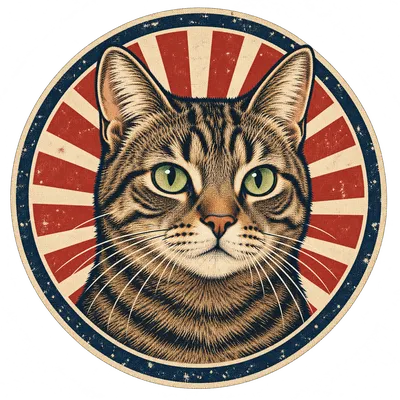 Retro badge
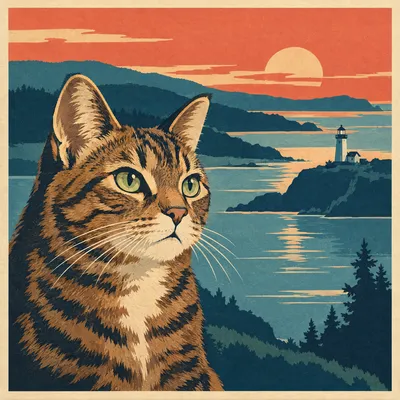 National park poster
 Woodblock print
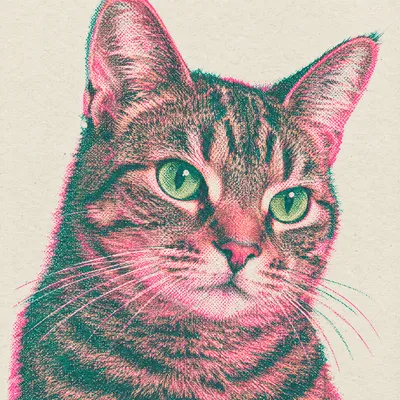 Risograph print
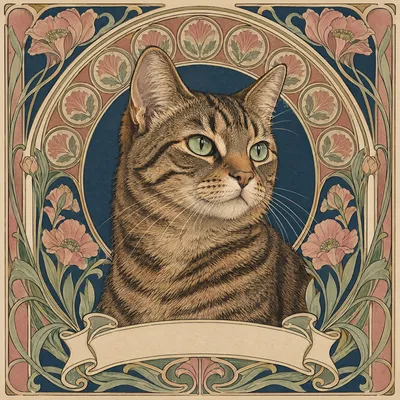 Art nouveau
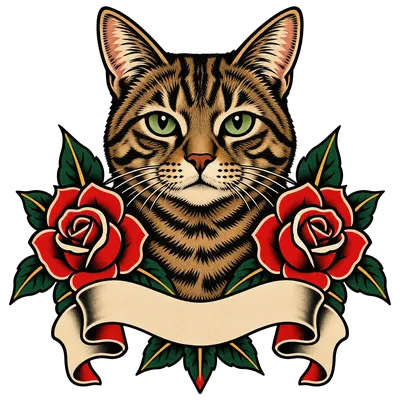 Tattoo flash
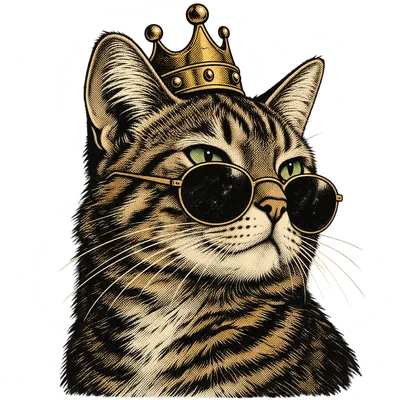 Crown and shades
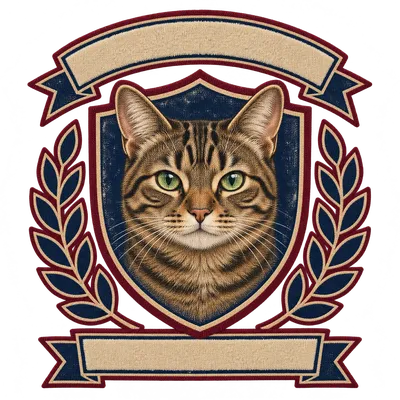 Varsity crest
Not your cat's color?
A Domestic Shorthair's life stages
Every cat moves through the same stages, whatever its breed.
- KittenBirth to 1 year
- Young adult1 to 6 years
- Mature adult7 to 10 years
- SeniorOver 10 years
Stages from the American Animal Hospital Association life stage guidelines. How the life-stage calculator works
A Domestic Shorthair's age in human years
On the same method as our cat age calculator.
| Age | In human years |
|---|---|
| 1 year | 15 |
| 2 years | 24 |
| 3 years | 28 |
| 5 years | 36 |
| 7 years | 44 |
| 10 years | 56 |
| 13 years | 68 |
| 16 years | 80 |
Questions people ask about the domestic shorthair
Is a domestic shorthair a breed?
No. It is a description: a cat with a short coat and mixed or unknown ancestry. It covers the everyday house cat, which is most of the cats in the country.
What will a domestic shorthair kitten be like as an adult?
Hard to say for sure. Coat and color are already visible, but size and personality depend on parents nobody knows. If predictability matters, consider an adult whose habits you can see.
Why are calico cats almost always female?
A calico or tortoiseshell coat needs two X chromosomes to show both orange and black, so nearly all of them are female. A male calico is a rare curiosity.
Do domestic shorthairs shed?
Yes, a moderate amount all year, with a bump in spring. A weekly brush and a lint roller near the door cover most homes.
Where can you find a domestic shorthair?
Almost anywhere: shelters, rescues, foster homes and neighbors with an unplanned litter. Shelters have the widest choice, and most will help match you with a cat that fits your home.
More cat breeds
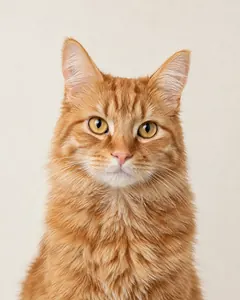

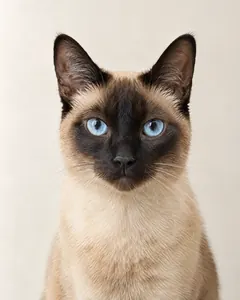
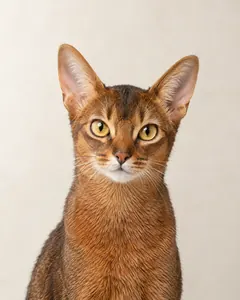
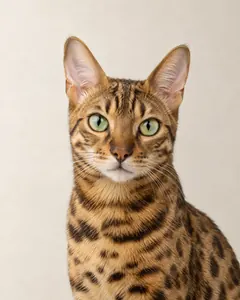
For your Domestic Shorthair
Every cat is an individual. What we describe here is what is typical, from owners' experience and published breed descriptions, not a promise about any one cat. Meet the cat in front of you before you decide.
Breed facts: Wikidata, read 2026-10-03, which anyone may reuse, and the breed's Wikipedia article, read 2026-10-08. The ratings in "Living with" are ours, from those facts.
Unlock unlimited calm listening, free
Quiet music for the hours your cat is home alone, and the occasional note about new designs.
Unlimited listening is unlocked on this device. The Soundtrack player is ready when you are. Open the Soundtrack player