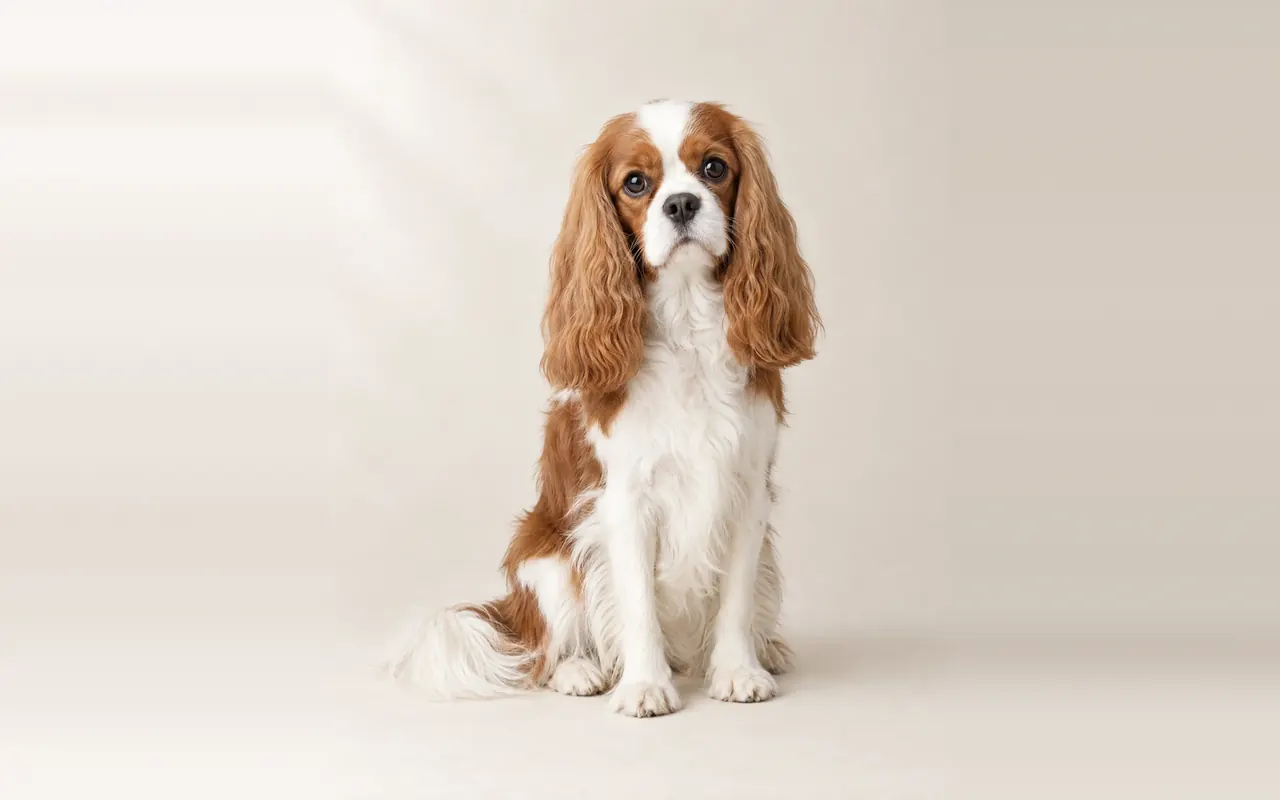
Dog breed
Cavalier King Charles Spaniel
From the United Kingdom, 12 to 13 inches at the shoulder and 12 to 18 pounds.
What a Cavalier King Charles Spaniel is really like
The Cavalier King Charles Spaniel was bred to sit in laps, and it treats that as a sacred duty. These soft-eyed little spaniels attach themselves to whoever is nearest and warmest, trail their people from room to room and greet guests, delivery drivers and total strangers with the same full-body wag.
There is a sporting spaniel in there too. On a walk, a Cavalier will flush a pigeon, chase a butterfly across the lawn and follow a squirrel's trail with surprising focus. They are up for a long country ramble or a slow stroll around town, and just as content to spend the rest of the afternoon on the sofa.
The look takes some care. The silky coat has long feathering on the ears, chest, legs and feet, and those long ears have a way of dipping into the water bowl and the dinner dish. Most owners brush a few times a week and keep a towel near the bowl for the dripping ears that follow every drink.
The facts
- Where it comes from
- United Kingdom
- Height at the shoulder
- 12 to 13 inches
- Weight
- 12 to 18 pounds
- Litter size
- around 4 puppies
- Also called
- Cavi and Cavalier
- American Kennel Club
- A recognized breed
- Not to be confused with
- King Charles Spaniel
Living with a Cavalier King Charles Spaniel
Our ratings, worked out from what its sources say about its weight, its coat and what it was bred for. Every animal is an individual, so meet them before you decide.
- Bred for
- Companionship
- Size
- Small
- Coat
- Silky and feathered
- Grooming
- Brushing every week
- Shedding
- Some
- Exercise
- Moderate: a good walk every day, and play
Cavalier King Charles Spaniel owners will tell you
- Their ears go into the water bowl and come out dripping onto your lap.
- Delivery drivers get a bigger welcome than you do.
- They look at you with those eyes, and somehow you are sharing your toast.
- A butterfly in the yard can derail an entire walk.
- Standing up from the couch means a spaniel sliding off your lap with a sigh.
A day with a Cavalier King Charles Spaniel
An example, not a schedule: every home runs its own way.
- MorningA brisk walk with the nose down and the tail going, pausing to stare hard at anything with feathers.
- BreakfastEaten with enthusiasm, ears tucked back or dangling in the bowl, depending on luck.
- MiddayCurled on the warmest lap in the house, or the warmest cushion if every lap is taken.
- AfternoonA romp in the yard after a ball, a bird or a falling leaf, whichever moves first.
- EveningA brush through the ear feathering, which the Cavalier tolerates in exchange for undivided attention.
- NightPressed against your side, one soft ear flopped over your arm.
Before you choose
- A Cavalier was made for company. It fits a household with people around for most of the day and plenty of laps in rotation.
- The spaniel instincts are real: birds, squirrels and rabbits can pull a Cavalier off course, so most owners keep a leash on outside a fenced area.
- The feathered coat sheds moderately all year. Brushing a few times a week keeps the ears, legs and feet free of tangles, and many owners trim the hair between the paw pads.
- Long ears collect food, water, mud and burrs. Owners keep a towel handy, and some slip on a soft snood at mealtimes to keep the ears out of the bowl.
- Most welcome everyone, so a Cavalier makes a poor guard dog and an excellent welcoming committee.
- At 12 to 18 lb, they are big enough for a real walk and small enough to fit on any lap or in the back seat.
- Ask the breeder about health screening for the puppy's parents, and ask a vet what to watch for in a Cavalier King Charles Spaniel.
History in brief
Toy spaniels were court favorites in England for centuries. King Charles II was so attached to his that the diarist Samuel Pepys grumbled that the king spent a meeting playing with his dog instead of minding the business of state.
The Duke of Marlborough kept red and white spaniels at Blenheim Palace, which gave the chestnut and white color its name. Legend says his duchess pressed her thumb on the head of an expectant spaniel while waiting for news of the Battle of Blenheim, leaving the lucky spot some Blenheims carry today.
By the 1900s, toy spaniels had been bred toward a flatter face. In the 1920s an American, Roswell Eldridge, offered prize money at a London show for spaniels with the longer noses seen in old paintings, and the Cavalier grew from that challenge.
The American Kennel Club recognized the breed in 1995. President Ronald Reagan kept a Blenheim Cavalier named Rex at the White House.
Colors and looks
A small, elegant spaniel with a slightly rounded head, large dark eyes, a short tapering muzzle and long, heavily feathered ears. The silky coat lies flat, with feathering on the chest, legs and feet, and the tail is almost always moving.
Colors you will see
- Blenheim
- Tricolor
- Ruby
- Black and tan
Most common names for a Cavalier King Charles Spaniel
In the pet license records we use, 2,447 dogs are listed as a Cavalier King Charles Spaniel or a Cavalier King Charles Spaniel mix. These are their most common names.
Names that lean Cavalier King Charles Spaniel
Each of these is more common among Cavalier King Charles Spaniel dogs than among all the dogs whose breed we can read in the records.
From pet license records published by New York City, Seattle, Cambridge in Massachusetts, and Allegheny County in Pennsylvania. How the names data works
Eight ways we draw a Cavalier King Charles Spaniel
Each one prints on a poster, a bandana, a bed, a mat and more. Pick a style to see it on a poster.
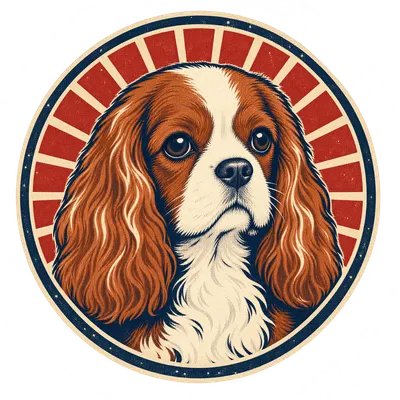 Retro badge
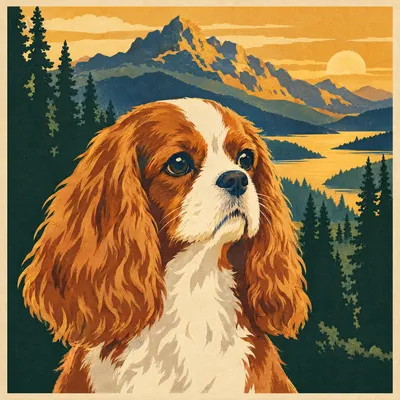 National park poster
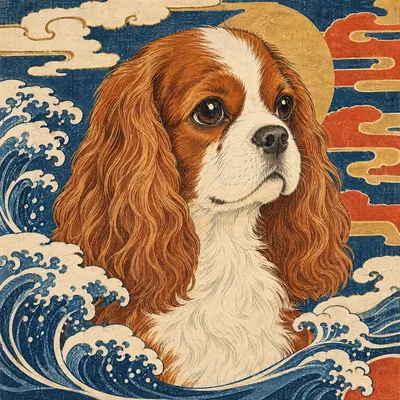 Woodblock print
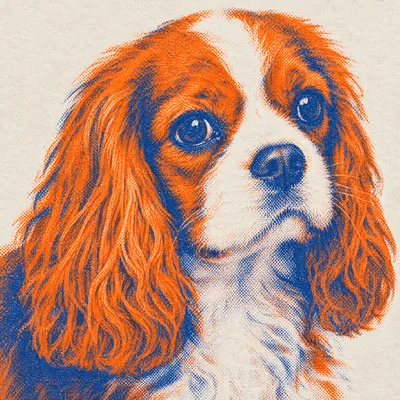 Risograph print
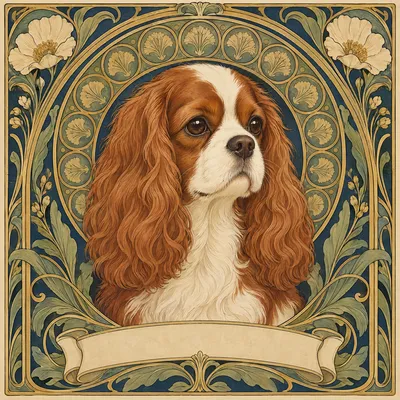 Art nouveau
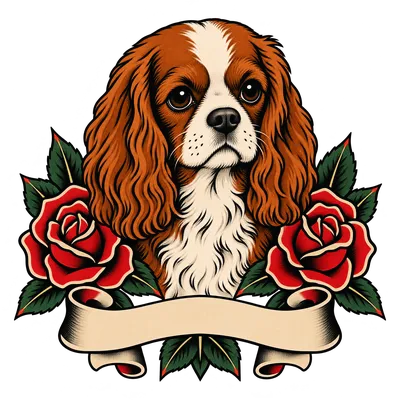 Tattoo flash
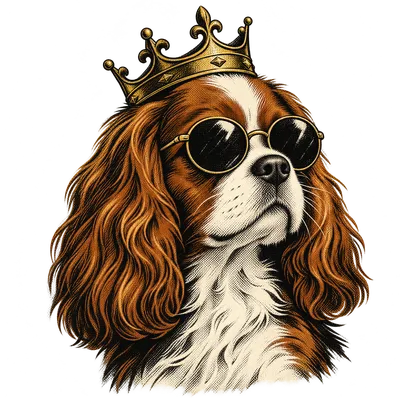 Crown and shades
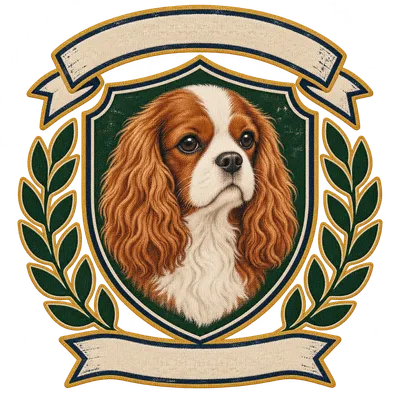 Varsity crest
Not your dog's color?
A Cavalier King Charles Spaniel's life stages
A Cavalier King Charles Spaniel is a small dog by its recorded weight, and the age the senior years may start depends on size.
- PuppyBirth to 6 months
- Puppy or young adult6 to 9 months
- Young adult9 months to 3 years
- Young or mature adult3 to 4 years
- Mature adult4 to 12 years
- Mature adult or seniorFrom 12 years
Stages from the American Animal Hospital Association life stage guidelines. How the life-stage calculator works
A Cavalier King Charles Spaniel's age in human years
For a small dog, on the same method as our dog age calculator.
| Age | In human years |
|---|---|
| 1 year | 15 |
| 2 years | 24 |
| 3 years | 28 |
| 5 years | 36 |
| 7 years | 44 |
| 10 years | 56 |
| 13 years | 68 |
| 16 years | 80 |
Questions people ask about the Cavalier King Charles Spaniel
How big do Cavaliers get?
Most weigh 12 to 18 lb and stand 12 to 13 inches at the shoulder. That puts them at the larger end of the toy dogs: sturdy enough for long walks and small enough for a lap.
What does Blenheim mean on a Cavalier?
It is the name for the chestnut and white coloring, after Blenheim Palace, where the Dukes of Marlborough kept spaniels of that color. Some Blenheims carry a chestnut spot on top of the head, known as the Blenheim spot.
Do Cavaliers shed?
Yes, moderately and all year. The silky coat is easy to brush, and a session a few times a week keeps the feathering tangle-free and the shedding under control.
Is a Cavalier the same as a King Charles Spaniel?
No. They share ancestors, but the King Charles Spaniel, called the English Toy Spaniel in the US, is smaller with a flatter face and a domed head. The Cavalier was bred back toward the longer nose of the old paintings.
Do Cavaliers chase things?
Many do. Underneath the lapdog is a sporting spaniel, and birds, squirrels and butterflies can send one off at speed, so most owners keep the leash on outside a fenced space.
Related breeds
The same size, or from the same country.





For your Cavalier King Charles Spaniel
Every dog is an individual. What we describe here is what is typical, from owners' experience and published breed descriptions, not a promise about any one dog. Meet the dog in front of you before you decide.
Breed facts: Wikidata, read 2026-10-03, which anyone may reuse, and the breed's Wikipedia article, read 2026-10-08. The ratings in "Living with" are ours, from those facts.
Unlock unlimited calm listening, free
Quiet music for the hours your dog is home alone, and the occasional note about new designs.
Unlimited listening is unlocked on this device. The Soundtrack player is ready when you are. Open the Soundtrack player