Dog breed
Jack Russell Terrier
From the United Kingdom and Australia, 10 to 12 inches at the shoulder and 11 to 13 pounds.
What a Jack Russell Terrier is really like
A Jack Russell Terrier is a small dog with the engine of a much bigger one. It wakes up at full speed, stays there most of the day and treats every walk, game and squirrel sighting as the most important thing that has ever happened. Owners say the challenge is not keeping a Jack Russell busy; it is keeping up.
These terriers were bred to chase foxes into their dens and bolt them out for hunters on horseback, and the job still shows. They dig, often with real ambition, through flower beds, lawns and the occasional sofa cushion. They spring, clearing a surprisingly tall fence or popping up onto the kitchen table from a standing start. And they chase anything small that moves, with a focus that makes your voice fade into the background.
In return you get a bold, funny, endlessly game companion that will hike all day, play ball until your arm gives out and then curl up, very briefly, on your lap. Jack Russells suit active people with a sense of humor and a secure yard, and they make life more entertaining for everyone around them.
The facts
- Where it comes from
- United Kingdom and Australia
- Height at the shoulder
- 10 to 12 inches
- Weight
- 11 to 13 pounds
- Litter size
- around 4 puppies
- Named after
- John Russell
Living with a Jack Russell Terrier
Our ratings, worked out from what its sources say about its weight, its coat and what it was bred for. Every animal is an individual, so meet them before you decide.
- Bred for
- Working foxes out of their dens
- Size
- Small
- Coat
- By variety: short and smooth or wiry
- Grooming
- Light to regular
- Shedding
- Lower to moderateNo breed is allergy-free.
- Exercise
- Lots: long walks, runs or a job to do
- Voice
- Its descriptions mention barking
Jack Russell Terrier owners will tell you
- A tired Jack Russell is a myth, like a quiet one.
- The backyard is not a lawn anymore; it is an archaeological dig.
- That fence you thought was tall enough turned out to be a suggestion.
- Twelve pounds of dog, ninety pounds of opinion.
- Throw the ball once and you have signed up for the next three hours.
A day with a Jack Russell Terrier
An example, not a schedule: every home runs its own way.
- DawnUp before the alarm, already waiting at the door, quivering slightly with the urge to get going.
- MorningA fast walk or a run, every hedge checked for anything small and furry, with at least one sudden lunge at a squirrel.
- BreakfastGone in seconds, followed by a lap of the kitchen to see whether anything else needs doing.
- MiddayDigging, given half a chance, so many owners set aside one corner of the yard where the terrier is allowed to excavate.
- AfternoonA ball game, a tug game or a flirt pole game, then another, because one round is never enough.
- EveningA short, surprising nap on a lap, then a sudden recharge and a lap of the living room at top speed.
Before you choose
- A Jack Russell needs a lot of exercise and play every single day, rain or shine. A bored one invents its own entertainment, and the garden usually pays for it.
- Fences need to be tall and dug in at the bottom. Jack Russells jump, climb and tunnel, and they are very motivated escape artists.
- They chase small animals with real focus, so most owners walk them on a leash and think carefully about homes with hamsters, rabbits or birds.
- They bark, and the bark is sharp, carrying and much bigger than the dog.
- Coats come smooth, broken or rough. All of them shed; the smooth coat sheds the most, and the rougher coats may need stripping a few times a year.
- Some can be bossy with other dogs, especially ones they share a home with, so meet the dog and ask about its history with other pets.
- Ask the breeder about health screening for the puppy's parents, and ask a vet what to watch for in a Jack Russell Terrier.
History in brief
The breed takes its name from the Reverend John Russell, a fox-hunting parson in Devon, England, in the 1800s. As a student at Oxford in 1819 he bought a white and tan terrier named Trump from a milkman, and she became the start of his line.
Russell wanted a terrier long-legged enough to keep up with horses and hounds and small enough to follow a fox underground. Mostly white coats mattered, so hunters could tell the dog from the fox in the field.
Kennel clubs have since split the family. The leggier dogs are shown today as Parson Russell Terriers, while the Jack Russell Terrier Club of America, formed in 1976, kept the old name and its broad range of sizes.
Colors and looks
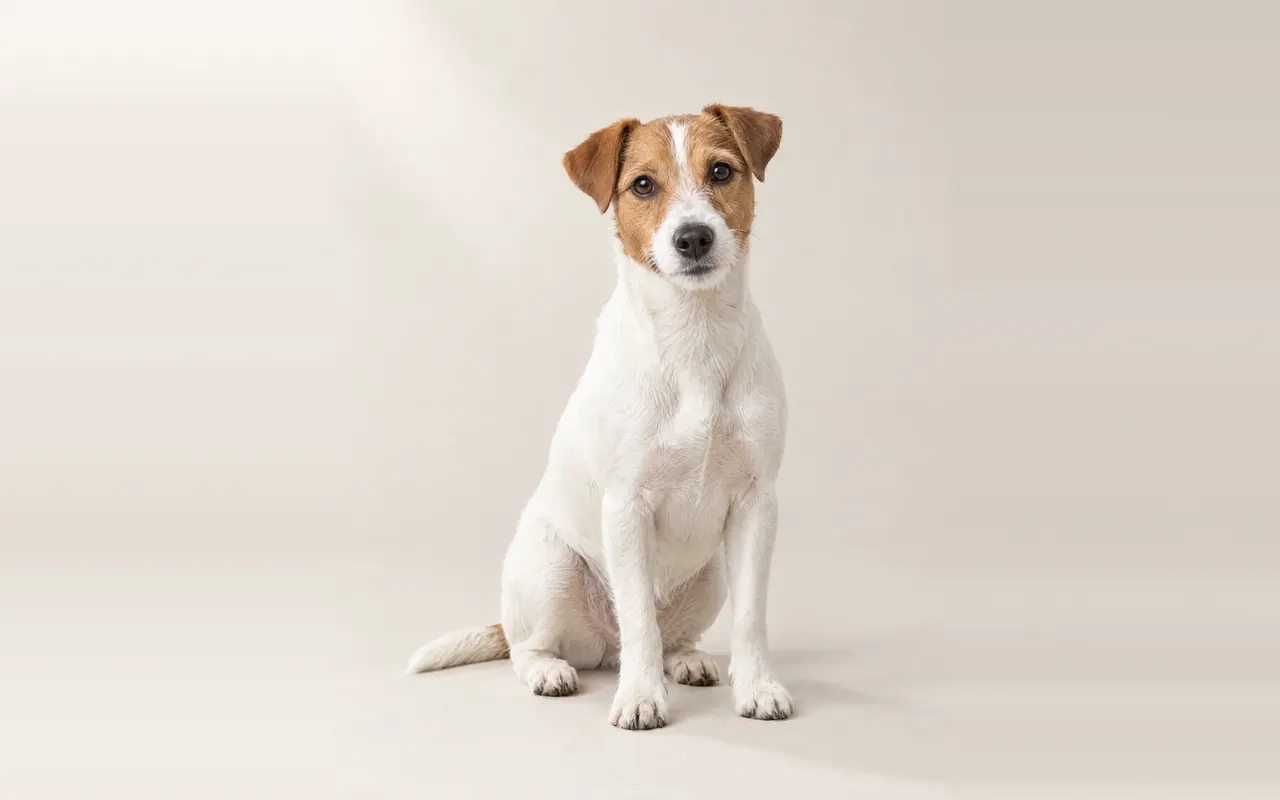
A compact, mostly white terrier with tan or black markings, usually on the head and near the tail, and dark, bright eyes. The coat comes smooth, rough or in between, called broken, and the ears fold forward in neat triangles.
Colors you will see
- White and tan
- White and black
- White, black and tan
Most common names for a Jack Russell Terrier
In the pet license records we use, 1,442 dogs are listed as a Jack Russell Terrier or a Jack Russell Terrier mix. These are their most common names.
Names that lean Jack Russell Terrier
Each of these is more common among Jack Russell Terrier dogs than among all the dogs whose breed we can read in the records.
From pet license records published by New York City, Seattle, Cambridge in Massachusetts, and Allegheny County in Pennsylvania. How the names data works
We haven't drawn a Jack Russell Terrier yetAsk for a Jack Russell Terrier and we'll email you when it's ready.
A Jack Russell Terrier's life stages
A Jack Russell Terrier is a small dog by its recorded weight, and the age the senior years may start depends on size.
- PuppyBirth to 6 months
- Puppy or young adult6 to 9 months
- Young adult9 months to 3 years
- Young or mature adult3 to 4 years
- Mature adult4 to 12 years
- Mature adult or seniorFrom 12 years
Stages from the American Animal Hospital Association life stage guidelines. How the life-stage calculator works
A Jack Russell Terrier's age in human years
For a small dog, on the same method as our dog age calculator.
| Age | In human years |
|---|---|
| 1 year | 15 |
| 2 years | 24 |
| 3 years | 28 |
| 5 years | 36 |
| 7 years | 44 |
| 10 years | 56 |
| 13 years | 68 |
| 16 years | 80 |
Questions people ask about the Jack Russell Terrier
How big do Jack Russell Terriers get?
Most stand about 10 to 15 inches at the shoulder and weigh roughly 11 to 15 lb. Leggier dogs tend to sit at the taller end of that range, and shorter-legged ones at the smaller end.
Do Jack Russells shed?
Yes. The smooth coat sheds steadily and the short white hairs work their way into fabric; broken and rough coats shed a little less but need occasional stripping.
How much exercise does a Jack Russell need?
More than its size suggests. Think in terms of a big daily walk plus two or three solid play sessions, with games that use the nose as well as the legs.
Why do Jack Russells dig so much?
Digging was part of the job. They were bred to go to ground after foxes, so tunneling comes naturally. Many owners give up one corner of the yard where digging is allowed.
Can a Jack Russell live in an apartment?
Some do, if they get plenty of exercise and the neighbors can live with the barking. Most do better with a yard, as long as the fence goes deep and high.
Related breeds
The same size, or from the same country.




For your Jack Russell Terrier
Every dog is an individual. What we describe here is what is typical, from owners' experience and published breed descriptions, not a promise about any one dog. Meet the dog in front of you before you decide.
Breed facts: Wikidata, read 2026-10-03, which anyone may reuse, and the breed's Wikipedia article, read 2026-10-08. The ratings in "Living with" are ours, from those facts.
Unlock unlimited calm listening, free
Quiet music for the hours your dog is home alone, and the occasional note about new designs.
Unlimited listening is unlocked on this device. The Soundtrack player is ready when you are. Open the Soundtrack player