Dog breed
Havanese
From Cuba, 8 to 11 inches at the shoulder and 7 to 14 pounds.
What a Havanese is really like
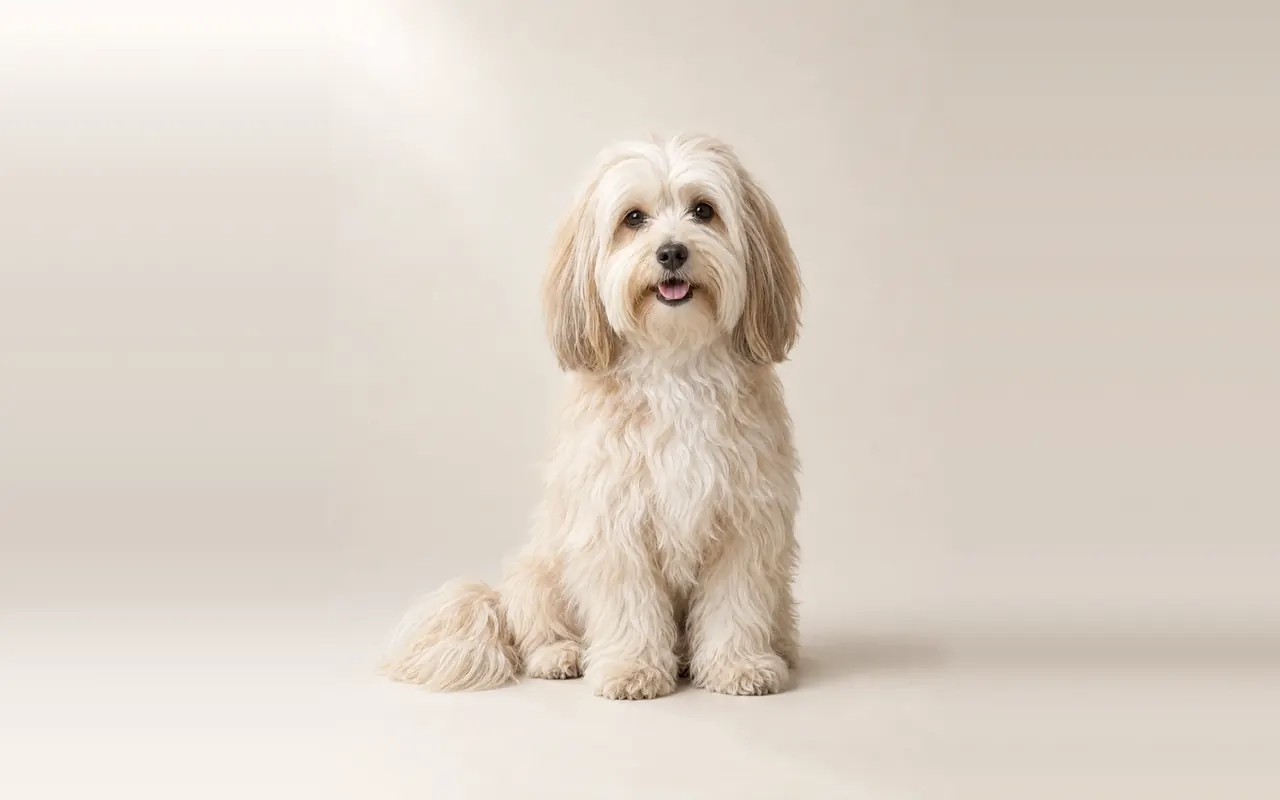
Cuba's national dog is a small, springy, silky-coated shadow that wants to be involved in whatever you happen to be doing. A Havanese follows you from the couch to the kitchen to the laundry room and back again, and treats each person who walks through the front door as a guest it has been expecting all day.
They move with a bouncy, almost spring-loaded trot, and many owners report a Havanese running laps of the house at full speed, ears flapping, for reasons nobody can identify. In quieter moments they like a high perch, the back of the couch or the top of a cushion, where they keep watch over the street and greet the mail with a few barks before settling down again.
The coat is soft, light and silky, anywhere from straight to wavy to curly, and it grows long. Some owners let it flow, many keep a short trim, and a few let it twist into cords. Nearly every color in the canine paint box is allowed, so no two Havanese look quite alike.
The facts
- Where it comes from
- Cuba
- Height at the shoulder
- 8 to 11 inches
- Weight
- 7 to 14 pounds
- Litter size
- around 4 puppies
- Named after
- Havana
- Also called
- Havanese Bichon
- American Kennel Club
- A recognized breed
Living with a Havanese
Our ratings, worked out from what its sources say about its weight, its coat and what it was bred for. Every animal is an individual, so meet them before you decide.
- Bred for
- Companionship
- Size
- Small
- Coat
- Long hair
- Grooming
- Regular brushing, and trims for some coats
- Shedding
- Less than mostNo breed is allergy-free.
- Exercise
- Lighter: short walks and play
Havanese owners will tell you
- They watch the street from the top of the couch like a tiny mayor.
- Laps of the house at top speed, ears flying, for no reason at all, twice a day.
- Every walk in the park comes home with a souvenir leaf or two in the coat.
- That springy little trot makes a trip to the mailbox look like a celebration.
- The puppy you picked as cream is now champagne, and next year it might be something else.
A day with a Havanese
An example, not a schedule: every home runs its own way.
- MorningA bouncy walk with that springy trot, pausing to say hello to anyone who looks even slightly interested.
- BreakfastBreakfast, then a quick brush through the coat to tease out any tangles that formed overnight.
- MiddayPerched on the back of the couch or the arm of a chair, keeping watch over the street as if it were a paid position.
- AfternoonA game of hide and seek with a toy, then a surprise sprint down the hallway and back for no clear reason.
- EveningSitting on your feet while you cook, then in your lap while you eat, then in your lap again for the rest of the night.
- BedtimeSnuggled against whoever is still awake, then relocated, without asking, to the warmest pillow.
Before you choose
- This is a dog that wants company. Havanese are happiest with their people close by and tend to suit homes where someone is around for much of the day.
- Brushing matters. The silky coat tangles near the skin, so most owners brush several times a week or keep a shorter trim that a groomer refreshes regularly.
- Long hair over the eyes is part of the traditional look; many owners clip it back or trim it so the dog can see where it is going.
- Expect a few barks at the window and the door. Havanese like to keep watch, though most are more welcoming than wary once the door opens.
- They are sturdy for a small dog and move with a lively gait, which makes them handy companions for errands and strolls around town.
- Colors shift. Many puppies lighten or darken over their first year or two, so the shade you choose at eight weeks is more of a first draft.
- Ask the breeder about health screening for the puppy's parents, and ask a vet what to watch for in a Havanese.
History in brief
The Havanese descends from small bichon-type dogs that came to Cuba with Spanish settlers, by way of the Canary Islands. Cuban households kept them as companions for generations, and the breed became the island's national dog.
After the Cuban Revolution, a few families left for the United States and brought their dogs with them. American breeders rebuilt the breed from that small group, adding a few dogs from abroad, and it has grown steadily more popular since.
Colors and looks
A small, sturdy dog a little longer than tall, with a topline that rises slightly toward the hips, dark almond eyes, drop ears and a plumed tail carried over the back. The soft coat may be straight, wavy or curly, and long hair often falls over the eyes.
Colors you will see
- White
- Cream
- Champagne
- Gold
- Red
- Sable
- Chocolate
- Black
- Silver
- Blue
- Black and tan
- Parti-color
- Brindle
Most common names for a Havanese
In the pet license records we use, 2,548 dogs are listed as a Havanese or a Havanese mix. These are their most common names.
Names that lean Havanese
Each of these is more common among Havanese dogs than among all the dogs whose breed we can read in the records.
From pet license records published by New York City, Seattle, Cambridge in Massachusetts, and Allegheny County in Pennsylvania. How the names data works
Eight ways we draw a Havanese
Each one prints on a poster, a bandana, a bed, a mat and more. Pick a style to see it on a poster.
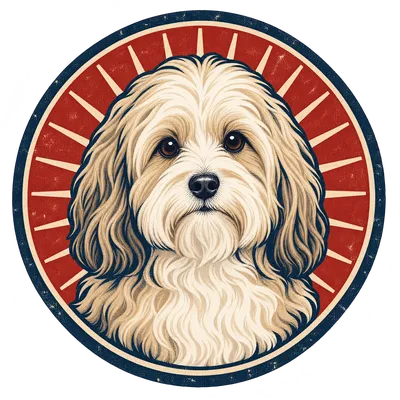 Retro badge
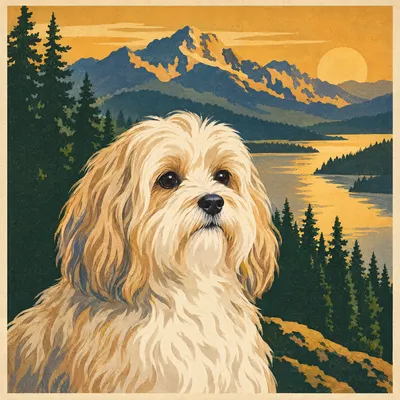 National park poster
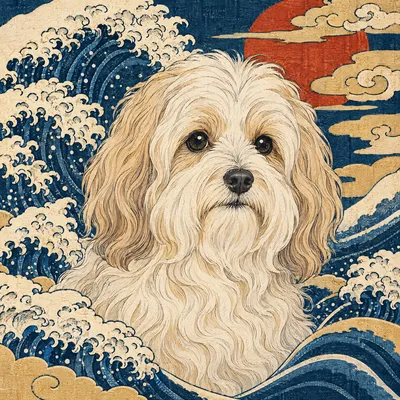 Woodblock print
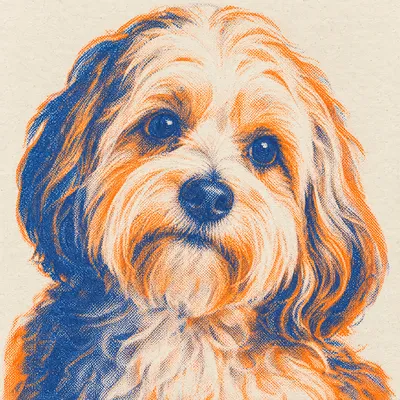 Risograph print
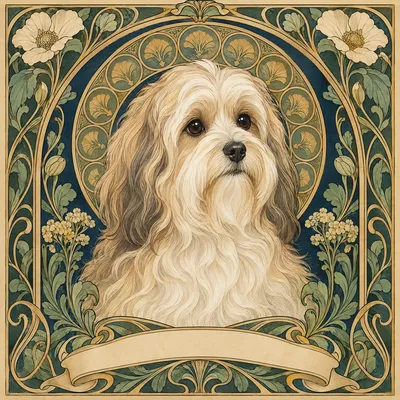 Art nouveau
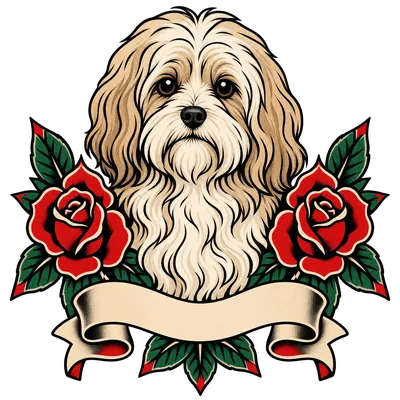 Tattoo flash
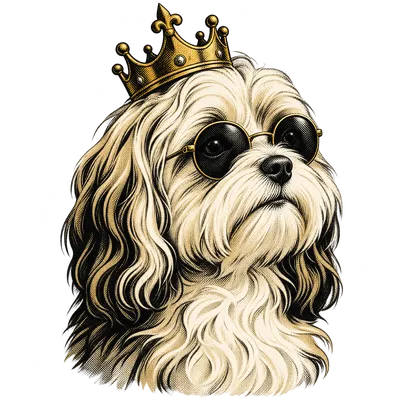 Crown and shades
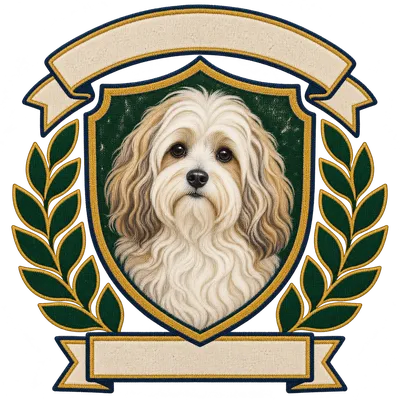 Varsity crest
Not your dog's color?
A Havanese's life stages
A Havanese is a small dog by its recorded weight, and the age the senior years may start depends on size.
- PuppyBirth to 6 months
- Puppy or young adult6 to 9 months
- Young adult9 months to 3 years
- Young or mature adult3 to 4 years
- Mature adult4 to 12 years
- Mature adult or seniorFrom 12 years
Stages from the American Animal Hospital Association life stage guidelines. How the life-stage calculator works
A Havanese's age in human years
For a small dog, on the same method as our dog age calculator.
| Age | In human years |
|---|---|
| 1 year | 15 |
| 2 years | 24 |
| 3 years | 28 |
| 5 years | 36 |
| 7 years | 44 |
| 10 years | 56 |
| 13 years | 68 |
| 16 years | 80 |
Questions people ask about the Havanese
How big do Havanese get?
Most weigh 7 to 13 lb and stand about 8 to 11 inches at the shoulder. They feel sturdier in your arms than their size suggests.
Do Havanese shed?
Lightly. The silky coat drops little hair on the floor, but it needs brushing several times a week to stay free of tangles, or a shorter trim.
What is a corded Havanese?
A Havanese whose coat has been allowed to twist into long, rope-like cords, a bit like a tiny mop. It is an accepted look but takes careful upkeep, and most pet owners choose a brushed coat or a short trim.
Are Havanese barkers?
Most will bark at the door or at something interesting outside, often from a lookout on the back of the couch. Many settle quickly once the announcement is made.
Do Havanese change color as they grow?
Often, yes. Many puppies lighten, darken or shift shade over the first year or two, so breeders and owners treat a young puppy's color as a first draft.
Related breeds
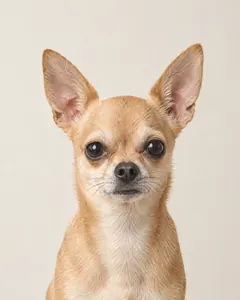
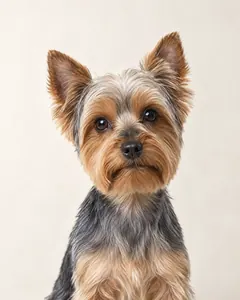
The same size, or from the same country.



For your Havanese
Every dog is an individual. What we describe here is what is typical, from owners' experience and published breed descriptions, not a promise about any one dog. Meet the dog in front of you before you decide.
Breed facts: Wikidata, read 2026-10-03, which anyone may reuse, and the breed's Wikipedia article, read 2026-10-08. The ratings in "Living with" are ours, from those facts.
Unlock unlimited calm listening, free
Quiet music for the hours your dog is home alone, and the occasional note about new designs.
Unlimited listening is unlocked on this device. The Soundtrack player is ready when you are. Open the Soundtrack player