Dog breed
Lhasa Apso
From Tibet, around 10 inches at the shoulder and 12 to 18 pounds.
What a Lhasa Apso is really like
For centuries the Lhasa Apso's job was to sit inside Tibetan monasteries and noble houses and sound the alarm about anyone who did not belong. Owners will tell you it still takes the post seriously. A Lhasa notices the stranger at the door, the unfamiliar car on the street and the new chair in the living room, and it reports on each one.
With its own people, a Lhasa plays, clowns and keeps close track of the household routine, but on its own terms. It likes to decide when a cuddle starts and when it ends, and many prefer to lie near you rather than on you, one eye on the room. Visitors usually get a long, measured look from across the floor before the Lhasa decides whether they have earned a hello.
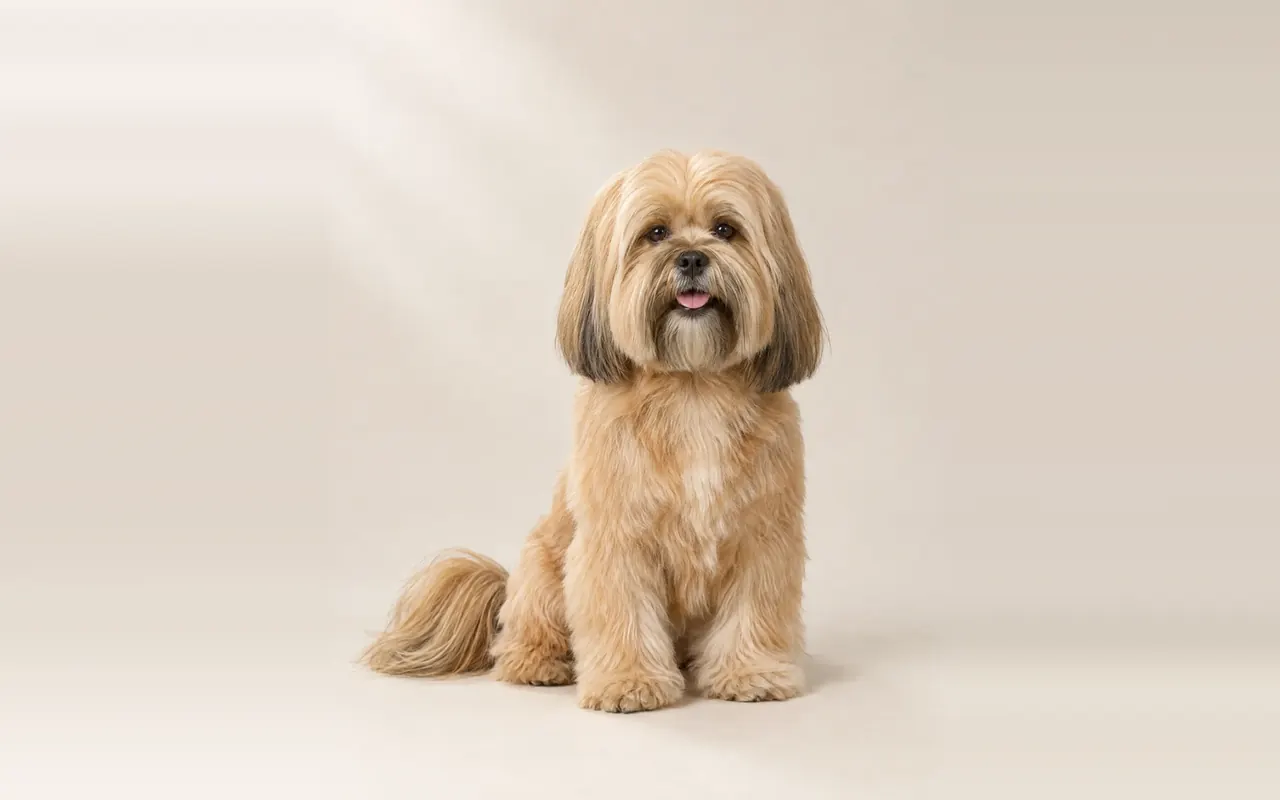
Under all that hair is a sturdy little dog. The coat is heavy, straight and long, harder to the touch than it looks, and at full length it parts down the back and brushes the floor. Most pet Lhasas wear a shorter trim, though the beard, mustache and long fringe over the eyes are hard to give up.
The facts
- Where it comes from
- Tibet
- Height at the shoulder
- around 10 inches
- Weight
- 12 to 18 pounds
- Litter size
- around 5 puppies
- American Kennel Club
- A recognized breed
Living with a Lhasa Apso
Our ratings, worked out from what its sources say about its weight, its coat and what it was bred for. Every animal is an individual, so meet them before you decide.
- Bred for
- Keeping watch indoors
- Size
- Small
- Coat
- Long hair
- Grooming
- Regular brushing, and trims for some coats
- Shedding
- Less than mostNo breed is allergy-free.
- Exercise
- Lighter: short walks and play
Lhasa Apso owners will tell you
- No stranger gets past the front window without a full background check.
- They decide when cuddle time starts and, more importantly, when it ends.
- New furniture gets barked at for a week, purely as a precaution.
- They lie just out of reach, watching you, like a tiny security guard on a long shift.
A day with a Lhasa Apso
An example, not a schedule: every home runs its own way.
- MorningA short walk at a confident, unhurried trot, with a stop to inspect anything that changed overnight.
- BreakfastEaten at a measured pace, then a quick comb through the beard and mustache.
- MiddayOn duty in a favorite spot with a view of the front door, eyes half closed but very much awake.
- AfternoonA short, silly burst of play with a favorite toy that surprises anyone who thought the Lhasa was all business.
- EveningStretched out near your feet, close enough to keep watch over you and far enough to keep its dignity.
- NightA last round of the house, one bark at a noise only it heard, then sleep.
Before you choose
- They bark at the unfamiliar. A Lhasa was bred as an indoor sentry, and that alarm is part of the package, especially in a busy building.
- Many take their time with new people. Visitors who let the Lhasa come to them, rather than reaching for it, tend to be accepted sooner.
- The coat is a real commitment: a long coat needs thorough brushing several times a week, and most owners keep a shorter trim with a groomer every month or two.
- They are a handy size, about 10 or 11 inches at the shoulder, and sturdy enough to enjoy a proper walk around the neighborhood.
- They are quieter indoors than the alarm suggests. Once the stranger has been reported, most go straight back to napping.
- Ask the breeder about health screening for the puppy's parents, and ask a vet what to watch for in a Lhasa Apso.
History in brief
The Lhasa Apso comes from Tibet and takes its name from Lhasa, the capital. For about a thousand years these dogs kept watch inside palaces and monasteries high in the Himalayas, raising the alarm while much larger mastiffs guarded the gates outside.
Lhasas were traditionally given as gifts rather than sold. The first pair to reach the United States, in 1933, was a present from the 13th Dalai Lama to the American naturalist C. Suydam Cutting.
The American Kennel Club accepted the breed in 1935, first among the terriers, and moved it to the Non-Sporting Group in 1959.
Colors and looks
A sturdy little dog, longer than tall, with a heavy, straight coat, a fringe falling over dark eyes, a beard and mustache, and a well-feathered tail carried over the back, often with a little kink at the tip.
Colors you will see
- Golden
- Honey
- Cream
- White
- Black
- Slate
- Smoke
- Grizzle
- Red
- Sandy
- Parti-color
Most common names for a Lhasa Apso
In the pet license records we use, 462 dogs are listed as a Lhasa Apso or a Lhasa Apso mix. These are their most common names.
From pet license records published by New York City, Seattle, Cambridge in Massachusetts, and Allegheny County in Pennsylvania. How the names data works
We haven't drawn a Lhasa Apso yetAsk for a Lhasa Apso and we'll email you when it's ready.
A Lhasa Apso's life stages
A Lhasa Apso is a small dog by its recorded weight, and the age the senior years may start depends on size.
- PuppyBirth to 6 months
- Puppy or young adult6 to 9 months
- Young adult9 months to 3 years
- Young or mature adult3 to 4 years
- Mature adult4 to 12 years
- Mature adult or seniorFrom 12 years
Stages from the American Animal Hospital Association life stage guidelines. How the life-stage calculator works
A Lhasa Apso's age in human years
For a small dog, on the same method as our dog age calculator.
| Age | In human years |
|---|---|
| 1 year | 15 |
| 2 years | 24 |
| 3 years | 28 |
| 5 years | 36 |
| 7 years | 44 |
| 10 years | 56 |
| 13 years | 68 |
| 16 years | 80 |
Questions people ask about the Lhasa Apso
How big do Lhasa Apsos get?
Most stand about 10 or 11 inches at the shoulder. They are solid, compact dogs, heavier in your arms than all that hair suggests.
Are Lhasa Apsos barkers?
Many are, especially at the door and at strangers. They were bred to raise the alarm indoors, and that instinct is still very much part of the breed.
Do Lhasa Apsos shed?
Lightly. The long, heavy coat keeps most loose hair in place until it is brushed out, so regular brushing or a shorter trim keeps tangles from forming.
Do Lhasa Apsos like strangers?
Many take their time. A Lhasa often watches a newcomer from a distance before deciding to say hello, a habit from centuries of keeping watch indoors. With its own people it is far more playful.
How is a Lhasa Apso different from a Shih Tzu?
The Lhasa has a longer muzzle, a harder and heavier coat and a more watchful way with newcomers, and it comes from Tibet's monasteries. The Shih Tzu is a palace lapdog from China with a shorter face, rounder eyes and a softer coat.
Related breeds
The same size, or from the same country.




For your Lhasa Apso
Every dog is an individual. What we describe here is what is typical, from owners' experience and published breed descriptions, not a promise about any one dog. Meet the dog in front of you before you decide.
Breed facts: Wikidata, read 2026-10-03, which anyone may reuse, and the breed's Wikipedia article, read 2026-10-08. The ratings in "Living with" are ours, from those facts. Its weight is from the American Kennel Club's breed page.
Unlock unlimited calm listening, free
Quiet music for the hours your dog is home alone, and the occasional note about new designs.
Unlimited listening is unlocked on this device. The Soundtrack player is ready when you are. Open the Soundtrack player