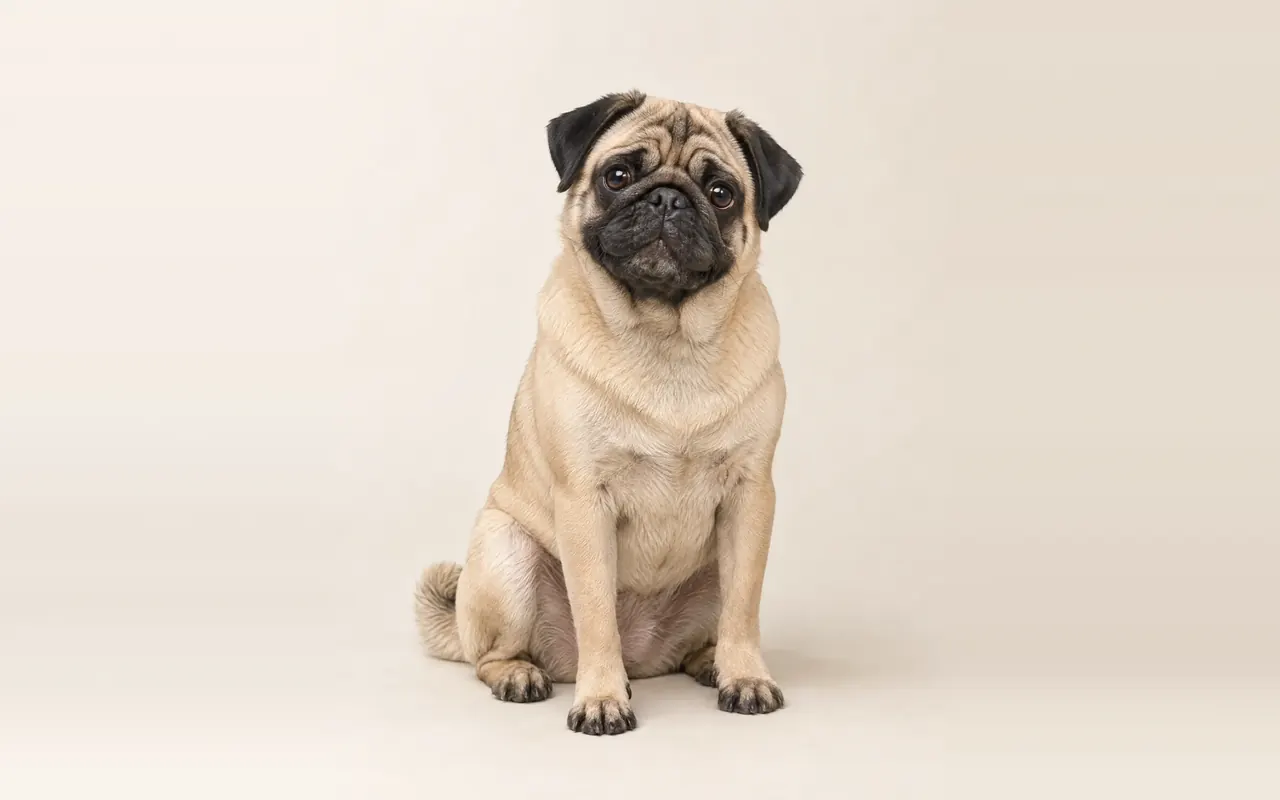
Dog breed
Pug
From China, around 12 inches at the shoulder and 14 to 18 pounds.
What a Pug is really like
Multum in parvo, Latin for much in little, is the Pug's old motto, and anyone who has shared a couch with one can confirm it. A Pug is a compact, square little clown with a wrinkled forehead, a curled tail and a face that seems to hold an opinion about everything you do, especially if you are eating.
Pugs were bred for one job, companionship, and they work at it full time. They follow their people from chair to chair, lean against your legs, sit on your feet and supervise every trip to the kitchen with total commitment. Owners joke that privacy ends the day a Pug moves in, and they are only half joking.
They are comedians, too. A Pug will tilt its head at a strange noise, race around the yard in a burst of happy chaos and then flop flat on the kitchen floor with its back legs splayed out behind it like a frog. That short, smooth coat looks low maintenance, and it is easy to groom, but it sheds far more than most people expect.
The facts
- Where it comes from
- China
- Height at the shoulder
- around 12 inches
- Weight
- 14 to 18 pounds
- Typical lifespan
- around 14 years
- Litter size
- around 4 puppies
- Also called
- carlin and mops
- American Kennel Club
- A recognized breed
Living with a Pug
Our ratings, worked out from what its sources say about its weight, its coat and what it was bred for. Every animal is an individual, so meet them before you decide.
- Bred for
- Companionship
- Size
- Small
- Coat
- Short and smooth
- Grooming
- A quick brush now and then
- Shedding
- Some
- Exercise
- Lighter: short walks and play
Pug owners will tell you
- You will never use the bathroom without an audience again.
- The head tilt gets them out of trouble every single time.
- Fawn Pug hair is now a permanent part of every outfit you own.
- Every stare at your dinner comes with a forehead full of worry wrinkles.
A day with a Pug
An example, not a schedule: every home runs its own way.
- MorningA relaxed stroll around the block, with frequent stops to greet anyone who looks like they might pet a Pug.
- BreakfastFinished before the bowl settles on the floor, followed by a hopeful vigil beside your plate.
- MiddayA nap on the couch with the chin on the armrest, one eye open in case anyone opens the fridge.
- AfternoonA burst of happy zoomies around the yard, then the trademark flop, back legs stretched out like a frog.
- EveningPressed against your hip on the couch, head tilting every time the TV makes an unusual sound.
- NightBurrowed under a blanket at the foot of the bed, curled tail and all.
Before you choose
- Plan on company. A Pug wants to be with you, in whichever room you are in, for most of the day.
- The short coat sheds a lot, especially on fawns with their thicker double coat. A weekly brush helps, and dark clothes will show every hair.
- Grooming is otherwise simple: a quick brush, a soft cloth for the face wrinkles and an occasional bath.
- Food is a powerful motivator. Pugs will sit, stare and plead for anything you are eating, so plates and snacks need to stay out of reach.
- Exercise needs are light. Short daily walks and some play indoors keep most Pugs content.
- Most welcome visitors and other pets with open curiosity, so a Pug rarely makes a serious watchdog, though many will bark once to report a knock.
- Ask the breeder about health screening for the puppy's parents, and ask a vet what to watch for in a Pug.
History in brief
Pugs come from China, where small, short-muzzled dogs were kept at the imperial court for many centuries. Breeders there prized a pattern of forehead wrinkles that resembled the Chinese character for prince.
Dutch traders brought them to Europe in the 1500s. The breed became a favorite of the Dutch House of Orange after a Pug named Pompey is said to have raised the alarm when enemy soldiers crept toward the camp of William, Prince of Orange, in 1572.
Before she married Napoleon, Josephine was held in a Paris prison during the Revolution, and her Pug, Fortune, was allowed to visit her and is said to have carried hidden notes to her family.
Queen Victoria later bred Pugs and favored the fawn and apricot colors, while the traveler Lady Brassey made black Pugs fashionable after bringing some home from China in 1886.
Colors and looks
A square, muscular little dog with a large round head, deep forehead wrinkles, small soft ears and a tail curled tightly over the hip; a double curl is especially prized. Fawns wear a black mask and often a dark line down the back called the trace.
Colors you will see
- Fawn
- Apricot fawn
- Silver fawn
- Black
Most common names for a Pug
In the pet license records we use, 1,690 dogs are listed as a Pug or a Pug mix. These are their most common names.
Names that lean Pug
Each of these is more common among Pug dogs than among all the dogs whose breed we can read in the records.
From pet license records published by New York City, Seattle, Cambridge in Massachusetts, and Allegheny County in Pennsylvania. How the names data works
Eight ways we draw a Pug
Each one prints on a poster, a bandana, a bed, a mat and more. Pick a style to see it on a poster.
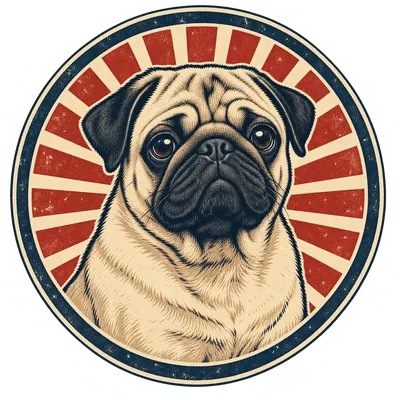 Retro badge
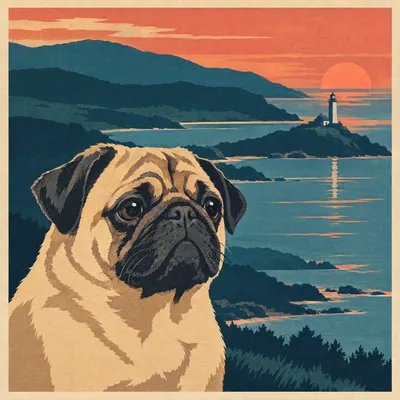 National park poster
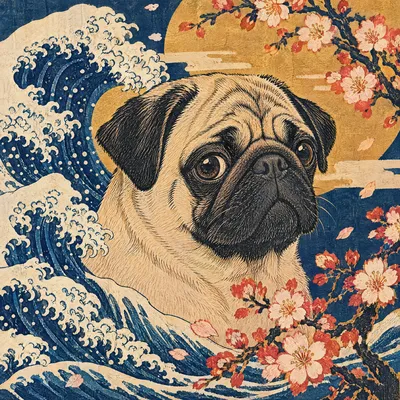 Woodblock print
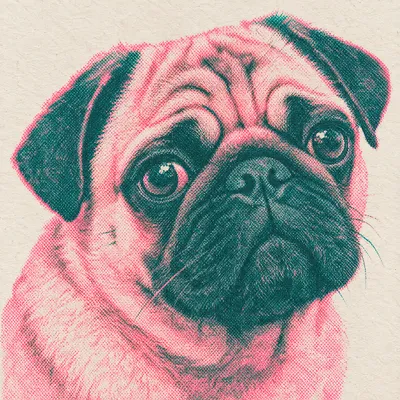 Risograph print
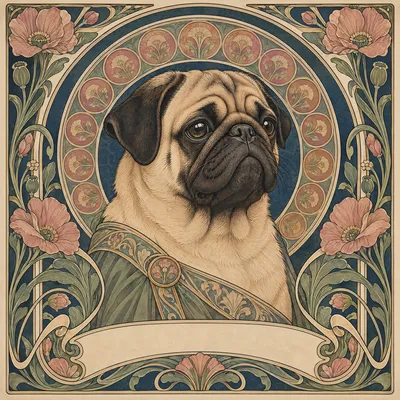 Art nouveau
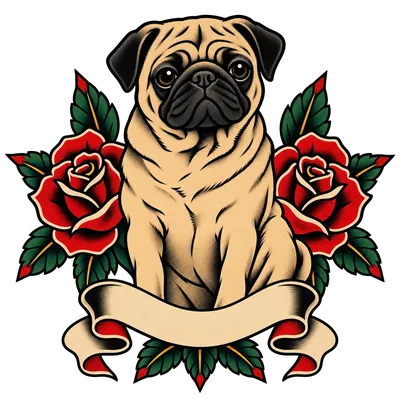 Tattoo flash
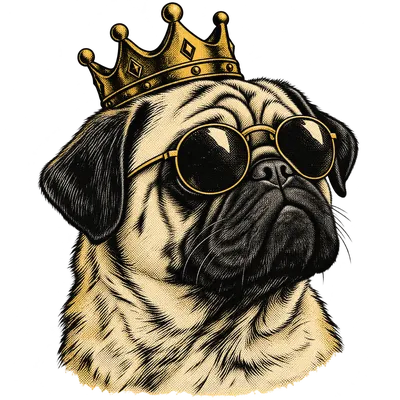 Crown and shades
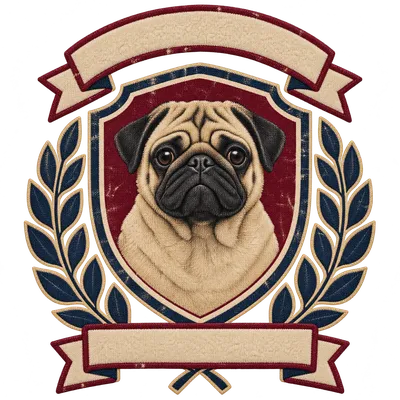 Varsity crest
Not your dog's color?
A Pug's life stages
A Pug is a small dog by its recorded weight, and the age the senior years may start depends on size.
- PuppyBirth to 6 months
- Puppy or young adult6 to 9 months
- Young adult9 months to 3 years
- Young or mature adult3 to 4 years
- Mature adult4 to 12 years
- Mature adult or seniorFrom 12 years
Stages from the American Animal Hospital Association life stage guidelines. How the life-stage calculator works
A Pug's age in human years
For a small dog, on the same method as our dog age calculator.
| Age | In human years |
|---|---|
| 1 year | 15 |
| 2 years | 24 |
| 3 years | 28 |
| 5 years | 36 |
| 7 years | 44 |
| 10 years | 56 |
| 13 years | 68 |
| 16 years | 80 |
Questions people ask about the Pug
How big do Pugs get?
Most weigh 14 to 18 lb and stand about 10 to 13 inches at the shoulder. They are compact and solid, with a lot of dog packed into a small frame.
Do Pugs shed a lot?
Yes, more than most people expect from a short coat. Fawn Pugs usually have a thicker double coat and shed the most, while black Pugs often have a single coat and shed a little less. A weekly brush helps.
What does multum in parvo mean?
It is Latin for much in little, the breed's long-standing motto. It fits: a lot of personality, muscle and opinion packed into one small, square dog.
What is the trace on a Pug?
A dark line running down the middle of the back from the head toward the tail, seen on some fawn Pugs. Along with the black mask and dark ears, it is one of the markings breed fans look for.
Do Pugs bark much?
Not usually. Most Pugs bark when someone knocks, then go back to what they were doing, which was probably watching you eat.
Related breeds
The same size, or from the same country.
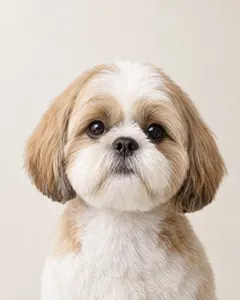
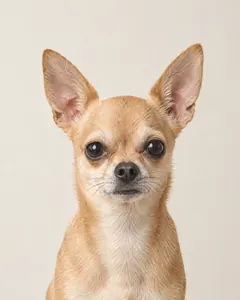
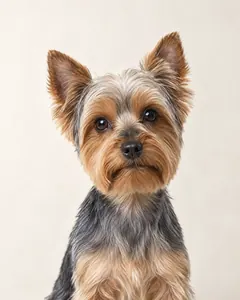
For your Pug
Every dog is an individual. What we describe here is what is typical, from owners' experience and published breed descriptions, not a promise about any one dog. Meet the dog in front of you before you decide.
Breed facts: Wikidata, read 2026-10-03, which anyone may reuse, and the breed's Wikipedia article, read 2026-10-08. The ratings in "Living with" are ours, from those facts.
Unlock unlimited calm listening, free
Quiet music for the hours your dog is home alone, and the occasional note about new designs.
Unlimited listening is unlocked on this device. The Soundtrack player is ready when you are. Open the Soundtrack player