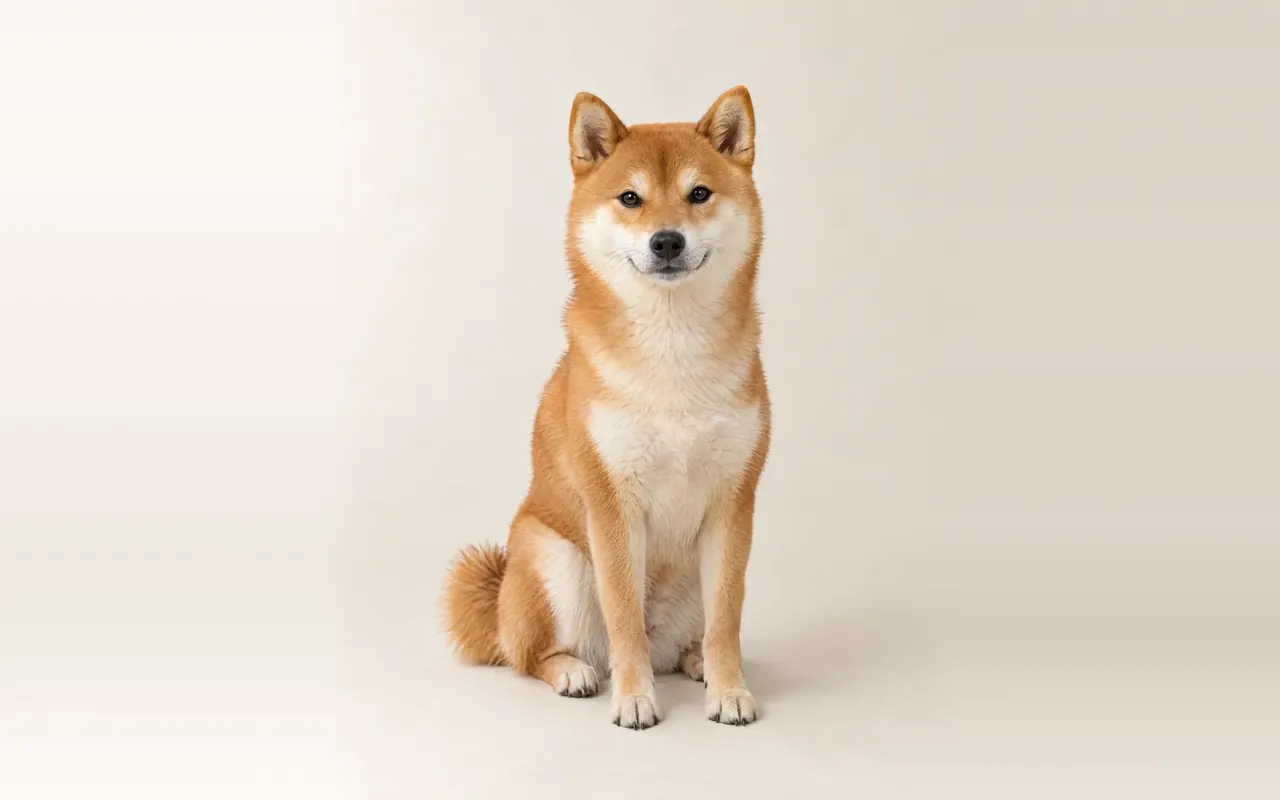
Dog breed
Shiba Inu
From Japan, 14 to 16 inches at the shoulder and 18 to 22 pounds.
What a Shiba Inu is really like
A Shiba Inu is a small, foxy dog with the personality of a cat. It keeps itself spotless, picks its own moments for a cuddle, watches the household from a slight distance and seems to be quietly judging most of it. Owners describe a dog that adores its people and shows it on its own terms: a lean here, a nose bump there, and a firm walk away when the petting goes on a moment too long.
Then there is the Shiba scream. A Shiba that objects to something, whether a bath, a nail trim, being picked up or being asked to walk the other way, can let out a high, piercing shriek that sounds like the end of the world. It is dramatic, it is loud and it usually means nothing worse than mild inconvenience. New owners hear it once and never forget it.
Shibas were bred to flush birds and small game in the mountains of Japan, and they still have a powerful urge to chase. Few owners let one off leash outside a fence, because a Shiba that spots a squirrel will cheerfully ignore its own name. Indoors they are tidy and fairly quiet, napping for hours, until they burst into wild, joyful laps of the house that owners call the Shiba 500.
The facts
- Where it comes from
- Japan
- Height at the shoulder
- 14 to 16 inches
- Weight
- 18 to 22 pounds
- Litter size
- around 3 puppies
- American Kennel Club
- A recognized breed
Living with a Shiba Inu
Our ratings, worked out from what its sources say about its weight, its coat and what it was bred for. Every animal is an individual, so meet them before you decide.
- Bred for
- Flushing birds and rabbits for hunters
- Size
- Small to medium
- Coat
- A double coat, short to medium
- Grooming
- Brushing every week
- Shedding
- A lot
- Exercise
- Lots: long walks, runs or a job to do
- Voice
- Its descriptions mention less barking than most
Shiba Inu owners will tell you
- A Shiba does not come when called; it considers your request and gets back to you.
- Bath time sounds like a horror movie, and all you did was turn on the tap.
- It grooms itself like a cat and judges you like one, too.
- Twice a year it blows its coat, and you could knit a second Shiba from the fur.
- That side-eye can end a conversation without a single sound.
A day with a Shiba Inu
An example, not a schedule: every home runs its own way.
- MorningA brisk walk on a firm leash, during which the Shiba picks the route and sometimes plants all four feet to veto yours.
- BreakfastEaten neatly, followed by a thorough face wash with a paw, exactly the way a cat would do it.
- MiddayA nap in a sunny window, curled tight with the plush tail wrapped over the nose.
- AfternoonA slow survey of the yard, interrupted by a sudden sprint after anything that dares to move.
- EveningZoomies: a few minutes of mad laps around the furniture, then a dignified return to the rug as if nothing happened.
- NightAsleep near you but not quite touching, which in Shiba terms is a grand declaration of love.
Before you choose
- Shibas are escape artists with a strong chase urge. Plan on a secure fence, a well-fitting harness and a leash for every walk outside the yard.
- The coat blows out twice a year, and the amount of fur is startling. Expect daily brushing during those weeks and a vacuum on standby.
- Many object loudly to baths, nail trims and being held, so grooming at home tends to involve some negotiation.
- Shibas are independent and often reserved with strangers. They suit people who like a self-possessed dog more than one that wants to be held all day.
- They rarely bark, but they make plenty of other noises, from yodels and grumbles to the famous scream.
- They are fastidiously clean, often stepping around puddles and tidying themselves after every meal.
- Ask the breeder about health screening for the puppy's parents, and ask a vet what to watch for in a Shiba Inu.
History in brief
The Shiba is the smallest of Japan's six native breeds and one of the oldest. Hunters in the mountains used it to flush birds and small game out of thick brush, and the name may mean brushwood dog, though some say it simply means small dog.
The breed came close to vanishing around World War II. Breeders rebuilt it from three surviving regional lines, the Shinshu, the Mino and the San'in, and Japan had already named it a Natural Monument in 1936.
The first Shiba in the United States arrived with a military family in 1954, and the breed earned American Kennel Club recognition in 1992.
Colors and looks
A compact, foxlike dog with a thick double coat, small upright triangular ears, deep-set eyes and a plush tail curled over the back. Every color has urajiro, the cream to white shading on the cheeks, throat, chest, belly and inner legs.
Colors you will see
- Red
- Black and tan
- Sesame
- Cream
Most common names for a Shiba Inu
In the pet license records we use, 1,578 dogs are listed as a Shiba Inu or a Shiba Inu mix. These are their most common names.
Names that lean Shiba Inu
Each of these is more common among Shiba Inu dogs than among all the dogs whose breed we can read in the records.
From pet license records published by New York City, Seattle, Cambridge in Massachusetts, and Allegheny County in Pennsylvania. How the names data works
We haven't drawn a Shiba Inu yetAsk for a Shiba Inu and we'll email you when it's ready.
A Shiba Inu's life stages
A Shiba Inu is a small to medium dog by its recorded weight; the stages below follow the small band, and the age the senior years may start depends on size.
- PuppyBirth to 6 months
- Puppy or young adult6 to 9 months
- Young adult9 months to 3 years
- Young or mature adult3 to 4 years
- Mature adult4 to 12 years
- Mature adult or seniorFrom 12 years
Stages from the American Animal Hospital Association life stage guidelines. How the life-stage calculator works
A Shiba Inu's age in human years
A Shiba Inu's recorded weight spans small to medium dogs; this table uses the small band, on the same method as our dog age calculator.
| Age | In human years |
|---|---|
| 1 year | 15 |
| 2 years | 24 |
| 3 years | 28 |
| 5 years | 36 |
| 7 years | 44 |
| 10 years | 56 |
| 13 years | 68 |
| 16 years | 80 |
Questions people ask about the Shiba Inu
How big do Shiba Inus get?
Most stand about 14 to 16 inches at the shoulder, with males a little taller than females. They are compact, muscular dogs that feel sturdier than they look.
What is the Shiba scream?
A loud, high shriek some Shibas let out when they object to something, like a bath, a nail trim or being held. It sounds alarming, but it is usually protest rather than distress.
Do Shiba Inus shed?
Yes, a lot. They shed lightly most of the year, then blow their undercoat twice a year in a heavy shed that lasts a few weeks. Daily brushing during those spells helps a great deal.
Can Shiba Inus be off leash?
Rarely, and only somewhere fully fenced. Shibas have a strong chase drive and an independent streak, so a loose Shiba tends to follow its own plans.
Do Shibas bark?
Not much. Shibas are fairly quiet dogs, but they have a range of other sounds, from grumbles and yodels to the scream they save for real objections.
Related breeds
The same size, or from the same country.
For your Shiba Inu
Every dog is an individual. What we describe here is what is typical, from owners' experience and published breed descriptions, not a promise about any one dog. Meet the dog in front of you before you decide.
Breed facts: Wikidata, read 2026-10-03, which anyone may reuse, and the breed's Wikipedia article, read 2026-10-08. The ratings in "Living with" are ours, from those facts.
Unlock unlimited calm listening, free
Quiet music for the hours your dog is home alone, and the occasional note about new designs.
Unlimited listening is unlocked on this device. The Soundtrack player is ready when you are. Open the Soundtrack player