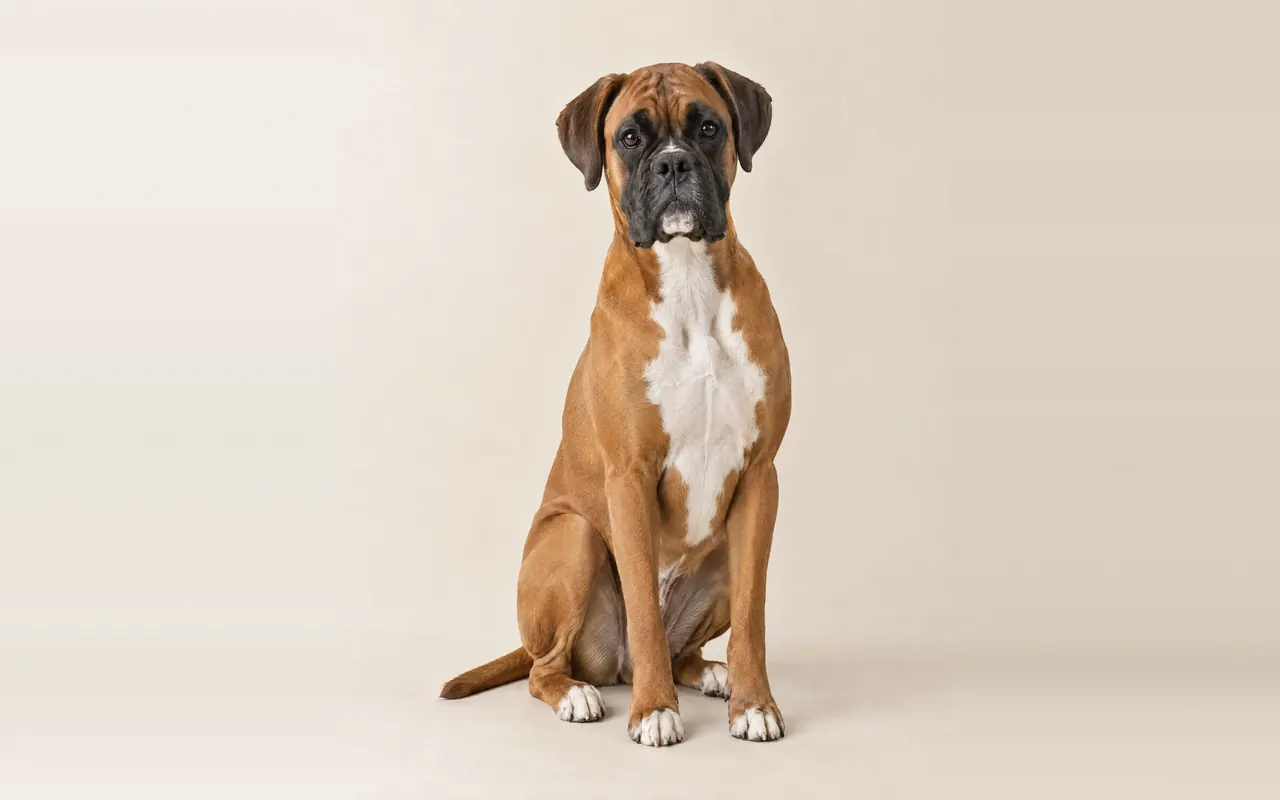
Dog breed
Boxer
From Germany, 21 to 25 inches at the shoulder and 55 to 66 pounds.
What a Boxer is really like
A Boxer greets you with its whole body. The stub of a tail starts the wag, the hips join in, and before long the dog has folded itself into a wriggling letter C. Then comes the bounce: straight up, all four feet off the floor, to get a better look at your face. Visitors either laugh or take a step back, and the Boxer reads both as an invitation.
Under the clowning is a muscular, athletic dog that stays a puppy in its head for a long time. Plenty of owners say their Boxer did not act grown up until well past its second birthday, and some never quite got there. Expect laps of the yard at full speed, a tug rope dropped in your lap during an important phone call, and a dog that rears up and bats the air with its front paws when play gets going. Owners will tell you the name fits.
Boxers want to be where their people are, ideally touching them. They lean on legs, sit on feet and wedge into the gap on the sofa you thought was too small for anyone. They are talkers more than barkers: a Boxer that wants something grumbles, groans and makes a low woo-woo sound until someone asks what the matter is.
The facts
- Where it comes from
- Germany
- Height at the shoulder
- 21 to 25 inches
- Weight
- 55 to 66 pounds
- Typical lifespan
- around 10 years
- Litter size
- around 7 puppies
- Also called
- Deutscher Boxer and German Boxer
Living with a Boxer
Our ratings, worked out from what its sources say about its weight, its coat and what it was bred for. Every animal is an individual, so meet them before you decide.
- Bred for
- Guarding
- Size
- Large
- Coat
- Short and smooth
- Grooming
- A quick brush now and then
- Shedding
- Some
- Exercise
- Lots: long walks, runs or a job to do
Boxer owners will tell you
- The wiggle starts at the tail and ends somewhere around the ears.
- Wherever you stand, a Boxer will find a way to stand on your feet.
- A Boxer does not walk into a room; it arrives.
- Squeaky toys show up in the morning and leave in pieces by supper.
- The puppy phase is officially two years, unofficially forever.
A day with a Boxer
An example, not a schedule: every home runs its own way.
- Wake-upA full-body wiggle at the side of the bed, then a brisk walk or a run, because a Boxer with spare energy will find its own uses for it.
- BreakfastEaten with gusto, followed by a long drink and a trail of water drips from the bowl to wherever you are standing.
- Late morningFetch or tug in the yard, with at least one round of wide, joyful laps at a speed that seems unwise near the flower beds.
- AfternoonA nap flat on its back, all four legs in the air, in whatever patch of sun has reached the floor.
- EveningSofa time, which means leaning the whole weight of a solid, muscular dog against whoever sat down first.
- BedtimeBurrowed under the covers if allowed, and sometimes if not. Many Boxers love a blanket over everything but the nose.
Before you choose
- Boxers are big, bouncy and strong for their first few years. Plan on jumping hellos, a dog that pulls on the leash and a solid amount of exercise every single day.
- A happy Boxer jump carries real weight, so households with toddlers or unsteady grandparents think ahead about greetings at the door.
- They want company and like to be in the middle of things. A Boxer suits a home where someone is around a lot and the dog can tag along.
- Those loose lips hold water and the odd string of drool, especially around mealtimes. Owners tend to keep a towel near the water bowl.
- The short coat needs only a quick brush, but it sheds steadily, and stiff little hairs turn up on dark clothes all year.
- A short, single coat keeps little warmth in, so many owners keep a jacket on hand for winter walks.
- Ask the breeder about health screening for the puppy's parents, and ask a vet what to watch for in a Boxer.
History in brief
The Boxer comes from Germany, where breeders around Munich shaped it in the late 1800s from the Bullenbeisser, a heavier dog used to hold big game for hunters, and English bulldogs. The first Boxer club formed there in 1895.
Boxers carried messages and supplies for the German army in World War I. After World War II, soldiers coming home helped make the breed a familiar sight in American neighborhoods, and it has stayed a favorite ever since.
Colors and looks
A square, muscular dog with a short, tight coat, a broad blunt muzzle and a slight underbite that gives the face a look of mild concern. White markings on the chest, feet and face are called flash, and a fair number of Boxers are born mostly white.
Colors you will see
- Fawn
- Brindle
- Fawn and white
- Brindle and white
- Mostly white
Most common names for a Boxer
In the pet license records we use, 2,398 dogs are listed as a Boxer or a Boxer mix. These are their most common names.
Names that lean Boxer
Each of these is more common among Boxer dogs than among all the dogs whose breed we can read in the records.
From pet license records published by New York City, Seattle, Cambridge in Massachusetts, and Allegheny County in Pennsylvania. How the names data works
Eight ways we draw a Boxer
Each one prints on a poster, a bandana, a bed, a mat and more. Pick a style to see it on a poster.
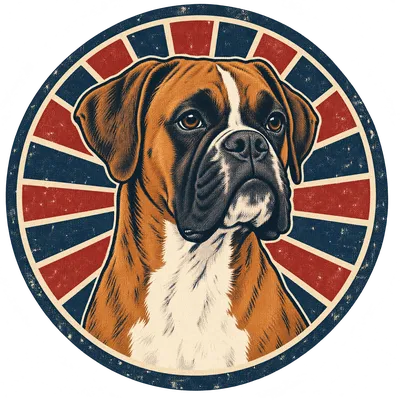 Retro badge
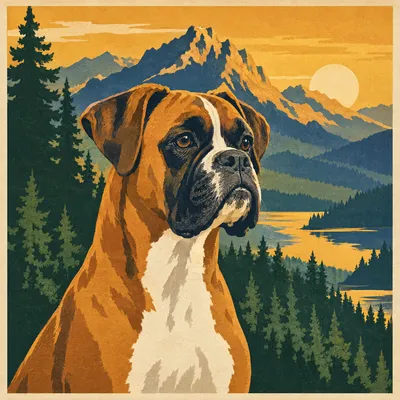 National park poster
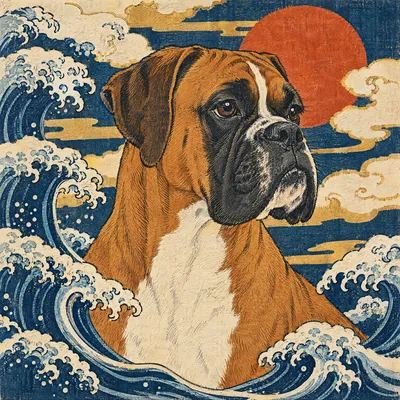 Woodblock print
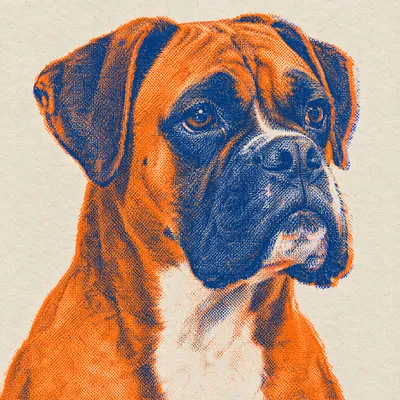 Risograph print
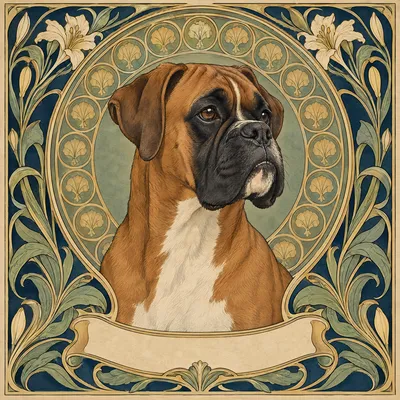 Art nouveau
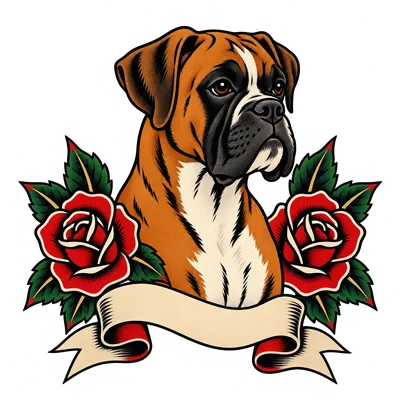 Tattoo flash
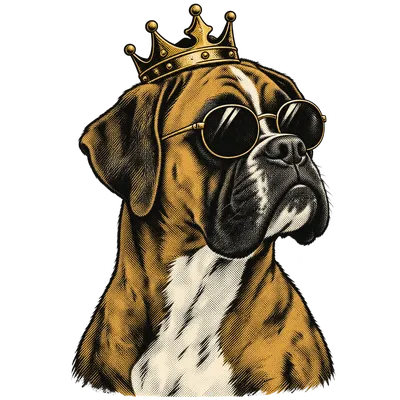 Crown and shades
 Varsity crest
Not your dog's color?
A Boxer's life stages
A Boxer is a large dog by its recorded weight, and the age the senior years may start depends on size.
- PuppyBirth to 6 months
- Puppy or young adult6 to 9 months
- Young adult9 months to 3 years
- Young or mature adult3 to 4 years
- Mature adult4 to 7 years
- Mature adult or seniorFrom 7 years
Stages from the American Animal Hospital Association life stage guidelines. How the life-stage calculator works
A Boxer's age in human years
For a large dog, on the same method as our dog age calculator.
| Age | In human years |
|---|---|
| 1 year | 15 |
| 2 years | 24 |
| 3 years | 30 |
| 5 years | 42 |
| 7 years | 54 |
| 10 years | 72 |
| 13 years | 90 |
| 16 years | 108 |
Questions people ask about the Boxer
How big do Boxers get?
Most adults weigh about 55 to 80 lb, with males at the heavier end, and stand roughly 21 to 25 inches at the shoulder. They are dense with muscle, so they feel heavier than they look when one sits on you.
Do Boxers shed?
Yes, steadily, though the coat is short. A rubber grooming mitt once or twice a week pulls out loose hair before it settles into the sofa.
At what age do Boxers settle down?
Later than many breeds. Boxers often keep their puppy bounce until two or three years old, and plenty stay playful clowns for life. Daily exercise and games make the wait much easier.
Why do Boxers curl into a C shape when they are happy?
Owners call it the Boxer wiggle. A Boxer's wag starts at the tail and spreads through the whole back end, so a very happy dog bends into a curve and sometimes spins in a circle.
Can a Boxer live in an apartment?
Many do, with real daily exercise. A Boxer is not especially noisy, but it is big and bouncy, so a long walk or run every day matters more than the size of the home.
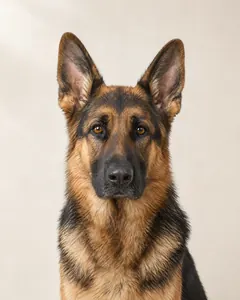
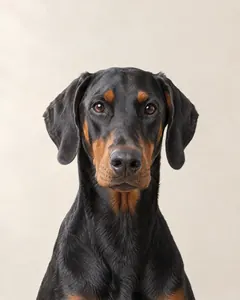
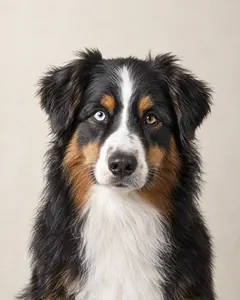
Related breeds
The same size, or from the same country.


For your Boxer
Every dog is an individual. What we describe here is what is typical, from owners' experience and published breed descriptions, not a promise about any one dog. Meet the dog in front of you before you decide.
Breed facts: Wikidata, read 2026-10-03, which anyone may reuse, and the breed's Wikipedia article, read 2026-10-08. The ratings in "Living with" are ours, from those facts.
Unlock unlimited calm listening, free
Quiet music for the hours your dog is home alone, and the occasional note about new designs.
Unlimited listening is unlocked on this device. The Soundtrack player is ready when you are. Open the Soundtrack player