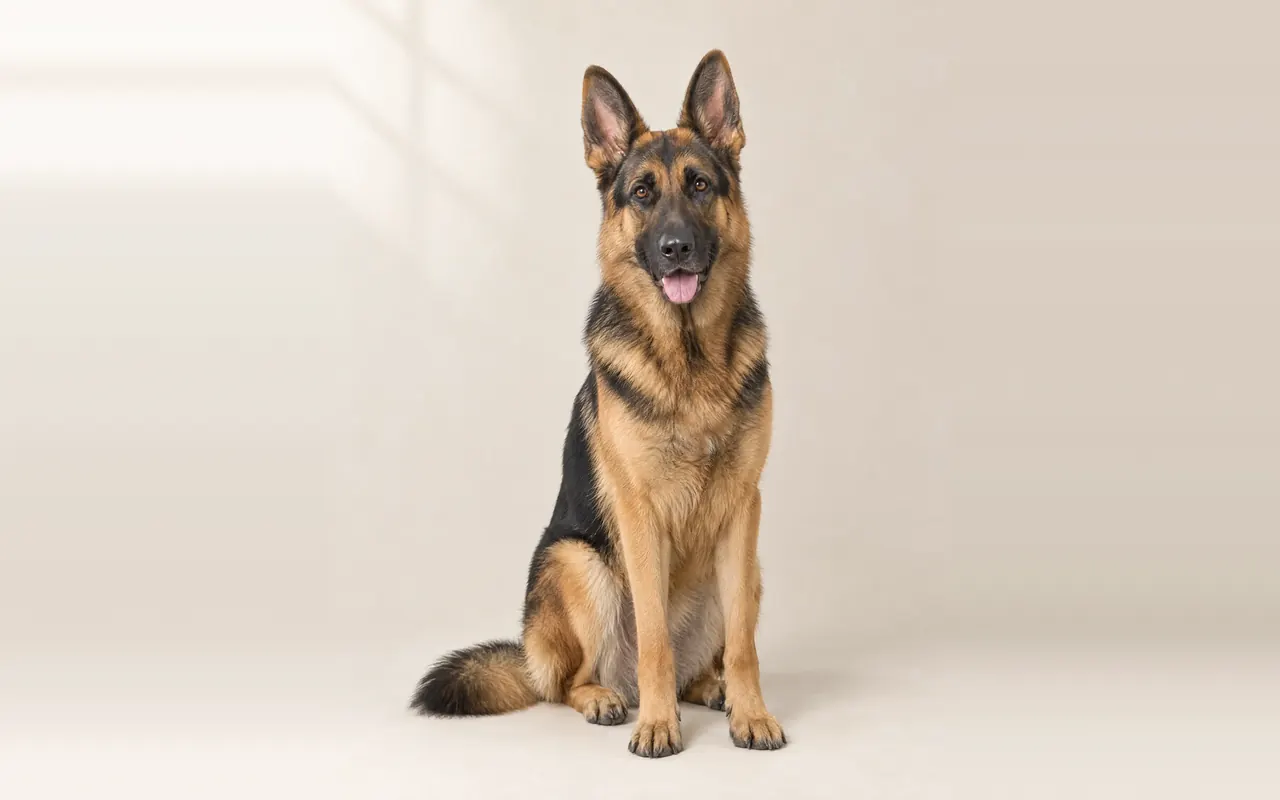
Dog breed
German Shepherd
From Germany, 22 to 24 inches at the shoulder and 49 to 88 pounds.
What a German Shepherd is really like
A German Shepherd wants a job and a person, and ideally both at once. Most attach themselves to one or two people and go everywhere with them: to the kitchen, to the laundry room, to the bathroom door, where they wait with obvious concern until you come out. Owners call it being shadowed, and it rarely lets up.
These are watchful dogs. A Shepherd notices the car that slows down, the new trash can next door and the delivery driver two houses away, and it reports on all of them in a deep, serious bark. Plenty of Shepherds are vocal in quieter ways too: groaning, grumbling, yodeling at dinnertime and huffing loudly when a walk runs late.
Bred to tend flocks all day and later to work beside police and soldiers, a Shepherd needs real exercise and real thinking. Long walks, tracking games, fetch and new tricks all help, and a bored one may remodel the flower beds. Then there is the shedding, which earned the breed its fond nickname among owners: the German Shedder.
The facts
- Where it comes from
- Germany
- Height at the shoulder
- 22 to 24 inches
- Weight
- 49 to 88 pounds
- Typical lifespan
- around 10 years
- Litter size
- around 6 puppies
- Also called
- Schäferhund, Deutscher Schäferhund and Berger Allemand
- American Kennel Club
- A recognized breed
Living with a German Shepherd
Our ratings, worked out from what its sources say about its weight, its coat and what it was bred for. Every animal is an individual, so meet them before you decide.
- Bred for
- Herding sheep
- Size
- Medium to large
- Coat
- A double coat, short to medium
- Grooming
- Brushing every week
- Shedding
- A lot
- Exercise
- Moderate: a good walk every day, and play
- Voice
- Its descriptions mention barking
Breeds compared: German Shepherd vs Labrador Retriever · German Shepherd vs Golden Retriever · Australian Shepherd vs German Shepherd · German Shepherd vs Siberian Husky
German Shepherd owners will tell you
- You have not been to the bathroom by yourself since the puppy came home.
- The German Shedder nickname is not a joke; it is a weather report.
- Every question gets an answer, usually a groan, a yodel or a long, theatrical sigh.
- Puppy ears have a mind of their own: one up, one down, then both sideways for a week.
- The delivery driver has been announced, assessed and discussed before reaching the porch.
A day with a German Shepherd
An example, not a schedule: every home runs its own way.
- Dawn patrolA tour of the yard to confirm nothing changed overnight, with a thorough sniff along the whole fence line.
- MorningA long walk or jog, then a game for the brain, such as hide-and-seek with a favorite toy or following a trail of treats across the grass.
- MiddayLying in a doorway where two rooms can be watched at once, eyes half closed and ears still turning toward every sound.
- AfternoonHelping with chores, which mostly means lying exactly where you need to step next.
- EveningFetch or tug until you are both done, then a groaning, full-body stretch on the rug.
- NightSleeping near the bedroom door, which makes a late trip for a glass of water an obstacle course.
Before you choose
- They shed heavily all year and drop most of their undercoat about twice a year. Brushing several times a week helps, and the vacuum never really goes back in the closet.
- A Shepherd needs plenty of activity for body and mind. Owners often take up tracking, scent games, agility or herding lessons to give all that drive somewhere to go.
- Most take their time with strangers and bark at anything new near the house, so expect a dog that watches first and warms up second.
- They are big: about 50 to 90 lb, with a bark that sounds bigger still. Some leases and home insurers restrict the breed, so check before you choose.
- They tend to attach strongly to their people and want to be part of everything. A Shepherd suits a home with plenty of company and a role in daily life.
- Puppies are nippy, bouncy and endlessly curious, with sharp teeth and long legs, so expect a busy first year and a few chewed shoes.
- Ask the breeder about health screening for the puppy's parents, and ask a vet what to watch for in a German Shepherd.
History in brief
The breed began in Germany in 1899, when a cavalry officer named Max von Stephanitz spotted a herding dog at a show, bought it that day and renamed it Horand von Grafrath. Horand became the first registered German Shepherd Dog.
Von Stephanitz bred for working ability above looks. As farm herding faded, he promoted his dogs for police and army work, and the breed has done both ever since, along with guide dog and search work.
After World War I, British owners avoided the German name and called the dog the Alsatian. That name lasted for decades, until British kennel clubs allowed German Shepherd Dog again in 1977.
Colors and looks
A strong, long-bodied dog with large upright ears, a deep chest and a bushy tail carried low. The double coat is usually medium length, often black and tan in a saddle pattern, though working lines are frequently sable, with each hair banded and tipped in black. A long-coated variety is also bred.
Colors you will see
- Black and tan
- Black and red
- Black and cream
- Sable
- Solid black
- Bicolor
Most common names for a German Shepherd
In the pet license records we use, 6,477 dogs are listed as a German Shepherd or a German Shepherd mix. These are their most common names.
Names that lean German Shepherd
Each of these is more common among German Shepherd dogs than among all the dogs whose breed we can read in the records.
From pet license records published by New York City, Seattle, Cambridge in Massachusetts, and Allegheny County in Pennsylvania. How the names data works
Eight ways we draw a German Shepherd
Each one prints on a poster, a bandana, a bed, a mat and more. Pick a style to see it on a poster.
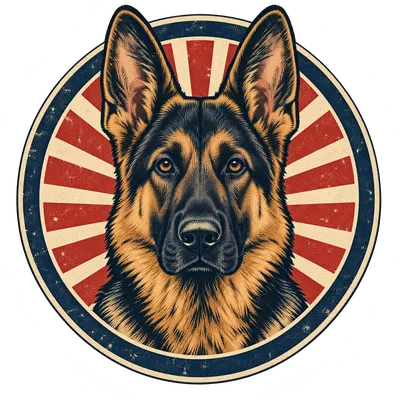 Retro badge
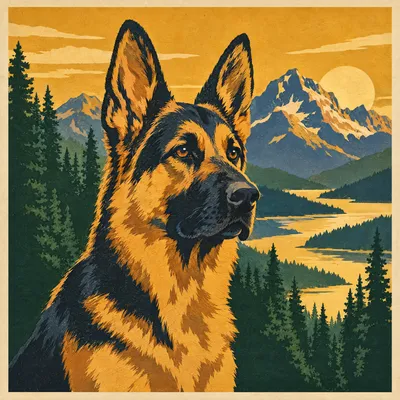 National park poster
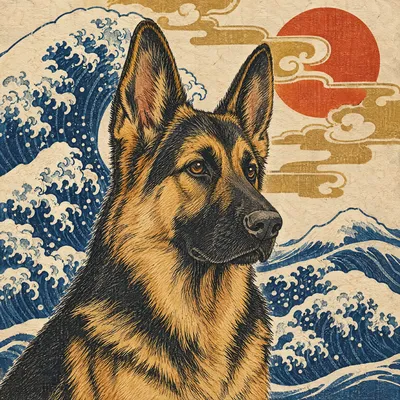 Woodblock print
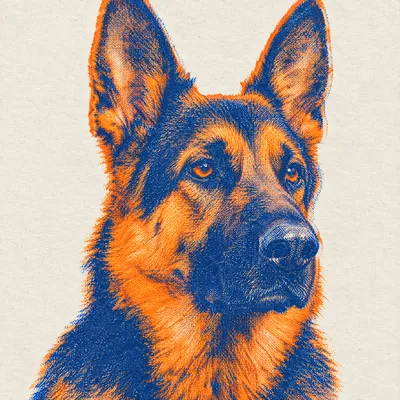 Risograph print
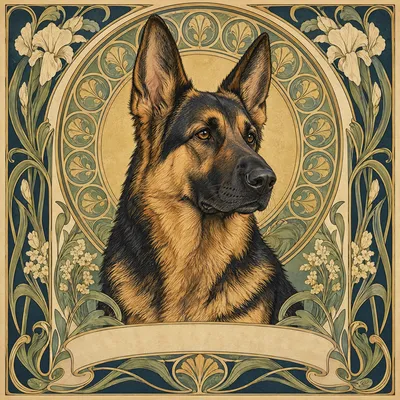 Art nouveau
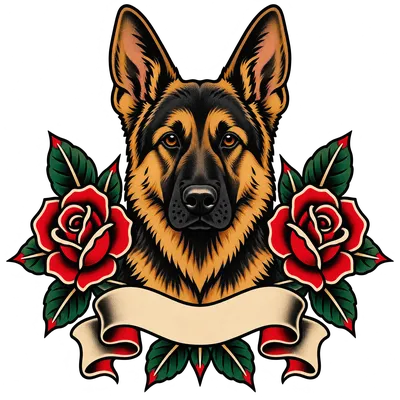 Tattoo flash
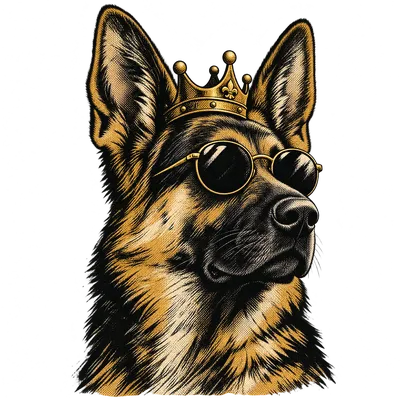 Crown and shades
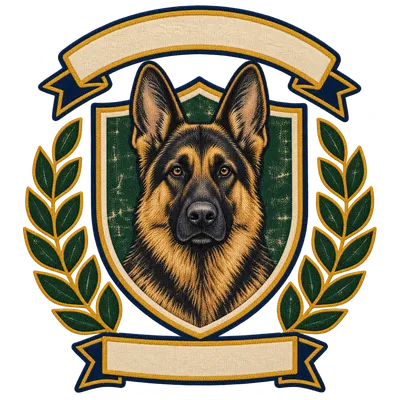 Varsity crest
Not your dog's color?
A German Shepherd's life stages
A German Shepherd is a medium to large dog by its recorded weight; the stages below follow the large band, and the age the senior years may start depends on size.
- PuppyBirth to 6 months
- Puppy or young adult6 to 9 months
- Young adult9 months to 3 years
- Young or mature adult3 to 4 years
- Mature adult4 to 7 years
- Mature adult or seniorFrom 7 years
Stages from the American Animal Hospital Association life stage guidelines. How the life-stage calculator works
A German Shepherd's age in human years
A German Shepherd's recorded weight spans medium to large dogs; this table uses the large band, on the same method as our dog age calculator.
| Age | In human years |
|---|---|
| 1 year | 15 |
| 2 years | 24 |
| 3 years | 30 |
| 5 years | 42 |
| 7 years | 54 |
| 10 years | 72 |
| 13 years | 90 |
| 16 years | 108 |
Questions people ask about the German Shepherd
How big do German Shepherds get?
Most adults weigh about 50 to 90 lb, with males clearly larger, and stand roughly 22 to 26 inches at the shoulder. Working-line dogs can look leaner and more compact than show-line dogs.
Do German Shepherds shed a lot?
Yes. They shed all year and lose their undercoat in a big way about twice a year. The long-coated variety looks fluffier but sheds just as much, so expect hair on everything either way.
When do German Shepherd puppies' ears stand up?
Many stand during the first six months or so. It is normal for them to rise, flop and rise again while the puppy is teething, and some take a little longer than their littermates.
Are German Shepherds vocal?
Many are. Beyond barking at anything unusual, plenty of Shepherds groan, grumble, whine and make a warbling sound owners call yodeling, especially when they want something or think dinner is late.
What is the difference between working and show line German Shepherds?
Working lines are bred mainly for police work, sport and herding drive; show lines for looks in the ring. Working-line dogs are often sable and even more energetic, so ask a breeder which kind you are meeting.
Related breeds
The same size, or from the same country.
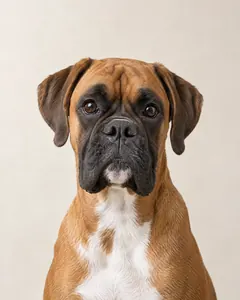
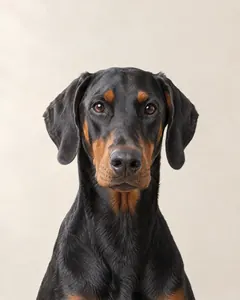

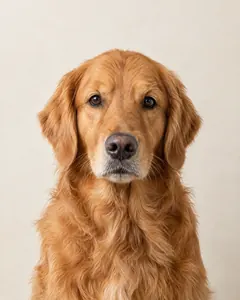
For your German Shepherd
Every dog is an individual. What we describe here is what is typical, from owners' experience and published breed descriptions, not a promise about any one dog. Meet the dog in front of you before you decide.
Breed facts: Wikidata, read 2026-10-03, which anyone may reuse, and the breed's Wikipedia article, read 2026-10-08. The ratings in "Living with" are ours, from those facts.
Unlock unlimited calm listening, free
Quiet music for the hours your dog is home alone, and the occasional note about new designs.
Unlimited listening is unlocked on this device. The Soundtrack player is ready when you are. Open the Soundtrack player